How to Build Company Culture Like a Product
TL;DR
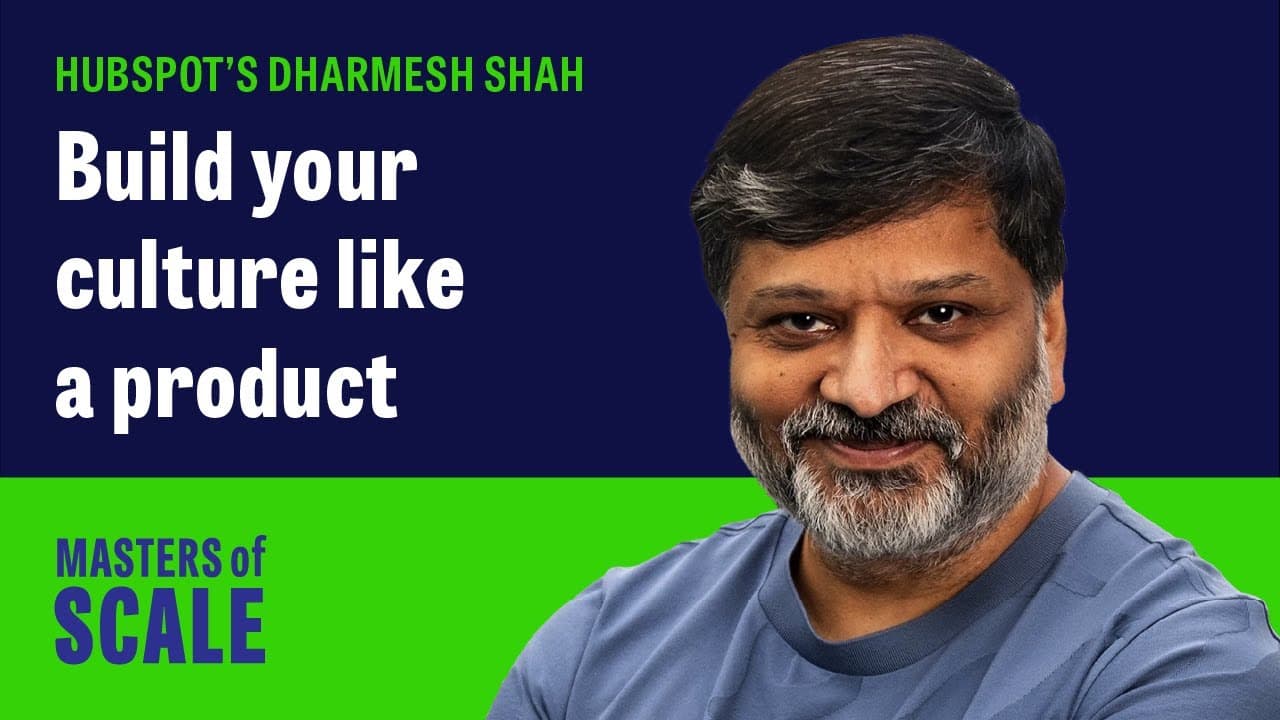
Building a strong company culture requires the same intentionality as product design. Dharmesh Shah of HubSpot created the HubSpot Culture Code by treating culture as a product, emphasizing transparency, customer focus, and adaptability. This approach not only solidified HubSpot's internal culture but also inspired countless other companies to adopt similar strategies.
Transcript
- We didn't really use the word culture for the first five or six years of HubSpot. It was not a thing we talked about, and I know this because I went through the email logs. - That's Dharmesh Shah, co-founder and CTO of HubSpot. Dharmesh only started to take culture seriously several years after launching the company. When his co-founder and HubSp... Read More
Key Insights
- Dharmesh Shah initially underestimated the importance of company culture at HubSpot.
- Feedback from employees revealed a distrust of typical corporate culture initiatives.
- Dharmesh approached culture building like product development: define, iterate, and sell.
- The HubSpot Culture Code became a foundational document, evolving from 16 to 128 slides.
- Transparency at HubSpot included designating all employees as insiders during the IPO.
- Risk-taking is encouraged, with clear responsibility assigned to decision-makers.
- Diversity is essential for empathy with a varied customer base, requiring deliberate hiring practices.
- Culture should evolve over time, adapting to new challenges and opportunities.
Install to Summarize YouTube Videos and Get Transcripts
Explore YouTube Video Summarizer or Get YouTube Transcript Extractor
Questions & Answers
Q: How did Dharmesh Shah initially view company culture at HubSpot?
Dharmesh Shah initially did not prioritize company culture at HubSpot, as it was not a focus during the early years of the company. It was only after a pivotal meeting where his co-founder Brian Halligan received critical feedback from peers that Dharmesh began to take culture seriously, recognizing its long-term importance for the company's success.
Q: What approach did Dharmesh Shah take to build HubSpot's culture?
Dharmesh Shah approached building HubSpot's culture as he would a product. He defined the culture, iterated on it based on feedback, and sold the concept to employees. This involved creating the HubSpot Culture Code, a document that outlines key cultural principles and evolves over time to adapt to new challenges and feedback from the team.
Q: What is the HubSpot Culture Code?
The HubSpot Culture Code is a comprehensive document that outlines the company's cultural values, principles, and practices. It was initially created by Dharmesh Shah as a way to formalize and communicate the culture at HubSpot. The code emphasizes transparency, customer focus, risk-taking, and diversity, and it is continuously updated to reflect the evolving needs of the company.
Q: Why is transparency important in HubSpot's culture?
Transparency is a core component of HubSpot's culture because it empowers employees to make informed decisions and fosters trust within the organization. By designating all employees as insiders during the IPO, HubSpot maintained its commitment to transparency, ensuring that everyone had access to important information and could contribute meaningfully to the company's direction.
Q: How does HubSpot encourage risk-taking?
HubSpot encourages risk-taking by fostering a culture where employees feel supported in trying new things. Dharmesh Shah emphasizes that not all risks will succeed, but failure is a part of experimentation. Decisions are made by designated individuals who are responsible for guiding risky initiatives, ensuring that risks are calculated and aligned with company goals.
Q: What role does diversity play in HubSpot's culture?
Diversity is crucial in HubSpot's culture as it ensures that the company can empathize with its diverse customer base. Dharmesh Shah recognized the initial lack of diversity at HubSpot and took steps to improve it by re-engineering hiring practices and emphasizing the need for a workforce that reflects the varied backgrounds and perspectives of their customers.
Q: How does HubSpot's culture evolve over time?
HubSpot's culture evolves through continuous iteration, much like a product. Dharmesh Shah believes that culture should adapt to meet new challenges and incorporate feedback from employees. The HubSpot Culture Code is regularly updated to reflect these changes, ensuring that the culture remains relevant and effective in supporting the company's mission and values.
Q: What lessons can other companies learn from HubSpot's approach to culture?
Other companies can learn the importance of intentionality in culture building from HubSpot's approach. Treating culture as a product means defining it clearly, iterating based on feedback, and ensuring it aligns with company goals. Emphasizing transparency, customer focus, risk-taking, and diversity can create a strong, adaptable culture that supports both employees and customers.
Summary & Key Takeaways
-
Dharmesh Shah, co-founder of HubSpot, initially overlooked the importance of company culture but later realized its significance after receiving critical feedback from employees. He approached culture building with the same rigor as product development, creating the HubSpot Culture Code, which emphasizes transparency, customer focus, and adaptability.
-
The HubSpot Culture Code, a living document, has grown from 16 to 128 slides since its inception in 2013. It serves as a guide for fostering a positive company culture and has inspired many other organizations. Key components include solving for the customer, extreme transparency, taking calculated risks, and ensuring diversity.
-
Building a strong company culture requires intentionality and continuous iteration. Dharmesh's approach at HubSpot highlights the importance of treating culture as a product, which not only strengthens internal practices but also aligns the company with its diverse customer base. This method has proven effective in maintaining a vibrant and adaptable culture.
Read in Other Languages (beta)
Share This Summary 📚
Summarize YouTube Videos and Get Video Transcripts with 1-Click
Try YouTube Summary with ChatGPT & Claude or YouTube Transcript Generator
Explore More Summaries from Masters of Scale 📚

Summarize YouTube Videos and Get Video Transcripts with 1-Click
Try YouTube Summary with ChatGPT & Claude or YouTube Transcript Generator