Soft Robotics' octopus-inspired robots industrial grippers
TL;DR
Soft robotics technology uses rubber materials to create flexible robotic actuators, allowing for versatile and efficient automation.
Transcript
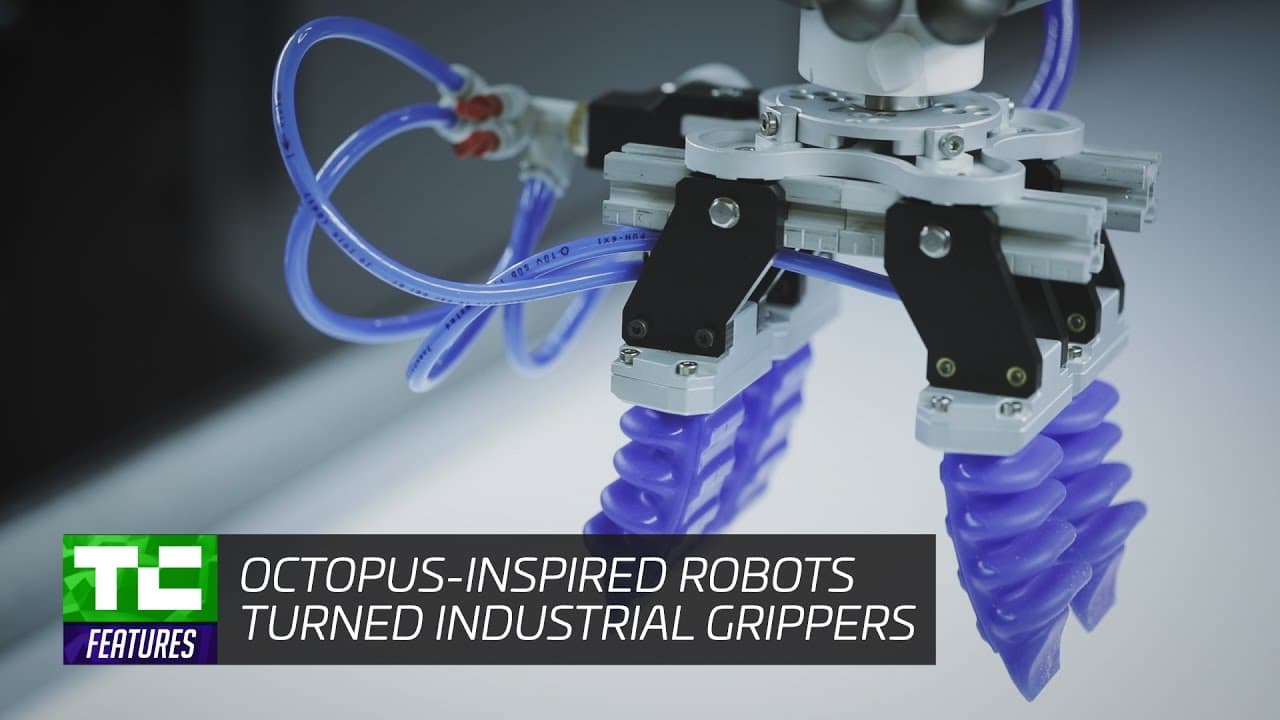
so robot by definition is a robot made of things that are not rigid or not hard we make robotic actuators out of rubber materials no sensors no tendons no pulleys no rigid joints you think about if you were going to build a robotic octopus what would it look like that was the inspiration for our technology can you break down the technology and real... Read More
Key Insights
- 🍦 Soft robotics technology utilizes rubber and elastomeric materials to create flexible robotic actuators, enabling versatile and efficient automation.
- 🤖 By utilizing fluidic channels and precise pressurization, soft robots can achieve various movements and actions.
- 🤖 Soft robotics offers advantages over traditional rigid robots, such as the ability to grip a wide range of objects without the need for precise calculations or complex sensors.
- 🍦 The development of soft robotics technology started in 2008 and has since matured, with commercial applications now available.
- 🍦 Soft robotics is being used in manufacturing environments to address labor shortages, particularly in industries like packaging.
- 🥶 It helps factories maintain productivity by automating tasks that are difficult to staff or require specific environments, such as freezing areas.
- 🧑🦽 Soft robotics technology reduces the need for extensive training and quality control in manual labor jobs, improving efficiency.
Install to Summarize YouTube Videos and Get Transcripts
Explore YouTube Video Summarizer or Get YouTube Transcript Extractor
Questions & Answers
Q: How does soft robotics technology work?
Soft robotics involves using elastomeric materials with fluidic channels, which can be pressurized to achieve bending, extension, or actuation. By controlling the pressurization rate, the robot can perform specific movements.
Q: What are the advantages of soft robotics over traditional rigid robots?
Unlike rigid robots, soft robots can grab any object without the need for precise calculations. This is possible because the elastomeric materials and actuators allow them to conform to any object. Soft robots also use simple vision systems, reducing the need for complex sensors.
Q: How long has soft robotics technology been in development?
Soft robotics technology has been in development since around 2008 when it started under a DARPA contract at George Whitesides' lab at Harvard. It has since matured and is now commercially available.
Q: Are soft robots taking away jobs from people?
Soft robotics technology is primarily being used to address labor shortages in industries like packaging. Instead of replacing workers, it helps factories maintain productivity by automating tasks that are difficult to staff, such as packaging in high-care areas or freezing environments.
Summary & Key Takeaways
-
Soft robotics utilizes elastomeric materials with built-in fluidic channels to achieve bending, extension, and actuation through pressurization.
-
Compared to traditional rigid robots, soft robotics offers the advantage of simple vision systems and the ability to grip a wide range of objects without precise calculations.
-
Soft robotics technology has been in development since 2008 and is now being used in manufacturing environments to address labor shortages in packaging.
Read in Other Languages (beta)
Share This Summary 📚
Summarize YouTube Videos and Get Video Transcripts with 1-Click
Try YouTube Summary with ChatGPT & Claude or YouTube Transcript Generator
Explore More Summaries from TechCrunch 📚





Summarize YouTube Videos and Get Video Transcripts with 1-Click
Try YouTube Summary with ChatGPT & Claude or YouTube Transcript Generator