What Rain Drops Actually Look Like
TL;DR
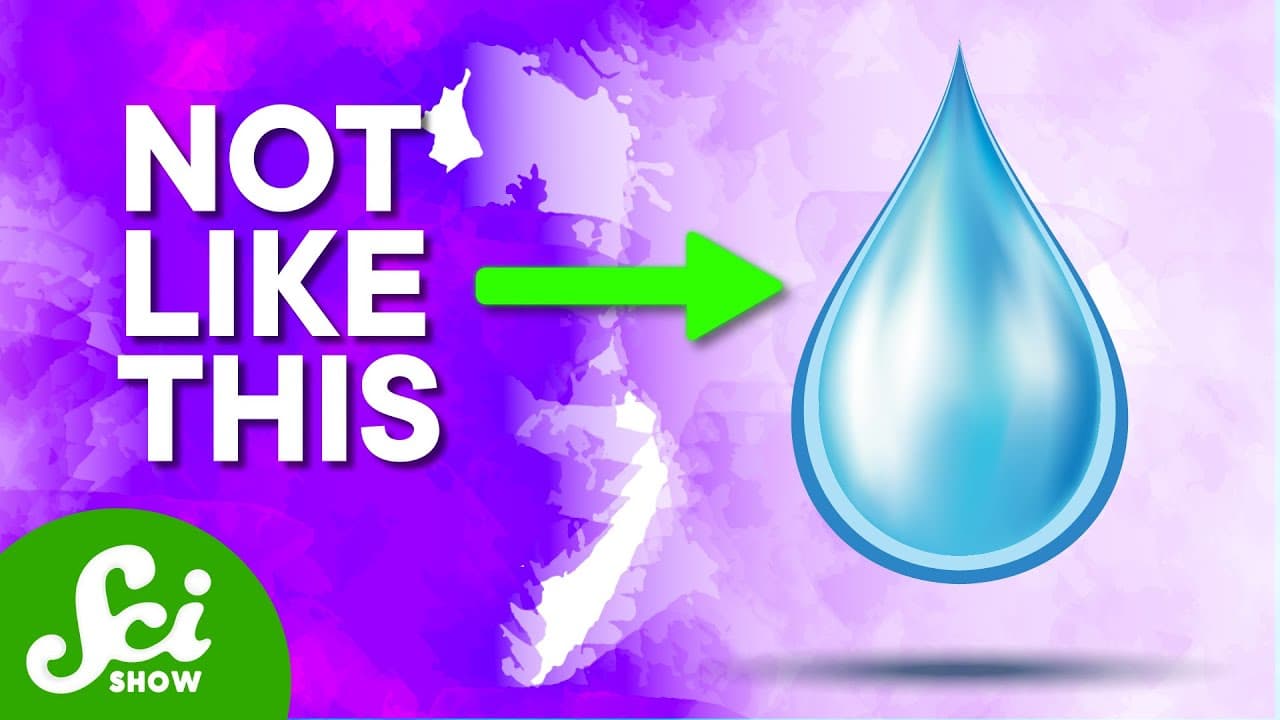
Raindrops are not the pointy-tipped shape we often see in cartoons, but rather take on various shapes like wobbling blobs, jellyfish, and dinosaurs as they fall.
Transcript
this scishow video describes the closest thing in nature to a perfect sphere as far as we know to find the area of a sphere you need pi 3.14 etc and that's only one of the many reasons we need pi so to show our appreciation for this incredible numerical value we are launching a very exciting new pie themed calendar you can get it for a limited time... Read More
Key Insights
- 💦 Raindrops are spherical due to surface tension and the pull of water molecules toward each other.
- 👱 Raindrops larger than four millimeters across flatten out at the bottom due to air resistance.
- 🔌 Different forces like electric charge and aerosols can affect raindrop shapes.
- 💥 Raindrop collisions can result in various shapes like sheet, neck, disc, and bag.
- 🧑🏭 Human activity can influence raindrop shapes through factors like electric charge and aerosols.
- 👀 Different storms have different-looking raindrops depending on the conditions.
- 😃 Heavy rainstorms tend to have bigger raindrops, which can burst if they become too large.
Install to Summarize YouTube Videos and Get Transcripts
Explore YouTube Video Summarizer or Get YouTube Transcript Extractor
Questions & Answers
Q: Why don't raindrops have pointy tops like in cartoons?
Raindrops are spherical due to surface tension, which causes the water molecules to cling together and smoothes out any pointiness as they fall.
Q: What happens to raindrops larger than four millimeters across?
Larger raindrops flatten out at the bottom like hamburger buns due to the force of air pushing against them as they fall.
Q: Can human activity affect raindrop shapes?
Yes, electric charge and aerosols like soot from cars can impact raindrop shapes, meaning human activity can have an influence on the shape of raindrops.
Q: What happens when raindrops collide?
Raindrop collisions can result in four main shapes: sheet (small droplet tears a chunk off the larger one), neck (small droplet glances off the larger one, leaving a stream of water), disc (small droplet hits the center of the larger one, creating a splat), and bag (rare variant of disc caused by dead-on collision, resulting in a lump and shower of droplets).
Summary & Key Takeaways
-
UCLA experiments in the 1960s used a wind tunnel to study raindrop shapes, revealing that they are spherical due to surface tension.
-
Raindrops larger than four millimeters across flatten out at the bottom like hamburger buns due to the force of air pushing against them.
-
Different forces like electric charge and aerosols can affect raindrop shapes, and collisions between raindrops can result in various shapes such as sheet, neck, disc, and bag.
Read in Other Languages (beta)
Share This Summary 📚
Summarize YouTube Videos and Get Video Transcripts with 1-Click
Try YouTube Summary with ChatGPT & Claude or YouTube Transcript Generator
Explore More Summaries from SciShow 📚


Summarize YouTube Videos and Get Video Transcripts with 1-Click
Try YouTube Summary with ChatGPT & Claude or YouTube Transcript Generator