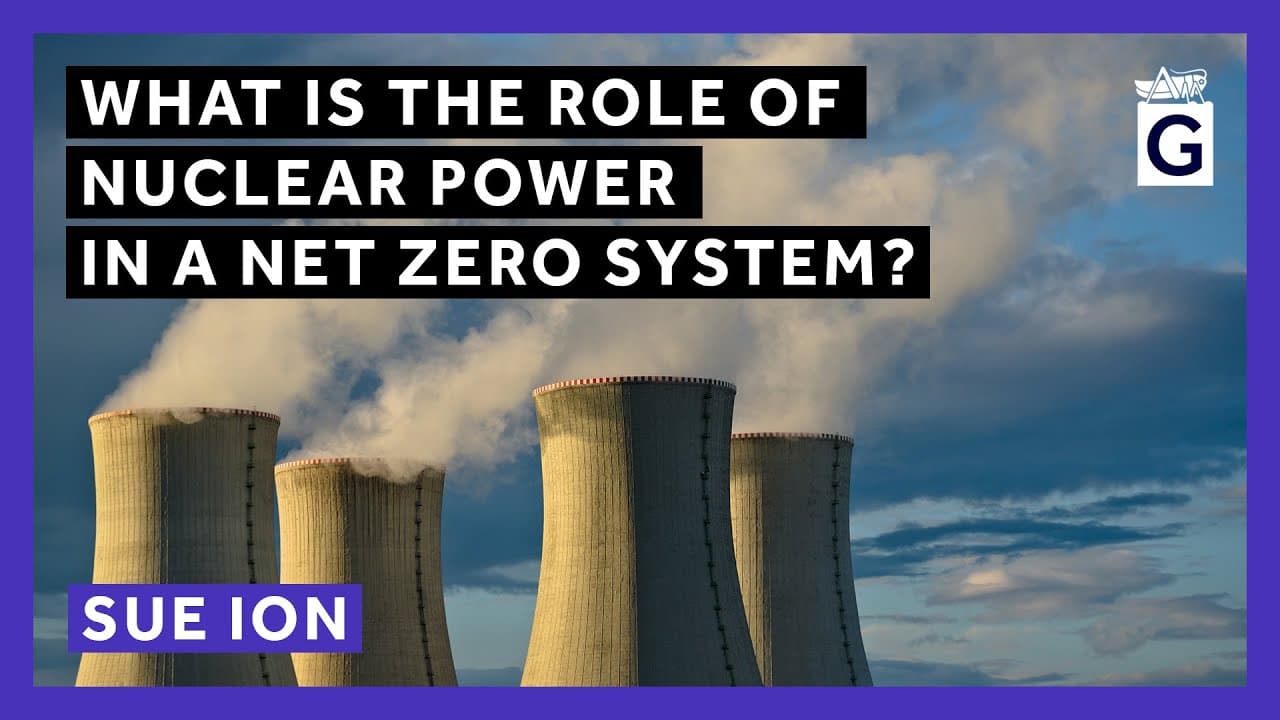
What Is the Role of Nuclear Power in a Net Zero System?
TL;DR
Nuclear power is a crucial component in achieving Net Zero, as it provides low-carbon electricity and heat and has other benefits such as the production of essential isotopes for medical use.
Transcript
ladies and gentlemen it's a real pleasure for me to be here tonight um especially as a fellow of the Royal Society because you probably all know that the very first meeting of the Royal Society was held following a meeting here in 1660 when Christopher Wren gave aggressive College lecture so he's with great pleasure that I'm here tonight and uh to ... Read More
Key Insights
- 😘 Nuclear power is a low-carbon source of electricity and heat that can contribute to achieving Net Zero.
- ✊ The UK currently relies on nuclear power for about 15% of its electricity, but most of its existing nuclear power plants will retire in the next decade.
- 🌚 Building new nuclear power plants requires significant investment and faces challenges in terms of cost, financing, and public acceptance.
- ✊ Advanced nuclear reactors and small modular reactors offer potential solutions for future nuclear power generation.
- ✊ Fusion energy is also being explored as a clean and sustainable source of power, but significant engineering challenges remain.
Install to Summarize YouTube Videos and Get Transcripts
Explore YouTube Video Summarizer or Get YouTube Transcript Extractor
Questions & Answers
Q: Why is nuclear power important in achieving Net Zero?
Nuclear power is crucial as it provides low-carbon electricity and heat, has a small carbon footprint, and can contribute to energy security. It also offers additional benefits such as the production of essential isotopes for medical use and powering space missions.
Q: How does nuclear power compare to other sources of electricity generation in terms of carbon emissions?
Nuclear power has the lowest life-cycle carbon intensity and land use of any electricity generating technology. It also has the lowest impact on ecosystems. Compared to other sources like biomass and fossil fuels, nuclear power emits significantly less CO2 per kilowatt-hour generated.
Q: What is the future of nuclear power in the UK?
The UK government has expressed support for new nuclear power stations and recognizes the importance of nuclear energy in achieving energy security and low-carbon electricity generation. However, the construction of new nuclear power plants in the UK faces challenges in terms of cost, financing, and public opinion.
Q: Is there enough uranium globally to support all the proposed nuclear power plants?
There are significant uranium resources globally, with countries like Canada and Australia having the largest reserves. However, as nuclear power expands, there may be a need to consider recycling the uranium fuel from reactors and developing advanced reactors that are more fuel-efficient.
Summary & Key Takeaways
-
Nuclear power accounts for less than 10% of the global electricity mix, with fossil fuels still dominating the majority of energy supply.
-
The UK currently generates about 15% of its electricity from nuclear power, but most of its existing nuclear power plants will retire by the late 2020s.
-
Achieving Net Zero requires a combination of renewable technologies and nuclear power, as the demand for clean energy will increase with the decarbonization of various sectors.
Read in Other Languages (beta)
Share This Summary 📚
Summarize YouTube Videos and Get Video Transcripts with 1-Click
Try YouTube Summary with ChatGPT & Claude or YouTube Transcript Generator
Explore More Summaries from Gresham College 📚


Summarize YouTube Videos and Get Video Transcripts with 1-Click
Try YouTube Summary with ChatGPT & Claude or YouTube Transcript Generator