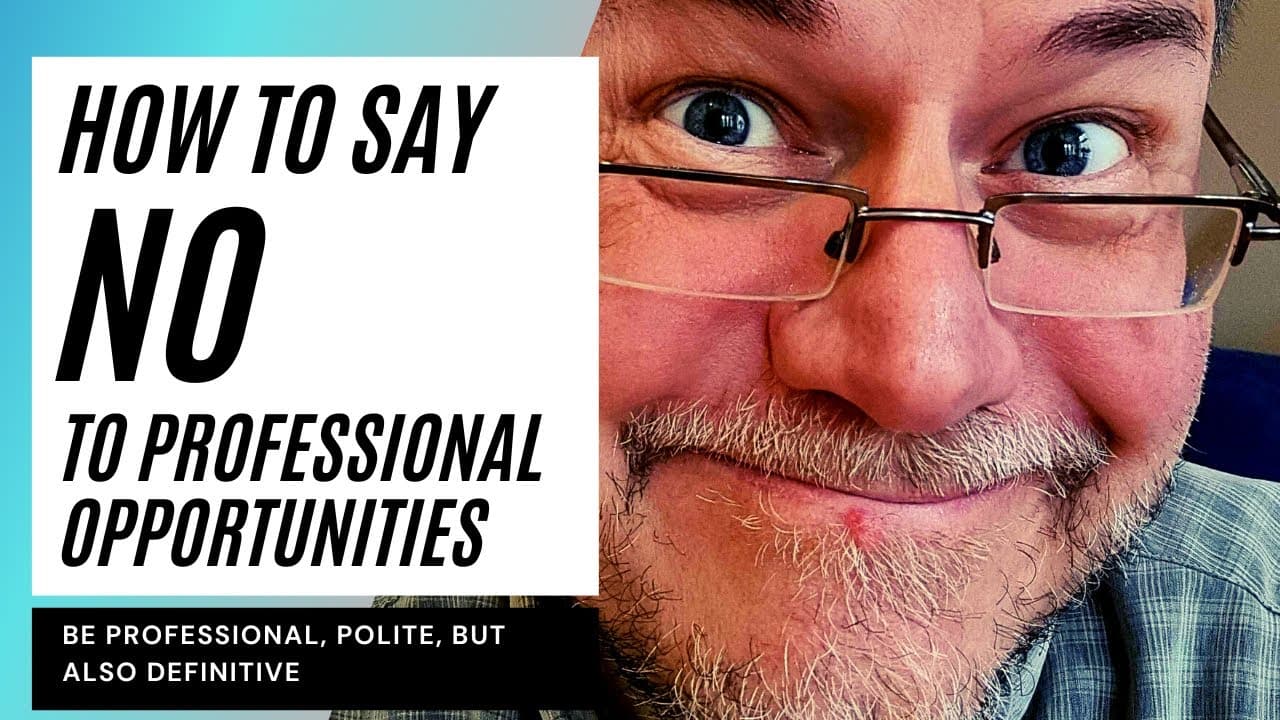
How to say no to professional opportunities #phd #assistantprofessor #postdoc #phdlife
TL;DR
Learn how to politely and definitively decline professional opportunities to avoid burnout and maintain your workload.
Transcript
hi there friends this video is about how to say no now I thought this would be mostly aimed at the level of Junior group leader for example but I think this is applicable to all career stages from doctoral student up because normally we are all going to be asked in the professional context to do more than we can actually accomplish so first of all ... Read More
Key Insights
- 💦 Saying no to professional opportunities is crucial to prevent overwhelm and maintain quality work.
- 🫡 Expressing gratitude and providing a simple reason for declining shows professionalism and respect.
- ❓ Being definitive in your response avoids unnecessary back-and-forth and prevents misunderstandings.
- ❎ It's important to avoid being negative about the offer or criticizing it, as it may negatively impact relationships.
- 🤗 Leaving the door open for future opportunities can be beneficial if you genuinely foresee potential collaboration.
- 🤟 Referring other potential candidates is optional but can be a helpful gesture if done with the other person's consent.
- 😚 Different strategies may apply when declining opportunities from work colleagues versus close friends.
Install to Summarize YouTube Videos and Get Transcripts
Explore YouTube Video Summarizer or Get YouTube Transcript Extractor
Questions & Answers
Q: Why is it important to learn how to say no professionally?
Learning how to say no professionally is essential to prevent overwhelming workloads, anxiety, and burnout. It allows you to maintain a healthy work-life balance and ensure you can deliver quality results on the commitments you do accept.
Q: How should you respond when declining an opportunity?
Start by expressing gratitude for being considered and explain your reason for declining in a concise and general manner. Avoid going into excessive detail to prevent arguments or negotiations.
Q: Is it okay to leave the door open for future opportunities when saying no?
Leaving the door open for future opportunities can be a nice gesture if you genuinely believe you may be able to collaborate in the future. However, be cautious not to give false hope or leave the door open if you have no intention of reconsidering.
Q: Should you refer the person to other potential candidates when declining an opportunity?
Referring other potential candidates is optional and can be helpful if you genuinely believe there are other suitable individuals. However, it's essential to ensure you have their consent and avoid assuming the person requesting help hasn't considered other options already.
Summary & Key Takeaways
-
Saying yes to too many opportunities can lead to anxiety and burnout, so it's important to know how to say no professionally.
-
When declining an opportunity, show appreciation for being asked and give a simple reason for declining, such as lack of time or expertise.
-
Be definitive in your response, avoid being negative about the offer, and leave the door open for future opportunities if desired.
Read in Other Languages (beta)
Share This Summary 📚
Summarize YouTube Videos and Get Video Transcripts with 1-Click
Try YouTube Summary with ChatGPT & Claude or YouTube Transcript Generator
Explore More Summaries from Life in academia 📚



Summarize YouTube Videos and Get Video Transcripts with 1-Click
Try YouTube Summary with ChatGPT & Claude or YouTube Transcript Generator