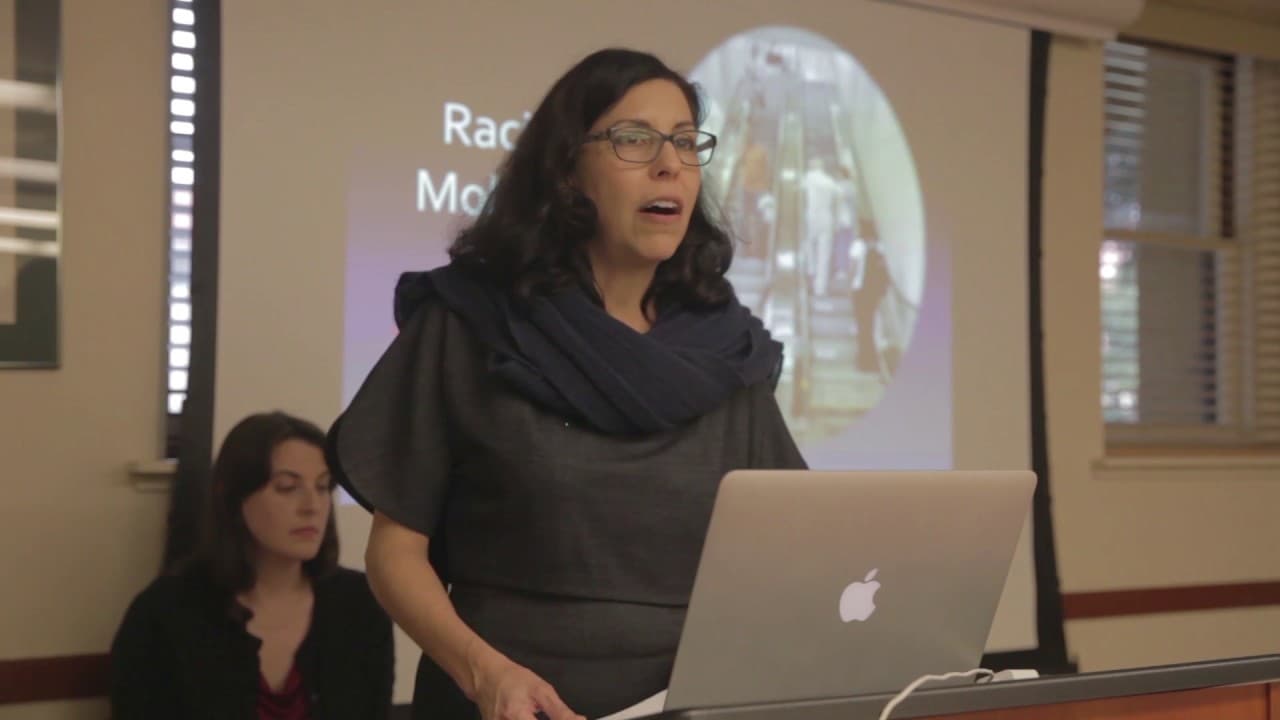
Racial Mobility: How Selective Fluidity Reinforces Social Inequality
TL;DR
Race is not a fixed characteristic, but rather a fluid and socially constructed concept that can change over time, impacting individual experiences and perpetuating racial inequality.
Transcript
alright good afternoon everyone and welcome thanks so much for coming to our winter faculty research fellows chautauqua for those of you that don't know me I'm Miriam ha madani the Associate Director of CCS re and it's my pleasure to welcome to today's event now before I turn it over to our moderator for today who is Paula Moya professor of English... Read More
Key Insights
- 🐎 Race is a socially constructed concept that can change over time, challenging the idea of race as a fixed characteristic.
- 🐎 Racial mobility can be influenced by structural changes in racial categories, categorical ambiguity, and the perception and stereotypes surrounding race.
- 🐎 Racial mobility reinforces racial inequalities by perpetuating stereotypes and maintaining the association between race and certain life outcomes.
Install to Summarize YouTube Videos and Get Transcripts
Explore YouTube Video Summarizer or Get YouTube Transcript Extractor
Questions & Answers
Q: How does the concept of racial mobility challenge traditional understandings of race?
Racial mobility challenges the idea that race is a fixed characteristic by showing that individuals can change racial categories over time. This challenges the notion that race is objective and inherent, highlighting the social construction of race.
Q: What factors influence racial mobility?
Factors such as changes in social status, including marriage, employment, education, and parenthood, can contribute to racial mobility. Additionally, the perception and stereotypes surrounding race can impact how individuals are classified.
Q: How does racial mobility perpetuate racial inequality?
Racial mobility can reinforce stereotypes and perpetuate racial inequalities. For example, those who experience negative life events such as unemployment or parenthood outside of marriage are more likely to be perceived as black, reinforcing negative stereotypes associated with blackness.
Q: How do researchers study racial mobility?
Researchers use quantitative methods, such as mobility tables and statistical modeling, to analyze changes in racial categories over time. However, the data currently available may not capture the full extent of racial performance or passing, limiting comprehensive analysis.
Summary & Key Takeaways
-
Racial mobility is the concept of individuals changing racial categories over time, challenging the notion that race is a fixed characteristic.
-
Structural mobility refers to changes in the structure of race, such as the addition or removal of categories, influencing how individuals are classified.
-
Categorical ambiguity occurs when the classification scheme itself is unclear or inconsistent, making it difficult to assign individuals to specific racial categories.
-
Racial performance or passing may also contribute to racial mobility, although the data does not currently allow for comprehensive analysis of this phenomenon.
Read in Other Languages (beta)
Share This Summary 📚
Summarize YouTube Videos and Get Video Transcripts with 1-Click
Try YouTube Summary with ChatGPT & Claude or YouTube Transcript Generator
Explore More Summaries from Stanford 📚





Summarize YouTube Videos and Get Video Transcripts with 1-Click
Try YouTube Summary with ChatGPT & Claude or YouTube Transcript Generator