When Your Brain Can't Accept Reality: Anosognosia
TL;DR
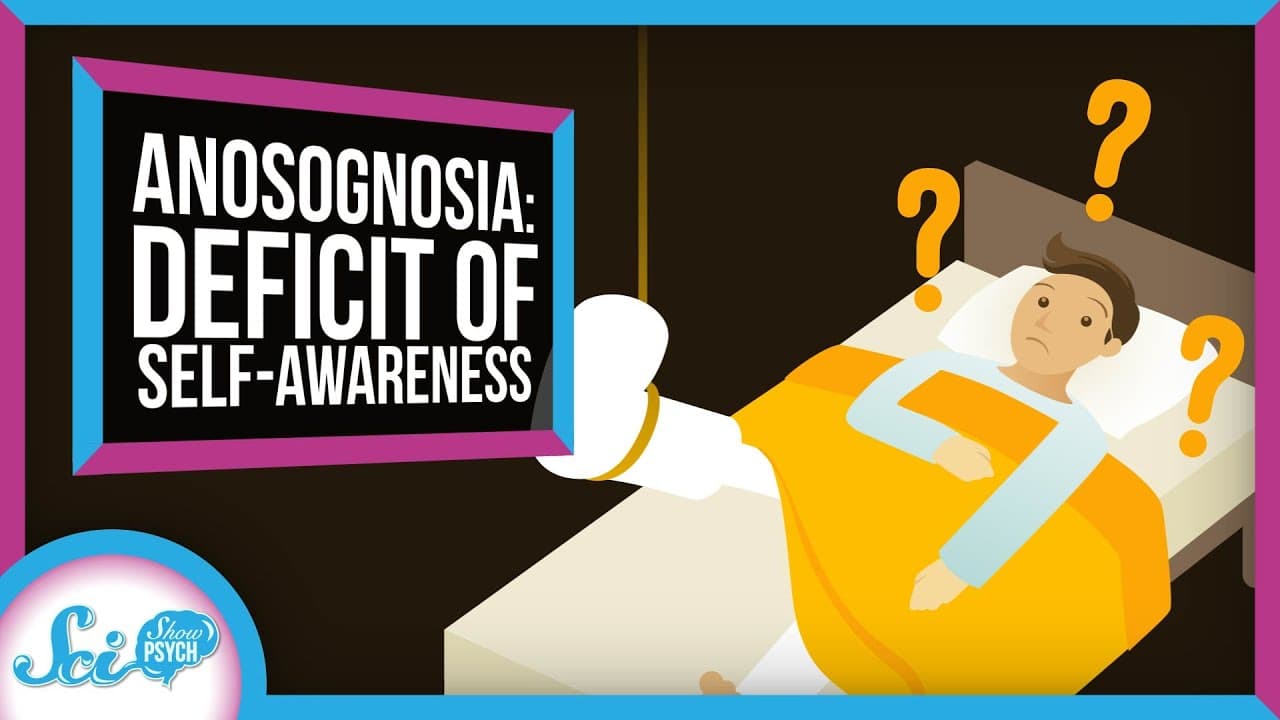
Anosognosia is a condition where individuals are unable to acknowledge or perceive their own disabilities or impairments, often caused by brain damage.
Transcript
Thanks to CuriosityStream for supporting this episode! Go to CuriosityStream.com/psych to learn more. [ ♪INTRO ] Back in the 1940s, a man suffered a series of injuries that left him mostly paralyzed and was confined to a hospital bed. Over time he grew more irritable and demanding of the staff, and if you asked him why he was there, he'd tell you h... Read More
Key Insights
- ❓ Anosognosia is a rare condition where individuals are unable to recognize their own disabilities or impairments.
- 🥳 It can be caused by different factors, including stroke, blindness, or damage to specific parts of the brain.
- 🧠 Anosognosia is not a result of denial or deliberate faking; it is a genuine inability of the brain to acknowledge or perceive the changes in reality.
- 💼 Treatment options, such as vestibular stimulation, can provide temporary relief and improve symptoms in some cases.
- 🧠 The brain's ability to recognize and understand the conditions of others demonstrates that anosognosia is not a case of deliberate denial.
- ❓ Anosognosia can occur in both physical and mental conditions, but this analysis focuses on the physical side of the condition.
- 🥺 Anosognosia can lead to difficulties in performing physical actions and may also affect cognitive abilities, making it hard for individuals to draw conclusions about their condition.
Install to Summarize YouTube Videos and Get Transcripts
Explore YouTube Video Summarizer or Get YouTube Transcript Extractor
Questions & Answers
Q: What is anosognosia?
Anosognosia is a condition where individuals are unable to acknowledge or perceive their own disabilities or impairments, often caused by brain damage.
Q: What are some common causes of anosognosia?
Anosognosia can be caused by conditions such as stroke, blindness, or damage to specific parts of the brain responsible for processing sensory information.
Q: Can anosognosia be temporary or reversible?
In some cases, anosognosia can be temporary or improve over time as the individual may start to notice patterns or make inferences about their condition. Vestibular stimulation can also provide temporary relief.
Q: Is anosognosia a form of denial?
No, anosognosia is not a form of denial or deliberate faking. It is a result of the brain's inability to process or comprehend the changes in reality.
Key Insights:
- Anosognosia is a rare condition where individuals are unable to recognize their own disabilities or impairments.
- It can be caused by different factors, including stroke, blindness, or damage to specific parts of the brain.
- Anosognosia is not a result of denial or deliberate faking; it is a genuine inability of the brain to acknowledge or perceive the changes in reality.
- Treatment options, such as vestibular stimulation, can provide temporary relief and improve symptoms in some cases.
- The brain's ability to recognize and understand the conditions of others demonstrates that anosognosia is not a case of deliberate denial.
- Anosognosia can occur in both physical and mental conditions, but this analysis focuses on the physical side of the condition.
- Anosognosia can lead to difficulties in performing physical actions and may also affect cognitive abilities, making it hard for individuals to draw conclusions about their condition.
- Anosognosia is a complex condition with no single cause, and further research is needed to understand its mechanisms fully.
Summary & Key Takeaways
-
Anosognosia is a condition where individuals are unable to recognize or accept their own physical or mental impairments.
-
It is rare and can be caused by different factors such as stroke, blindness, or damage to specific parts of the brain.
-
Anosognosia is not a form of denial, but rather a result of the brain's inability to process or comprehend the change in reality.
Read in Other Languages (beta)
Share This Summary 📚
Summarize YouTube Videos and Get Video Transcripts with 1-Click
Try YouTube Summary with ChatGPT & Claude or YouTube Transcript Generator
Explore More Summaries from SciShow Psych 📚


Summarize YouTube Videos and Get Video Transcripts with 1-Click
Try YouTube Summary with ChatGPT & Claude or YouTube Transcript Generator