Products
Features
YouTube Video Summarizer
Summarize YouTube videos
Web & PDF Highlighter
Highlight web pages & PDFs
Chat with PDF
Ask any PDF questions with AI
Ask AI Clone
Chat with your highlights & memories
Audio Transcriber
Transcribe audio files to text
Glasp Reader
Read and highlight articles
Kindle Highlight Export
Export your Kindle highlights
Idea Hatch
Hatch ideas from your highlights
Integrations
Obsidian Plugin
Notion Integration
Pocket Integration
Instapaper Integration
Medium Integration
Readwise Integration
Snipd Integration
Hypothesis Integration
Apps & Extensions
Chrome Extension
Safari Extension
Edge Add-ons
Firefox Add-ons
iOS App
Android App
Discover
Discover
Ideas
Discover new ideas and insights
Articles
Curated articles and insights
Books
Book recommendations by great minds
Posts
Essays and notes from readers
Quotes
Inspiring quotes collection
Videos
Curated videos and summaries
Explore Glasp
Glasp Newsletter
Weekly insights and updates
Glasp Talk
Interview series with great minds
Glasp Blog
Latest news and articles
Glasp Use Cases
Learn how others use Glasp
Build & Support
Glasp API
Access Glasp's API for developers
MCP Connector
Connect Glasp to Claude & ChatGPT
Community
Glasp Reddit Community
Students
Student discount and benefits
FAQs
Frequently Asked Questions
AboutPricing
DashboardLog inSign up

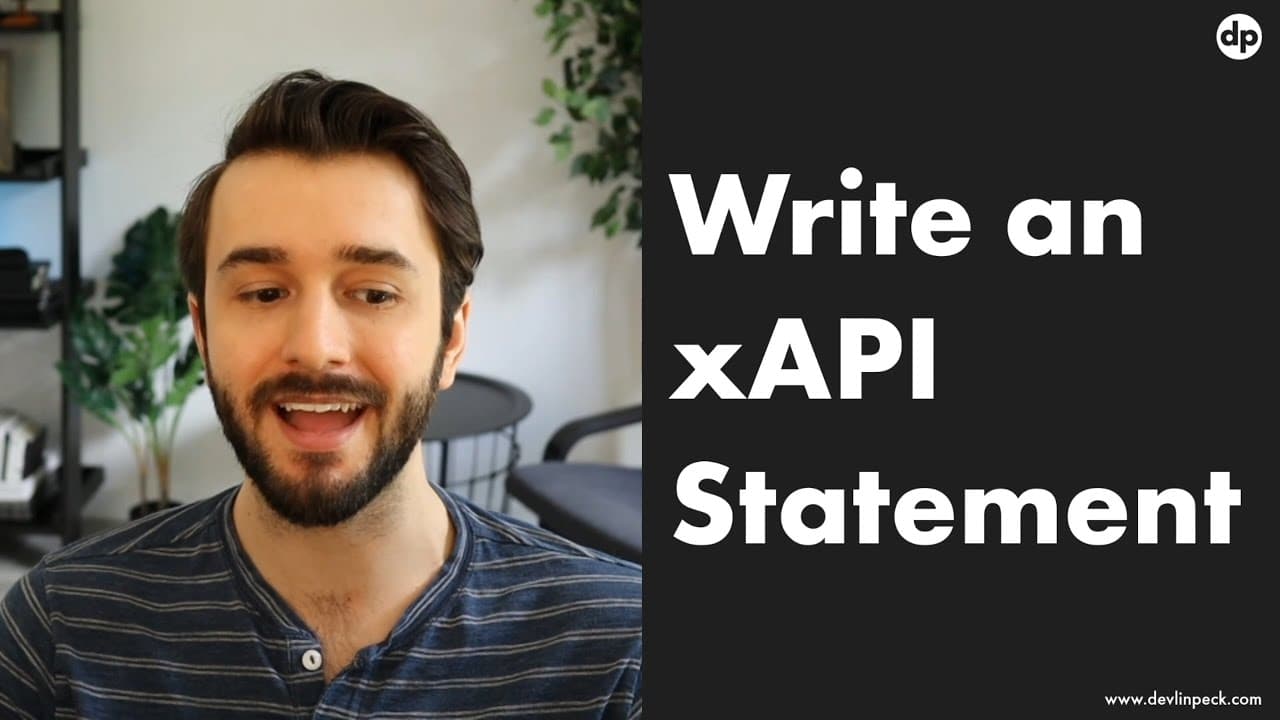
How to Write an xAPI Statement from Scratch
14.9K views
•
July 20, 2020
by
Devlin Peck
YouTube video player
How to Write an xAPI Statement from Scratch

TL;DR

Learn how to structure XAPI statements using JSON in this foundational tutorial.

Transcript

hello and welcome back to the channel in this video we're looking at how to write an x api statement and this is part one in a ten part series where we're looking at how to send and retrieve x api data from an articulate storyline course so if that sounds interesting to you then you are in the right place um yeah so this is a pretty foundational sk... Read More

Key Insights

  • 💁 XAPI statements consist of actors, verbs, and objects in JSON format.
  • 🙅 URIs are used to uniquely identify verbs and objects in XAPI statements.
  • ❓ Including display properties in verbs and objects enhances human readability of XAPI data.
  • 👻 JSON objects allow for nested structures within XAPI statements.
  • 🍵 Community agreed-upon URIs ensure consistency in XAPI statement interpretation.
  • 👨‍💻 Language codes in JSON objects enable multilingual support for XAPI data.
  • 🤩 Understanding JSON syntax and key-value pairs is crucial for XAPI statement creation.

Install to Summarize YouTube Videos and Get Transcripts

Explore YouTube Video Summarizer or Get YouTube Transcript Extractor

Questions & Answers

Q: What are the key components of an XAPI statement?

The key components of an XAPI statement are the actor, verb, and object, all structured in JSON format with key-value pairs.

Q: Why is JSON used for structuring XAPI data?

JSON is used for its flexibility and readability, making it easy to structure and interpret XAPI data for various web applications.

Q: How can you ensure unique identification in an XAPI statement?

By including specific properties like email addresses and URIs, XAPI statements can uniquely identify actors, verbs, and objects for accurate data representation.

Q: Why is using community agreed-upon URIs important in XAPI statements?

Using community agreed-upon URIs ensures interoperability and consistency in how verbs and objects are interpreted across different systems, enhancing data consistency.

Summary & Key Takeaways

  • XAPI statements are essential for sending and retrieving XAPI data.

  • XAPI statements consist of an actor, verb, and object in JSON format.

  • JSON objects follow key-value pairs and can contain nested objects.


Read in Other Languages (beta)

English

Share This Summary 📚

Summarize YouTube Videos and Get Video Transcripts with 1-Click

Download browser extensions on:

Try YouTube Summary with ChatGPT & Claude or YouTube Transcript Generator

Explore More Summaries from Devlin Peck 📚
How to Create a Music Player in Articulate Storyline, Part 2 thumbnail
How to Create a Music Player in Articulate Storyline, Part 2
Devlin Peck
eLearning Portfolio Review - Episode 7 thumbnail
eLearning Portfolio Review - Episode 7
Devlin Peck
Top 5 Writing Tips for Instructional Designers thumbnail
Top 5 Writing Tips for Instructional Designers
Devlin Peck
Instructional Designer vs  eLearning Developer thumbnail
Instructional Designer vs eLearning Developer
Devlin Peck
How to Land a Six-Figure Instructional Design Job thumbnail
How to Land a Six-Figure Instructional Design Job
Devlin Peck
How to Measure Duration with xAPI - Live Workshop thumbnail
How to Measure Duration with xAPI - Live Workshop
Devlin Peck

Summarize YouTube Videos and Get Video Transcripts with 1-Click

Download browser extensions on:

Try YouTube Summary with ChatGPT & Claude or YouTube Transcript Generator

Apps & Extensions

  • Chrome Extension
  • Safari Extension
  • Edge Add-ons
  • Firefox Add-ons
  • iOS App
  • Android App

Key Features

  • YouTube Video Summarizer
  • Web & PDF Summarizer
  • Web & PDF Highlighter
  • Chat with PDF
  • Ask AI Clone
  • Audio Transcriber
  • Glasp Reader
  • Kindle Highlight Export
  • Idea Hatch

Integrations

  • Obsidian Plugin
  • Notion Integration
  • Pocket Integration
  • Instapaper Integration
  • Medium Integration
  • Readwise Integration
  • Snipd Integration
  • Hypothesis Integration

More Features

  • APIs
  • MCP Connector
  • Blog & Post
  • Embed Links
  • Image Highlight
  • Personality Test
  • Quote Shots

Company

  • About us
  • Blog
  • Community
  • FAQs
  • Job Board
  • Newsletter
  • Pricing
Terms

•

Privacy

•

Guidelines

© 2026 Glasp Inc. All rights reserved.