How to Sell Marketing w/Alex Schlinsky: DigitalMarketer Podcast
TL;DR
Alex Schlinsky shares strategies for handling sales objections in marketing.
Transcript
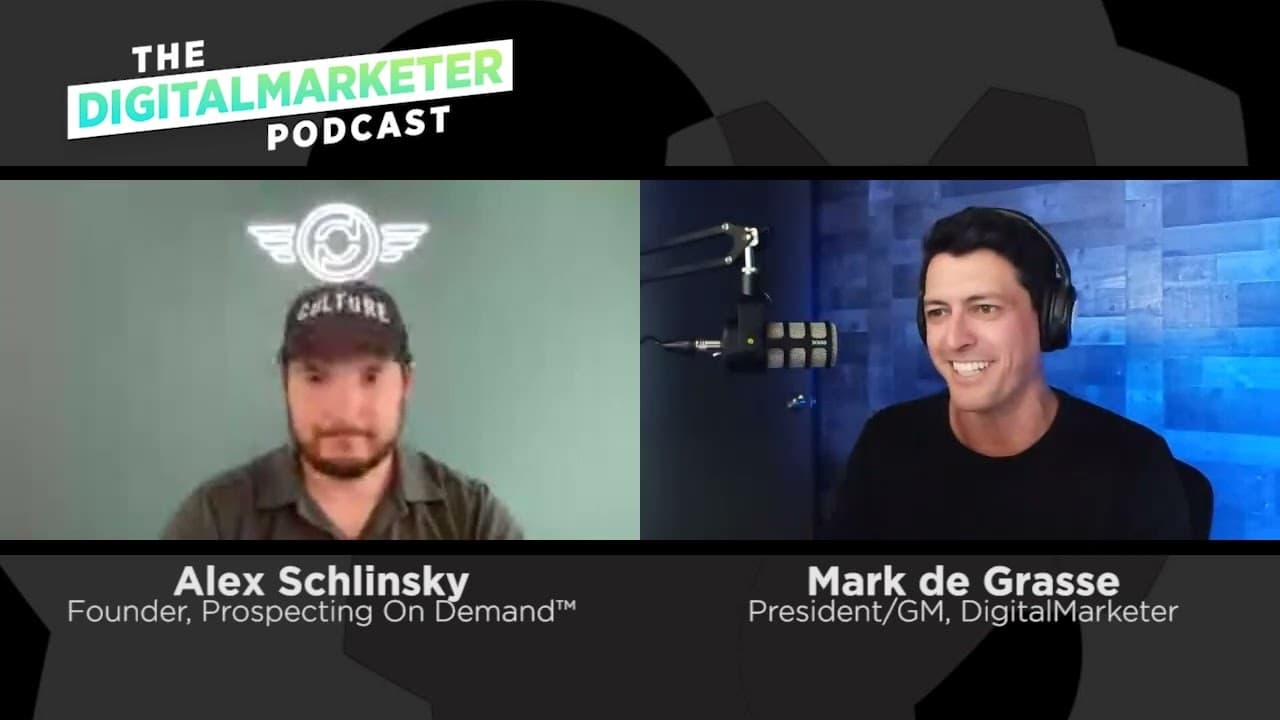
hey everyone welcome to the digital marketer podcast i'm mark degrass president of digital marketer and today i have an awesome guest alex zlinski he is the owner of prospecting on demand mastermind and has sold over 15 million in the last 10 years uh welcome alex hey mark thanks so much for having me what's up digital marketer community appreciate... Read More
Key Insights
- Alex Schlinsky emphasizes the importance of framing sales calls with clear expectations, using the 'time and result' and 'why are you on this call' frames to set the stage for effective communication.
- The 'one call close' strategy focuses on addressing objections during the call, using the 4Ws framework: where are you now, where do you want to go, what's the obstacle, and what's the urgency.
- Understanding the psychology of buyers, such as the PAC model (parent, adult, child), helps tailor the sales approach to address skepticism, logic, and emotional desires.
- Social proof and storytelling are powerful tools in overcoming objections, providing relatable success stories to potential clients to build trust and credibility.
- The cost of inaction is a critical point to address, highlighting the potential losses or missed opportunities if the client chooses not to proceed with the proposed solution.
- Handling the 'I need to talk to my spouse/partner' objection involves isolating the real concern, offering to speak directly with the partner, and proposing a refundable deposit to hold the client's spot.
- Framing the investment as an 'ATM' that returns more than what is put in helps shift the client's mindset from viewing it as a cost to seeing it as a strategic investment.
- Pre-handling common objections by addressing them early in the conversation can prevent them from derailing the sales process later on.
Install to Summarize YouTube Videos and Get Transcripts
Explore YouTube Video Summarizer or Get YouTube Transcript Extractor
Questions & Answers
Q: What is the 'one call close' strategy?
The 'one call close' strategy is a sales approach that combines the initial introduction and the sales pitch into a single call. It uses the 4Ws framework to address objections upfront: where are you now, where do you want to go, what's the obstacle, and what's the urgency. This method aims to close the deal within one conversation by providing all necessary information and addressing concerns as they arise.
Q: How does Alex Schlinsky suggest handling the 'I need to talk to my spouse' objection?
Alex suggests isolating the objection to ensure it's not a veiled no. If the client is genuinely interested but needs spousal approval, he proposes offering to speak directly with the spouse to provide clarity and answer questions. Additionally, he recommends a refundable deposit to hold the client's spot, ensuring they are committed while allowing time for spousal consultation.
Q: What role does social proof play in overcoming sales objections?
Social proof is crucial in overcoming sales objections as it provides relatable success stories and builds trust. By sharing examples of similar clients who have achieved desired results, salespeople can demonstrate the effectiveness of their solutions. This approach helps to alleviate doubts and reinforces the client's confidence in making a purchase decision.
Q: Why is it important to address the cost of inaction in sales?
Addressing the cost of inaction is important because it highlights the potential losses or missed opportunities if the client chooses not to proceed with the proposed solution. By framing the decision as an investment that can prevent future setbacks or inefficiencies, salespeople can motivate clients to act promptly, emphasizing the long-term benefits over short-term hesitations.
Q: How does the PAC model influence sales strategies?
The PAC model, consisting of the parent, adult, and child ego states, influences sales strategies by tailoring approaches to address skepticism, logic, and emotional desires. Understanding these states helps salespeople frame their pitches to overcome objections, provide logical solutions, and tap into the client's aspirations, creating a more compelling and personalized sales experience.
Q: What is the significance of framing in the sales process?
Framing is significant in the sales process because it sets clear expectations and guides the conversation. By establishing the purpose and duration of the call from the outset, salespeople can manage the client's expectations, prevent misunderstandings, and ensure that all necessary topics are covered efficiently. Proper framing also helps in pre-handling objections and maintaining control of the call.
Q: How can marketers use storytelling to improve sales?
Marketers can use storytelling to improve sales by sharing relatable success stories that illustrate the benefits and effectiveness of their solutions. Storytelling helps to build emotional connections with clients, making the sales pitch more engaging and memorable. By demonstrating how others have overcome similar challenges, marketers can inspire confidence and motivate clients to take action.
Q: Why is it important to differentiate between 'cost' and 'investment' in sales?
Differentiating between 'cost' and 'investment' is important because it shifts the client's mindset from viewing the expenditure as a loss to seeing it as a strategic move with potential returns. By framing the expenditure as an investment, salespeople can emphasize the value and benefits of their solution, making it easier for clients to justify the expense and commit to the purchase.
Summary & Key Takeaways
-
Alex Schlinsky from Prospecting On Demand shares his expertise on handling sales objections in the DigitalMarketer Podcast. He outlines the 'one call close' strategy, emphasizing the importance of framing calls and addressing objections upfront.
-
The conversation delves into the psychology of buying decisions, using the PAC model to tailor approaches to different ego states. Alex highlights the power of social proof and the importance of addressing the cost of inaction.
-
Alex provides practical solutions for common objections, such as needing to consult a partner, by suggesting direct communication with partners and offering refundable deposits. The episode is rich with insights for marketers looking to improve their sales skills.
Read in Other Languages (beta)
Share This Summary 📚
Summarize YouTube Videos and Get Video Transcripts with 1-Click
Try YouTube Summary with ChatGPT & Claude or YouTube Transcript Generator
Explore More Summaries from DigitalMarketer 📚
Summarize YouTube Videos and Get Video Transcripts with 1-Click
Try YouTube Summary with ChatGPT & Claude or YouTube Transcript Generator