Pronunciation: Assimilation of /d/ and /b/
TL;DR
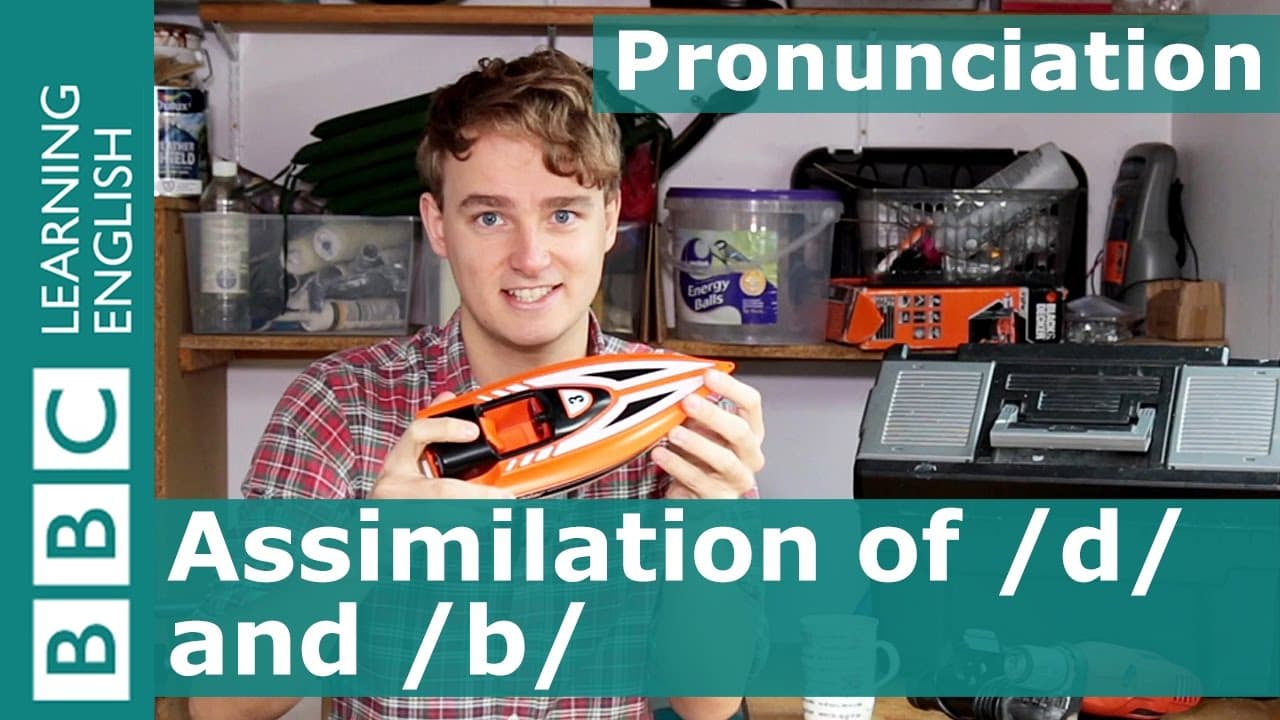
Tim explains assimilation of /d/ to /b/ in fluent English.
Transcript
Hi. I'm Tim and this is my Pronunciation workshop. Here I'm gonna show you how English is really spoken. Come on, let's go inside. Now, do you know the word speeb? No, of course not because it's not a real word. Or is it? Listen to some people in London talking about this. It's a speed boat. Speed boat. Speed boat. Speed boat. Speed boat. Now, the ... Read More
Key Insights
- Assimilation occurs when the /d/ sound at the end of a word changes to a /b/ when the next word starts with /b/.
- This phonetic change is common in fluent English speech, making words blend smoothly together.
- Examples include 'speed boat' becoming 'speebboat', illustrating the assimilation process in everyday language.
- Tim provides real-life examples, such as 'good boy' and 'rude before', to demonstrate this phonetic phenomenon.
- The workshop encourages active participation through a listen-and-repeat exercise to practice the pronunciation shift.
- Assimilation is a natural part of spoken English, often unnoticed by native speakers but challenging for learners.
- Tim's workshop aims to improve learners' understanding of natural English speech patterns through practical examples.
- The session ends with a personal anecdote, adding a relatable touch to the linguistic lesson.
Install to Summarize YouTube Videos and Get Transcripts
Explore YouTube Video Summarizer or Get YouTube Transcript Extractor
Questions & Answers
Q: What is the main topic of Tim's pronunciation workshop?
The main topic of Tim's pronunciation workshop is the assimilation of the /d/ sound into a /b/ sound when it is followed by a word that begins with /b/. This phonetic change is a common feature of fluent English speech and helps words blend together smoothly.
Q: How does the assimilation of /d/ to /b/ occur in speech?
The assimilation of /d/ to /b/ occurs when a word ending with the sound /d/ is immediately followed by a word starting with /b/. In fluent speech, the /d/ sound changes to a /b/ and merges with the following /b/, creating a smoother transition between words.
Q: Can you provide examples of sentences where this assimilation occurs?
Examples of sentences where this assimilation occurs include 'speed boat', which becomes 'speebboat', 'good boy', and 'rude before'. In each case, the /d/ sound at the end of a word changes to a /b/ when followed by a word starting with /b/, demonstrating the assimilation process.
Q: What is the purpose of the listen-and-repeat exercise in the workshop?
The purpose of the listen-and-repeat exercise in the workshop is to help participants practice and internalize the pronunciation shift caused by assimilation. By repeating examples like 'good boy' and 'rude before', learners can improve their understanding and pronunciation of natural English speech patterns.
Q: Why is assimilation important for English learners to understand?
Assimilation is important for English learners to understand because it is a common feature of natural spoken English. Recognizing and practicing this phonetic change can help learners sound more fluent and understand native speech better, as words often blend together in everyday conversation.
Q: What additional resources does Tim recommend for learning pronunciation?
Tim recommends visiting the BBC Learning English website for additional resources on learning pronunciation. The website offers various courses and materials that can help learners improve their understanding and pronunciation of English, complementing the insights gained from the workshop.
Q: What personal anecdote does Tim share at the end of the workshop?
At the end of the workshop, Tim shares a personal anecdote about wanting to own a real speed boat. He recalls a promise from his father to buy him a boat if he was a good boy, adding a humorous and relatable touch to the linguistic lesson.
Q: How does Tim illustrate the assimilation process in his workshop?
Tim illustrates the assimilation process by providing examples of phrases where the /d/ sound changes to /b/, such as 'speed boat' becoming 'speebboat'. He uses slow-motion video to show the mouth shape during pronunciation, helping learners visualize and understand the phonetic change.
Summary & Key Takeaways
-
Tim's pronunciation workshop focuses on the assimilation of the /d/ sound into /b/ when followed by a /b/ sound, as in 'speed boat'. He explains that this is a common occurrence in fluent English speech, where words blend together naturally.
-
Participants are encouraged to practice this assimilation through a series of examples, including phrases like 'good boy' and 'rude before'. The workshop aims to enhance understanding and pronunciation of natural English speech.
-
Tim concludes with a personal story about wanting a speed boat, adding a lighthearted element to the lesson. For further learning, viewers are directed to the BBC Learning English website for more resources.
Read in Other Languages (beta)
Share This Summary 📚
Summarize YouTube Videos and Get Video Transcripts with 1-Click
Try YouTube Summary with ChatGPT & Claude or YouTube Transcript Generator
Explore More Summaries from BBC Learning English 📚

Summarize YouTube Videos and Get Video Transcripts with 1-Click
Try YouTube Summary with ChatGPT & Claude or YouTube Transcript Generator