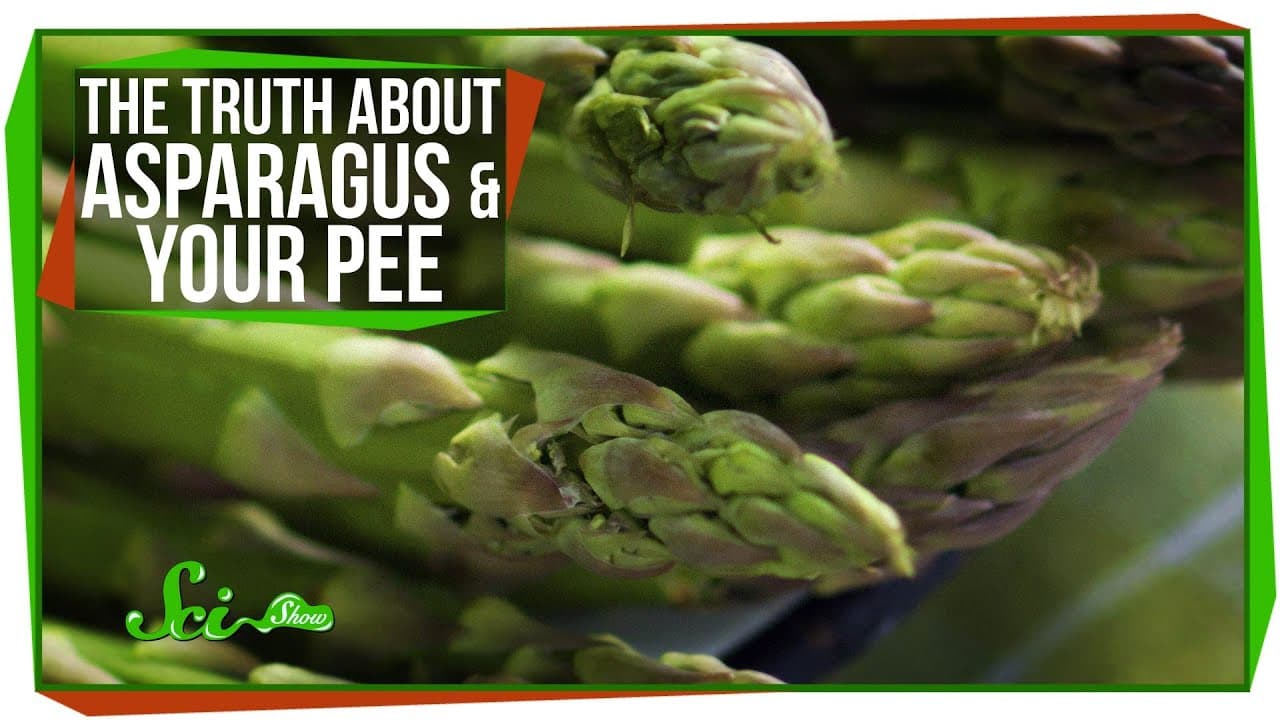
The Truth About Asparagus and Your Pee
TL;DR
Asparagus contains a stinky chemical called asparagusic acid that, when digested, produces sulfur compounds, causing some people's urine to smell, while others can't smell it.
Transcript
[Intro] You've probably never smelled a skunk and wished that you could reproduce that lovely odor with your own bodily fluids, but if you're among a certain 40% of humans, you actually kind of can. All you gotta do is eat some asparagus, wait a little bit, and then pee on your enemies. Asparagus is a weird little vegetable, it's a monocot, meaning... Read More
Key Insights
- ❓ Asparagus contains asparagusic acid, which produces sulfur compounds responsible for the smelly urine.
- 👃 Some individuals produce smelly urine but cannot smell it, while others can produce and smell it, and some do not produce it but can detect traces in others.
- 🖐️ Genetic mutations play a role in determining excretion and smelling abilities.
- 🫣 Asparagus pee has been a subject of scientific studies since the 1890s.
- ❓ The compounds responsible for the odor are found exclusively in asparagus.
- 😋 Different foods, like coffee and garlic, can also change the chemistry of urine.
- 👃 The non-smelling ability is due to a specific anosmia caused by a mutated smell-receptor gene.
Install to Summarize YouTube Videos and Get Transcripts
Explore YouTube Video Summarizer or Get YouTube Transcript Extractor
Questions & Answers
Q: Why does asparagus make some people's urine smell?
Asparagus contains asparagusic acid, which produces sulfur compounds when digested, causing the distinct odor in some people's urine.
Q: Is it true that some people produce smelly urine but can't smell it?
Yes, some individuals produce the smelly compounds but lack the ability to smell them; this is due to genetic mutations in their smell-receptor genes.
Q: Do all people produce the smelly compounds after eating asparagus?
No, some people do not produce the compounds due to a genetic mutation that prevents excretion.
Q: What determines whether someone can detect traces of asparagus in other people's urine?
Genetic mutations determine an individual's ability to detect traces of asparagus in other people's urine. Those without the ability to produce the compounds can still detect them.
Summary & Key Takeaways
-
Asparagus contains asparagusic acid, which produces sulfur compounds when digested, causing some people to have smelly urine.
-
Some individuals produce smelly urine but can't smell it, while others produce it and can smell it, and some don't produce it but can detect traces of asparagus in other people's urine.
-
Genetic mutations determine whether someone is an excretor or non-excretor and a smeller or non-smeller.
Read in Other Languages (beta)
Share This Summary 📚
Summarize YouTube Videos and Get Video Transcripts with 1-Click
Try YouTube Summary with ChatGPT & Claude or YouTube Transcript Generator
Explore More Summaries from SciShow 📚


Summarize YouTube Videos and Get Video Transcripts with 1-Click
Try YouTube Summary with ChatGPT & Claude or YouTube Transcript Generator