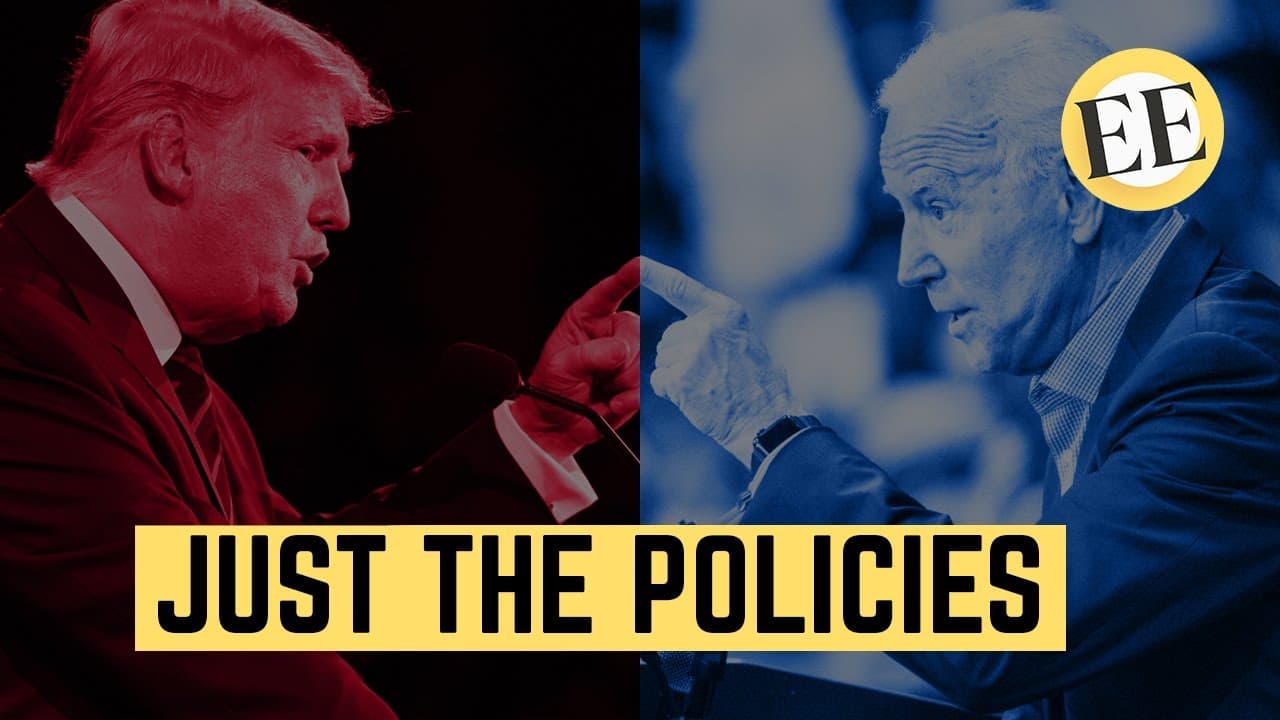
How Do Trump and Biden's Economic Policies Compare?
TL;DR
The video explores the economic policies proposed by Donald Trump and Joe Biden during the 2020 U.S. election. Trump's policies focus on maintaining tax cuts and reducing government spending, while Biden aims to increase taxes on high earners to fund social programs. The video also discusses the complexities of fiscal policy implementation and the potential impact of each candidate's plans on the U.S. economy.
Transcript
The US federal election will be held in 2 days from when this video is published. The process of electing who will go on to be the most powerful man in the world always makes for big news but perhaps never more so than in 2020. The United States is currently in the grips of a major health crisis that has caused untold suffering to people directly a... Read More
Key Insights
- Fiscal policy involves government taxation and spending, and is not solely controlled by the President.
- Trump's economic policies focus on tax cuts, especially for corporations, to stimulate economic growth.
- Biden plans to increase taxes on high-income earners and corporations to fund government spending on social programs.
- The success of fiscal policies depends on the timing and economic context in which they are implemented.
- Government spending is crucial during economic crises to maintain production and consumption levels.
- The U.S. needs additional economic stimulus to support individuals and businesses during the COVID-19 crisis.
- Political dynamics, such as party control in Congress, significantly affect the implementation of fiscal policies.
- Economic policy decisions have long-term implications on wealth inequality and market stability.
Install to Summarize YouTube Videos and Get Transcripts
Explore YouTube Video Summarizer or Get YouTube Transcript Extractor
Questions & Answers
Q: How do Trump's economic policies differ from Biden's?
Trump's economic policies focus on maintaining tax cuts for individuals and corporations, aiming to stimulate economic growth through reduced government intervention. In contrast, Biden's policies propose increasing taxes on high-income earners and corporations to fund government spending on infrastructure, education, and social programs, aiming to address wealth inequality and boost economic stability.
Q: What role does fiscal policy play in the U.S. economy?
Fiscal policy, involving government taxation and spending, plays a crucial role in managing economic stability and growth. It is used to influence economic activity, control inflation, and address unemployment. The effectiveness of fiscal policy depends on the economic context and the ability of government bodies to implement policies efficiently, considering the political landscape and economic conditions.
Q: Why is government spending important during economic crises?
Government spending is vital during economic crises as it acts as a stabilizing force, providing financial support to individuals and businesses. This helps maintain production and consumption levels, preventing further economic decline. By injecting funds into the economy, the government can stimulate demand, support employment, and lay the groundwork for long-term economic recovery and growth.
Q: What challenges do fiscal policies face in implementation?
Fiscal policies face challenges such as political opposition, complex legislative processes, and the need for compromise between different government bodies. The President's proposals must pass through Congress, where they can be amended or rejected. Additionally, external factors like economic conditions, market stability, and unforeseen events can impact the effectiveness and timing of policy implementation.
Q: How does political control affect fiscal policy outcomes?
Political control significantly influences fiscal policy outcomes, as party majorities in Congress can determine the success or failure of proposed policies. When the President's party controls both houses of Congress, policies can be implemented more swiftly. However, divided control often leads to compromises or stalemates, affecting the efficiency and effectiveness of policy measures.
Q: What impact do tax cuts have on the economy?
Tax cuts can stimulate economic growth by increasing disposable income for individuals and businesses, encouraging spending and investment. However, the impact varies depending on the economic context and how the tax savings are utilized. While tax cuts can boost financial markets and corporate profits, they may also contribute to wealth inequality and reduced government revenue for public services.
Q: Why is timing important in fiscal policy implementation?
Timing is crucial in fiscal policy implementation because the economic context determines the policy's effectiveness. Policies that are suitable during economic prosperity may not be appropriate during downturns. For instance, tax cuts may stimulate growth in a strong economy, but during a crisis, increased government spending may be more effective in supporting recovery and stability.
Q: What are the potential consequences of delaying economic stimulus?
Delaying economic stimulus can exacerbate economic downturns by prolonging financial hardships for individuals and businesses. It can lead to higher unemployment, reduced consumer spending, and increased economic uncertainty. Timely stimulus measures are essential to provide immediate support, stabilize the economy, and lay the foundation for a sustainable recovery, preventing long-term negative impacts on economic growth and stability.
Summary & Key Takeaways
-
The video examines the economic policies of Trump and Biden, highlighting their differing approaches to taxation and government spending. Trump's policies emphasize tax cuts for growth, while Biden focuses on increasing taxes to support social programs. The video also delves into the complexities of fiscal policy and the importance of timing in policy implementation.
-
Fiscal policy is a complex process involving multiple government bodies, and the President's role is limited to proposing ideas for Congress to consider. The video explains how political dynamics and economic conditions influence the success of fiscal policies, using the 2020 U.S. election as a case study.
-
The video discusses the need for additional economic stimulus in the U.S. to address the COVID-19 crisis. It highlights the potential impact of delaying stimulus efforts due to political maneuvers and emphasizes the importance of timely government intervention to support economic recovery and stability.
Read in Other Languages (beta)
Share This Summary 📚
Summarize YouTube Videos and Get Video Transcripts with 1-Click
Try YouTube Summary with ChatGPT & Claude or YouTube Transcript Generator
Explore More Summaries from Economics Explained 📚

Summarize YouTube Videos and Get Video Transcripts with 1-Click
Try YouTube Summary with ChatGPT & Claude or YouTube Transcript Generator