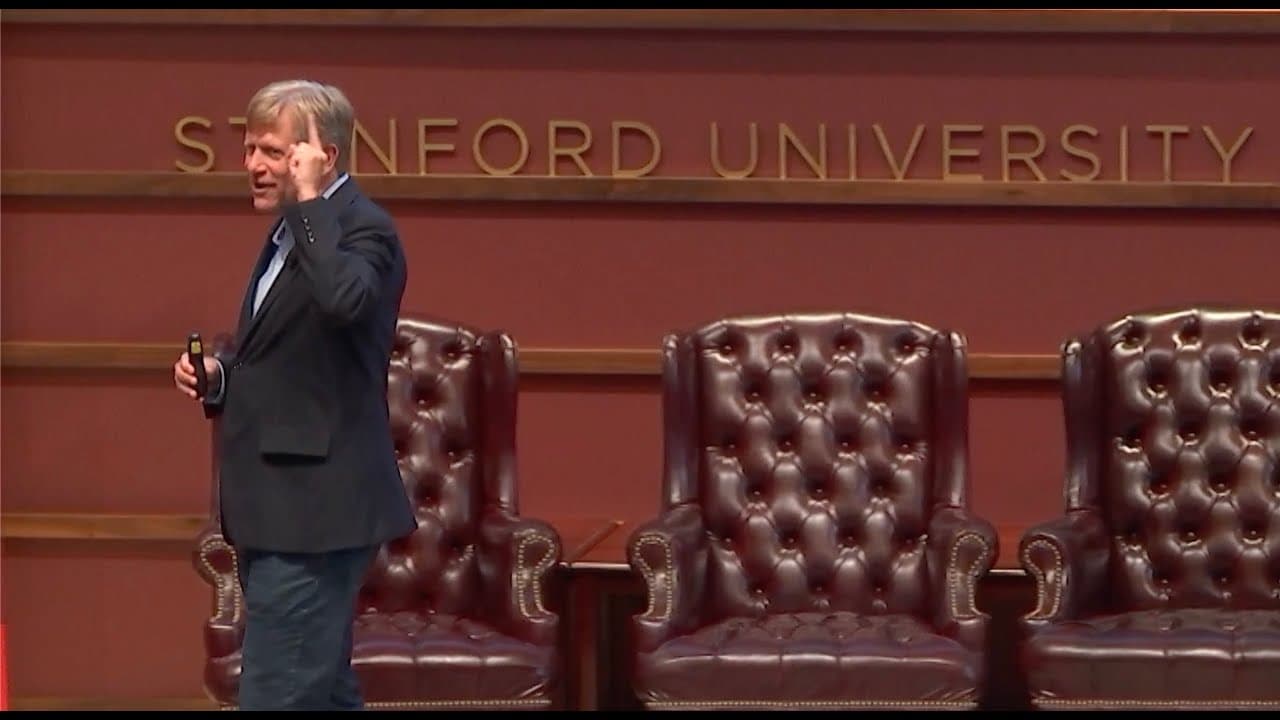
Explaining the Causes and Consequences of Putin’s Invasion of Ukraine with Mike McFaul
TL;DR
The speaker discusses the current conflict in Europe, highlighting the potential return to great power wars and the use of nuclear weapons, and analyzes the causes and implications of the war in Ukraine.
Transcript
I'm going to talk about some pretty scary things today, so I apologize for that upfront. I'm going to end on a good note if I can get to my last slides, but we are live in a pretty scary times. And I just want to remind you where we're at in this moment in history. We're in a moment where we're witnessing the first major conventional war in Europe ... Read More
Key Insights
- ↩️ The current conflict in Europe, specifically in Ukraine, is a cause for concern due to the potential return to great power wars and the use of nuclear weapons.
- ✊ The causes of the conflict are complex, including power politics, NATO expansion, and Russia's domestic politics, with each argument having some validity.
- ✌️ The current state of the conflict is uncertain, with possibilities ranging from a Russian victory to a complete Ukrainian victory or a long-term stalemate.
- 😇 The conflict holds moral implications, as it involves the annexation of territory and the impact on innocent lives, as well as long-term implications for the international system.
Install to Summarize YouTube Videos and Get Transcripts
Explore YouTube Video Summarizer or Get YouTube Transcript Extractor
Questions & Answers
Q: What are the three main arguments for the causes of the conflict in Ukraine?
The three main arguments are power politics, NATO expansion, and Russia's domestic politics. Power politics suggests that Russia is behaving like a normal great power, as historical patterns show the growth of powerful countries at the expense of weaker ones. NATO expansion focuses on the idea that the West's actions, specifically the expansion of NATO, triggered Russia's invasion of Ukraine. Lastly, Russia's domestic politics, driven by Putin's concerns about democratic movements on its borders and his desire to maintain control, provides another explanation.
Q: What are the potential long-term implications for Ukraine if it wins or loses the conflict?
If Ukraine wins, it would reassure NATO allies, deter China, and potentially lead to a renewed democratic momentum. However, if Ukraine loses, NATO allies would be nervous and require more support, China would be emboldened, and the perception of declining democracy would grow.
Q: What role does the speaker believe Stanford and its community should play in this conflict?
The speaker argues that Stanford should be purposeful in engaging with the conflict. This includes teaching and researching more about Ukraine, supporting programs and initiatives that involve Ukrainians, and actively being involved in the conflict through academic and diplomatic efforts.
Q: Is there a possibility of nuclear weapons being used in the conflict, and what would the consequences be?
While the speaker believes that the probability of a nuclear strike against the US is low, there is a higher possibility of a tactical nuclear weapon being used in Ukraine. The consequences would include intensified conflict, a potential deterrence to providing Ukraine with further military support, and isolation for Russia on the international stage.
Key Insights:
- The current conflict in Europe, specifically in Ukraine, is a cause for concern due to the potential return to great power wars and the use of nuclear weapons.
- The causes of the conflict are complex, including power politics, NATO expansion, and Russia's domestic politics, with each argument having some validity.
- The current state of the conflict is uncertain, with possibilities ranging from a Russian victory to a complete Ukrainian victory or a long-term stalemate.
- The conflict holds moral implications, as it involves the annexation of territory and the impact on innocent lives, as well as long-term implications for the international system.
- Stanford and its community should be engaged in understanding, analyzing, and actively participating in efforts related to the conflict, considering both moral and practical reasons for involvement.
Summary & Key Takeaways
-
The speaker highlights the scary times in which we live, with the first major conventional war in Europe since World War Two and the potential use of nuclear weapons.
-
The conflict in Ukraine is discussed, with an emphasis on the three main arguments for the causes of the conflict: power politics, NATO expansion, and Russia's domestic politics.
-
The speaker addresses the current state of the conflict, the uncertainties of how it will end, and the potential long-term implications for Ukraine and Russia.
Read in Other Languages (beta)
Share This Summary 📚
Summarize YouTube Videos and Get Video Transcripts with 1-Click
Try YouTube Summary with ChatGPT & Claude or YouTube Transcript Generator
Explore More Summaries from Stanford Alumni 📚
Summarize YouTube Videos and Get Video Transcripts with 1-Click
Try YouTube Summary with ChatGPT & Claude or YouTube Transcript Generator