The language of wine - 6 Minute English
TL;DR
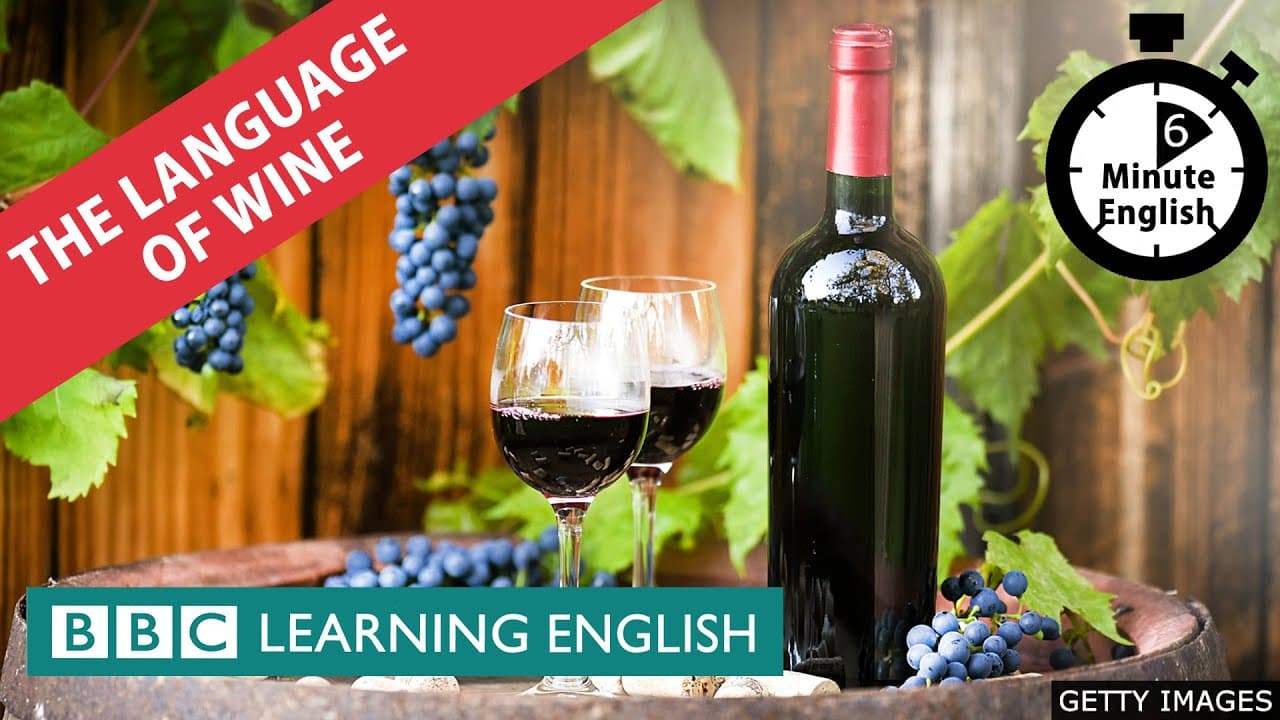
Discusses wine appreciation and the role of sommeliers.
Transcript
Hi. Neil from BBC Learning English here. Just to let you know, we are offering a new weekly extra episode of 6 Minute English - exclusively on our website! So, go to bbclearingenglish.com to hear Georgina and I discussing how colour can affect your mood. It’s available now. So, see you there! bbclearingenglish.com Hello. This is 6 Minute English fr... Read More
Key Insights
- Wine is not only a beverage but also a historical and cultural commodity that can be invested in and sold at auctions.
- A sommelier is a trained professional who specializes in wine service and advice, often dedicating significant time and effort to mastering their craft.
- The perception of wine quality can be influenced by its price, with research suggesting that higher prices can make people believe the wine tastes better.
- The word 'plonk' is used to describe cheap and poor-quality wine, while 'connoisseur' refers to someone with significant knowledge and enjoyment of a particular subject.
- The ability to distinguish and appreciate different tastes in wine is referred to as one's 'palate,' which sommeliers train extensively.
- The concept of 'sheer' is used to emphasize the extent of something, such as the dedication sommeliers have towards wine.
- The brain encodes information about wine, including its price, which can affect how we perceive its taste and quality.
- In 2018, a bottle of wine from 1774 sold for $120,800 at an auction, highlighting wine's value as a collectible item.
Install to Summarize YouTube Videos and Get Transcripts
Explore YouTube Video Summarizer or Get YouTube Transcript Extractor
Questions & Answers
Q: What is the role of a sommelier?
A sommelier is a professional trained in wine service and advice, often found in restaurants. They have extensive knowledge of different types of wine and their flavors or aromas, known as notes. Sommeliers dedicate significant time to training their palate and understanding wine to provide expert advice to customers.
Q: How does price influence the perception of wine taste?
Research indicates that the price of wine can influence our perception of its taste. When we see a higher price tag, our brain encodes this information and can make us believe that the wine tastes better. This suggests that our enjoyment of wine can be affected by psychological factors related to its cost.
Q: What does the term 'plonk' refer to?
The term 'plonk' is used to describe cheap, poor-quality wine. It is often contrasted with more expensive or higher-quality wines that are typically appreciated by connoisseurs. Despite its negative connotation, some people may still enjoy plonk for its affordability and simplicity.
Q: What was the record-breaking price of a bottle of wine sold in 2018?
In 2018, a bottle of wine dating back to 1774 was sold at an auction in eastern France for a record-breaking price of $120,800. This highlights the value of wine not only as a beverage but also as a collectible and investment item, with historical bottles fetching high prices.
Q: Why might someone choose to train as a sommelier?
Training as a sommelier involves a deep passion for wine and a desire to master the art of wine service and tasting. Sommeliers often undergo extensive training to refine their palate, learn about different wine regions and varieties, and provide expert advice and service to enhance the dining experience for customers.
Q: What is meant by the term 'connoisseur'?
A 'connoisseur' is someone who enjoys a particular subject and possesses extensive knowledge about it. In the context of wine, a connoisseur is someone who appreciates the nuances of different wines, understands their history and production, and can discern quality and flavor profiles, often enjoying wine as a hobby or profession.
Q: How does the concept of 'sheer' apply in the discussion?
The concept of 'sheer' is used to emphasize the extent or intensity of something. In the discussion, it is used to describe the dedication and effort sommeliers put into their craft, turning the enjoyment of wine into a rigorous and sometimes painful pursuit of perfection, highlighting their commitment to mastering wine service and tasting.
Q: What does it mean for the brain to 'encode' information about wine?
When the brain 'encodes' information about wine, it processes and changes the information into a form that can be understood and used. In the context of wine, this means that our brain takes cues like price and translates them into perceptions of taste and quality, influencing how we experience and enjoy the wine.
Summary & Key Takeaways
-
The discussion explores the world of wine, focusing on the role of sommeliers who dedicate their lives to understanding and serving wine. It highlights the cultural and historical significance of wine and how it can be a valuable investment.
-
The episode delves into how price influences wine perception, with research indicating that higher prices can lead to a belief in better taste. It also covers vocabulary related to wine, like 'plonk' and 'connoisseur.'
-
Listeners are introduced to the idea that wine's taste can be manipulated by price tags, affecting brain regions responsible for taste perception. The dedication of sommeliers is also discussed, emphasizing their intense training and commitment.
Read in Other Languages (beta)
Share This Summary 📚
Summarize YouTube Videos and Get Video Transcripts with 1-Click
Try YouTube Summary with ChatGPT & Claude or YouTube Transcript Generator
Explore More Summaries from BBC Learning English 📚

Summarize YouTube Videos and Get Video Transcripts with 1-Click
Try YouTube Summary with ChatGPT & Claude or YouTube Transcript Generator