How Can Incentives Boost Marketing Success?
TL;DR
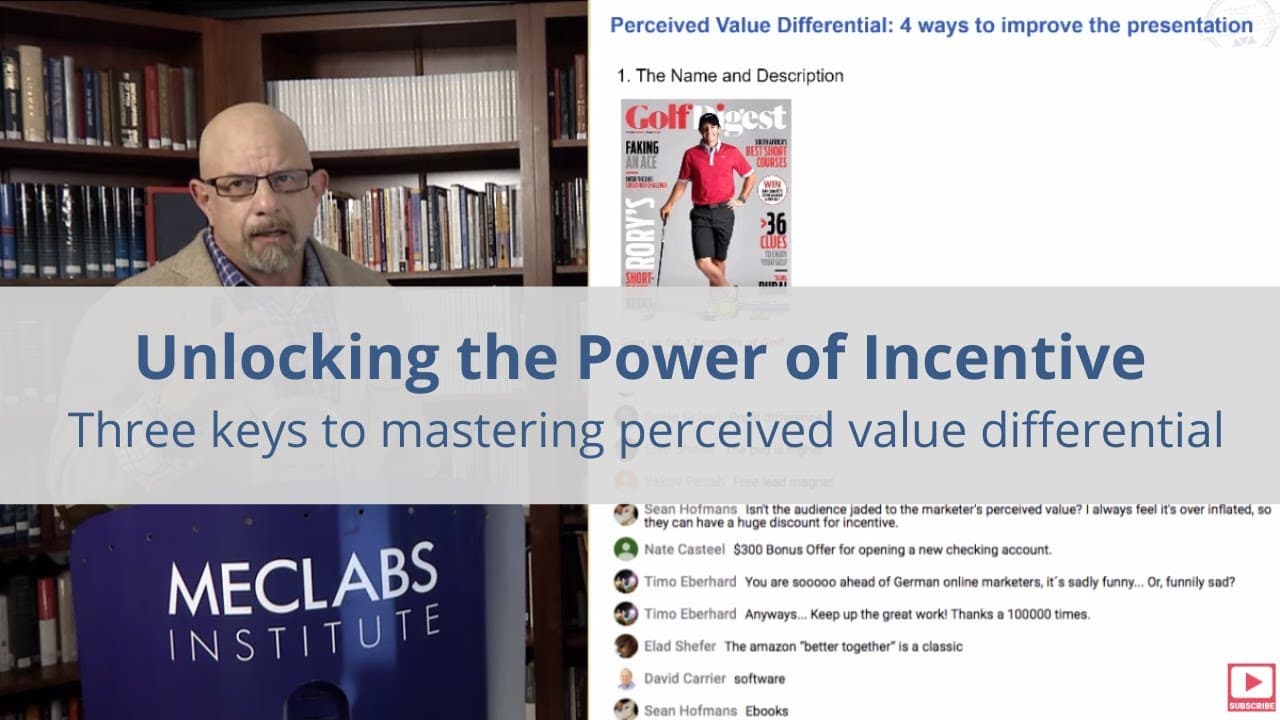
Incentives are crucial for improving marketing conversion rates and driving customer engagement. The right incentive can significantly enhance perceived value, leading to increased sales and better business performance. Understanding concepts like perceived value differential (PVD) can help marketers design effective incentive strategies that resonate with customers.
Transcript
at the actual event with leaders so three of these which one is best now I won't expect you to know the answer but I'd like you to take a crack at it because we're gonna unpack these and while we're doing that I want to suggest to you that if you are not using incentives you're probably doing money on the table I'm gonna explain to you why if you'r... Read More
Key Insights
- 😒 Effective use of incentives in marketing can lead to significant increases in customer engagement and conversion rates.
- 🐕🦺 Psychological principles, such as perceived value and customer service tone, are essential in crafting marketing messages that resonate with potential buyers.
- 🥺 A strong perceived value differential (PVD) indicates a lucrative incentive that can lead to better financial outcomes for businesses.
- ❓ Marketing strategies must account for customer psychology and behavior patterns to achieve desired results effectively.
- 🌍 Case studies demonstrate the real-world application of strategic incentives, highlighting the importance of testing and optimizing marketing offers.
- ❓ The perceived value of incentives can be enhanced through clever packaging, authoritative endorsement, and tailored messaging that appeals to the audience.
- 🐕🦺 Communication tone can greatly influence customer perceptions, making a service-oriented approach more effective in facilitating conversions.
Install to Summarize YouTube Videos and Get Transcripts
Explore YouTube Video Summarizer or Get YouTube Transcript Extractor
Questions & Answers
Q: Why are incentives important in marketing?
Incentives are crucial in marketing because they can significantly enhance customer engagement and conversion rates. Providing the right incentive aligns the emotional forces involved in decision-making, leading customers to perceive greater value and reducing perceived costs, which ultimately tips the balance toward making a purchase.
Q: What is perceived value differential (PVD)?
Perceived value differential (PVD) is the difference between the cost incurred in delivering an incentive and its perceived worth by the customer. A high PVD indicates that customers see more value in the incentive than it costs the business, thereby driving better marketing outcomes.
Q: Can you share an example of an effective incentive?
One example is an offer that combines a chance to win an Amazon gift card of varying amounts. A higher chance to win a lower monetary value often proves to be more appealing to customers than a lower chance at a larger reward, demonstrating the impact of perceived value on choice and conversion rates.
Q: How can companies calculate the effectiveness of their incentives?
Companies can evaluate the effectiveness of their incentives by calculating the perceived value differential (PVD) and comparing them against conversion rates. This involves assessing the perceived value provided to the customer against the cost incurred by the company for delivering that value, thus optimizing marketing strategies for better outcomes.
Q: What role does customer psychology play in marketing incentives?
Customer psychology plays a critical role in marketing incentives as it determines how customers perceive value and make decisions. Understanding psychological triggers—such as urgency, perceived cost versus value, and emotional appeal—allows marketers to tailor incentives effectively and drive engagement.
Q: How does the tone of communication affect customer response to incentives?
The tone of communication significantly impacts customer response to incentives. A friendly, customer-service-oriented tone can foster a sense of urgency and care, encouraging customers to complete purchases, whereas aggressive sales language may alienate them and reduce the perceived value of the incentive.
Q: What types of incentives can businesses use?
Businesses can use various incentives, including discounts, bonus offers, free products or services, and gifts. The key is to align the incentive with the customer's needs and preferences, ensuring that the perceived value outweighs the delivery cost for maximum effectiveness.
Q: How can businesses ensure their incentives are relevant?
To ensure incentives are relevant, businesses must conduct market research to understand their target audience better, test different offers, and assess customer feedback continually. Regularly analyzing which incentives resonate most with customers can help refine offerings for greater effectiveness.
Summary & Key Takeaways
-
The content discusses the importance of using incentives in marketing to enhance conversion rates and overall sales performance, especially when properly aligned with perceived value.
-
It highlights a case study that illustrates the impact of different incentives on customer engagement and purchasing decisions, showing a drastic improvement in conversion rates with the right approach.
-
The discussion includes psychological elements of marketing, such as perceived value differential (PVD), which can help businesses strategize their incentives to achieve better results.
Read in Other Languages (beta)
Share This Summary 📚
Summarize YouTube Videos and Get Video Transcripts with 1-Click
Try YouTube Summary with ChatGPT & Claude or YouTube Transcript Generator
Explore More Summaries from Flint McGlaughlin 📚

Summarize YouTube Videos and Get Video Transcripts with 1-Click
Try YouTube Summary with ChatGPT & Claude or YouTube Transcript Generator