Should we farm octopus? ⏲️ 6 Minute English
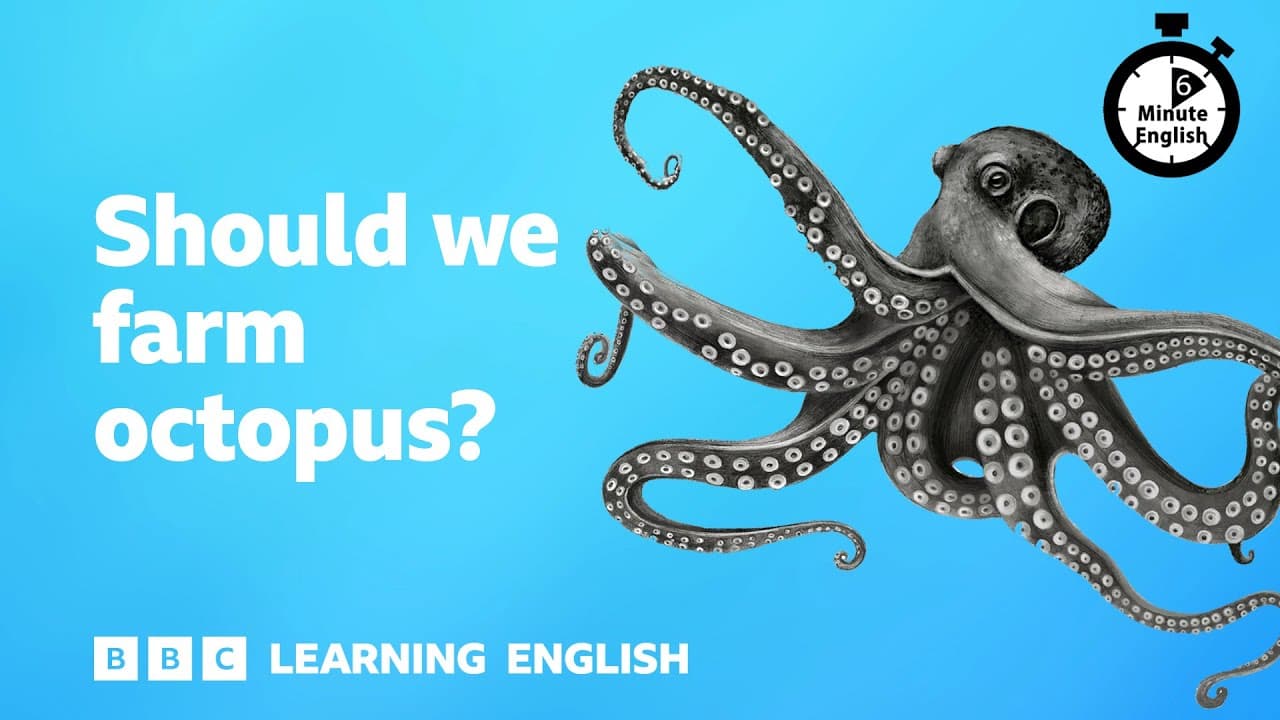
TL;DR
Farming octopus raises ethical concerns due to their sentience.
Transcript
Hello. This is Six Minute English from BBC Learning English. I'm Neil. And I'm Beth. Beth, what do you think about when I say the word octopus? Well, I know they're intelligent, they can change colour to hide in their surroundings, and of course they have eight arms. But, I have to admit I also think about how they taste - delicious. Yeah, I think ... Read More
Key Insights
- Octopuses are intelligent creatures capable of changing color and are appreciated for their umami flavor, especially in countries like South Korea, Spain, Portugal, and Japan.
- A Spanish company plans to sell farmed octopus, sparking ethical debates due to octopuses' sentient nature, meaning they can experience pleasure and pain.
- Octopuses have a complex life cycle, making them difficult to farm. They require live food and are solitary, complicating commercial farming efforts.
- Unlike social animals like chickens and pigs, octopuses prefer solitude, making captivity challenging due to space and social interaction needs.
- Scientific research indicates octopuses exhibit characteristics of sentient beings, such as trade-off behavior, raising questions about the morality of farming them.
- The farming of octopuses is controversial because they exhibit behaviors indicating they can feel emotions, similar to other sentient animals.
- Inky the octopus became famous for escaping his tank at the New Zealand National Aquarium, symbolizing the intelligence and problem-solving abilities of octopuses.
- The ethical debate on farming octopus continues, focusing on their capacity for feeling and the challenges of replicating their natural life cycle in captivity.
Install to Summarize YouTube Videos and Get Transcripts
Explore YouTube Video Summarizer or Get YouTube Transcript Extractor
Questions & Answers
Q: Why is farming octopus considered ethically controversial?
Farming octopus is ethically controversial because they are sentient creatures, meaning they can experience feelings such as pleasure and pain. This raises moral concerns about keeping them in captivity for commercial purposes, as their sentience suggests they should be treated with the same ethical considerations as other sentient animals.
Q: What makes octopuses difficult to farm commercially?
Octopuses are difficult to farm commercially due to their complex life cycle and solitary nature. They require live food for their larvae, and their preference for solitude makes it challenging to keep them in captivity. Unlike social animals, octopuses do not thrive in group settings, complicating efforts to farm them at a commercial scale.
Q: What did scientific research reveal about octopus sentience?
Scientific research revealed that octopuses exhibit characteristics of sentient beings, such as trade-off behavior, which indicates they can feel emotions. This research, conducted for a British government-commissioned report, found that octopuses have specific nerve connections and brain structures that correlate with the probability of sentience, raising ethical concerns about their treatment.
Q: What happened to Inky the octopus at the New Zealand National Aquarium?
Inky the octopus gained fame for escaping his tank at the New Zealand National Aquarium in 2016. He managed to find a drain that led him to the Pacific Ocean. This escape highlights the intelligence and problem-solving abilities of octopuses, further contributing to the debate on whether they should be farmed given their cognitive capabilities.
Q: How does the solitary nature of octopuses affect their farming?
The solitary nature of octopuses affects their farming because they prefer to live alone, making it difficult to keep them in captivity with other octopuses. This requirement for solitude necessitates more space and individualized care, which poses challenges for commercial farming operations aiming to keep multiple octopuses together in confined environments.
Q: What role does umami flavor play in the popularity of octopus cuisine?
The umami flavor, one of the five basic tastes, plays a significant role in the popularity of octopus cuisine. This savory taste is highly appreciated in countries like South Korea, Spain, Portugal, and Japan, where octopus is a common delicacy. The unique umami flavor contributes to the demand for octopus, prompting discussions on farming them to meet culinary needs.
Q: What challenges do scientists face in closing the octopus life cycle for farming?
Scientists face challenges in closing the octopus life cycle for farming due to the complex series of changes octopuses undergo from birth to death. They require live food for their larvae, and their solitary nature complicates efforts to replicate their natural environment in captivity. These factors make it difficult to establish a sustainable and ethical farming process.
Q: Why is the debate on farming octopus expected to continue?
The debate on farming octopus is expected to continue due to ongoing ethical concerns about their sentience and the challenges of farming them commercially. As scientific research highlights their capacity for feeling emotions, the moral implications of keeping octopuses in captivity for food production remain a contentious issue, prompting further discussions among scientists, campaigners, and the public.
Summary & Key Takeaways
-
Octopuses are known for their intelligence and unique umami flavor, leading to their popularity in various cuisines. However, the ethical implications of farming octopus are under scrutiny due to their sentient nature.
-
A Spanish company plans to introduce farmed octopus, but this has sparked controversy. Octopuses are solitary and have complex life cycles, making them difficult to farm ethically and commercially.
-
Research shows octopuses exhibit sentient characteristics, raising ethical questions about farming them. The debate continues as scientists and campaigners discuss the implications of keeping such intelligent creatures in captivity.
Read in Other Languages (beta)
Share This Summary 📚
Summarize YouTube Videos and Get Video Transcripts with 1-Click
Try YouTube Summary with ChatGPT & Claude or YouTube Transcript Generator
Explore More Summaries from BBC Learning English 📚

Summarize YouTube Videos and Get Video Transcripts with 1-Click
Try YouTube Summary with ChatGPT & Claude or YouTube Transcript Generator