Don't Be a Jerk to Your Barista — and Other Thoughts on Frontline Work | Adriann Negreros | TED
TL;DR
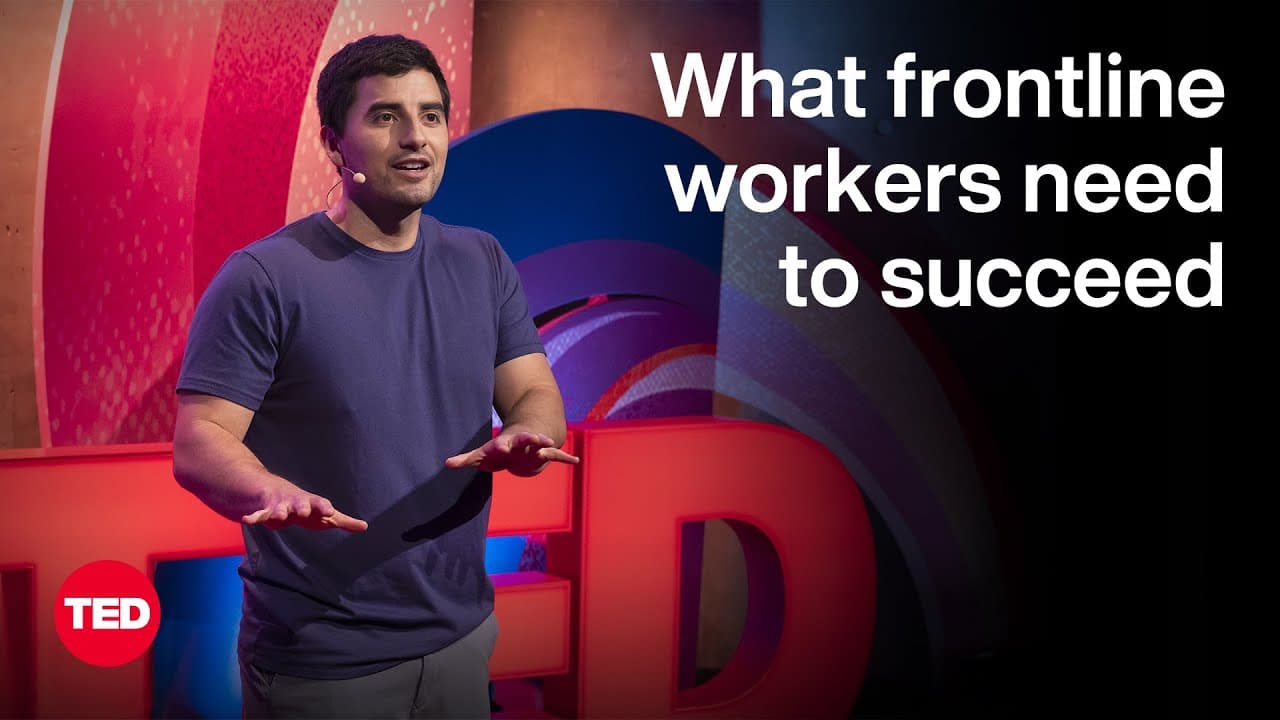
Adriann Negreros advocates for better conditions for frontline workers.
Transcript
Would it be alright if I told you all about my first kiss? (Cheers) It sounds like it would be, alright. So I'm from a small town in the United States, and I was working at one of the local spots, a job that required me to be in person, a frontline job. So I'm there, behind the counter. The person I really like, they come in. We have a great conver... Read More
Key Insights
- Frontline jobs, though challenging, can become fulfilling careers with the right changes and empathy from management.
- A significant percentage of frontline workers face incivility, leading to widespread dissatisfaction and anger in the workforce.
- CEOs typically spend minimal time understanding frontline work, which hinders their ability to make informed improvements.
- Pay inequity is a major issue, with some executives earning vastly more than their frontline employees, highlighting the need for better wage distribution.
- Flexible shifts and small policy changes, like ending shifts on time, can significantly improve employee satisfaction and reduce turnover.
- Safety gear and workplace conditions often do not accommodate diverse body types, leading to unnecessary injuries and dissatisfaction.
- The 'Handbook of Humanity' suggests treating each other with basic respect and kindness, improving interactions between workers and customers.
- Frontline workers deserve gratitude and better conditions without needing to ask for basic human decency and fair wages.
Install to Summarize YouTube Videos and Get Transcripts
Explore YouTube Video Summarizer or Get YouTube Transcript Extractor
Questions & Answers
Q: Why is it important for CEOs to understand frontline jobs?
CEOs understanding frontline jobs is crucial because it allows them to make informed decisions that can improve work conditions. By spending more time with frontline workers, executives can gain insights into the challenges and needs of these roles, leading to better policies and a more satisfied workforce.
Q: What are some examples of small changes that can improve frontline work conditions?
Small changes that can improve frontline work conditions include allowing shift flexibility, ending shifts on time, and providing safety gear that fits diverse body types. These adjustments can lead to lower turnover rates, reduced overtime, and higher employee satisfaction, ultimately benefiting both workers and the business.
Q: How does pay inequity affect frontline workers?
Pay inequity affects frontline workers by creating a sense of unfairness and dissatisfaction, as they often earn significantly less than executives. This disparity can lead to high turnover rates and low morale. Addressing pay inequity is essential for creating a more equitable and motivated workforce.
Q: What is the 'Handbook of Humanity' mentioned in the talk?
The 'Handbook of Humanity' is a concept proposed by Adriann Negreros, advocating for treating each other with basic respect and kindness. It suggests that both customers and workers should adhere to principles of empathy and understanding, improving interactions and creating a more positive work environment.
Q: Why is shift flexibility important for frontline workers?
Shift flexibility is important for frontline workers because it allows them to balance work with personal responsibilities, such as childcare. This flexibility can lead to increased job satisfaction, lower turnover rates, and a more engaged workforce, ultimately benefiting both employees and employers.
Q: How can companies address safety concerns for frontline workers?
Companies can address safety concerns for frontline workers by providing safety gear that fits various body types and ensuring workplace conditions accommodate all employees. By making these changes, companies can reduce workplace injuries, improve employee satisfaction, and create a safer work environment.
Q: What role does empathy play in improving frontline work conditions?
Empathy plays a crucial role in improving frontline work conditions by encouraging management to understand and address the challenges faced by workers. By fostering an empathetic approach, companies can implement changes that prioritize employee well-being, leading to a more motivated and satisfied workforce.
Q: What message does Adriann Negreros have for frontline workers?
Adriann Negreros' message to frontline workers is one of gratitude and recognition. He emphasizes that frontline workers should not have to ask for basic human decency, comfortable working conditions, and fair wages. Instead, leaders and customers should strive to do better and ensure these workers are appreciated and supported.
Summary & Key Takeaways
-
Adriann Negreros discusses the challenges faced by frontline workers and emphasizes the need for empathy-driven changes to improve their work conditions. He highlights the importance of CEOs understanding these jobs better and addressing issues like pay inequity and inflexible shifts.
-
Negreros suggests that small policy changes, such as allowing shift flexibility and providing fitting safety gear, can significantly enhance employee satisfaction and reduce turnover. He also points out the importance of treating frontline workers with respect and gratitude.
-
The talk advocates for a 'Handbook of Humanity,' encouraging people to treat each other with kindness and understanding. Negreros calls for better working conditions and fair wages for frontline workers, emphasizing that these changes benefit both employees and businesses.
Read in Other Languages (beta)
Share This Summary 📚
Summarize YouTube Videos and Get Video Transcripts with 1-Click
Try YouTube Summary with ChatGPT & Claude or YouTube Transcript Generator
Explore More Summaries from TED 📚




Summarize YouTube Videos and Get Video Transcripts with 1-Click
Try YouTube Summary with ChatGPT & Claude or YouTube Transcript Generator