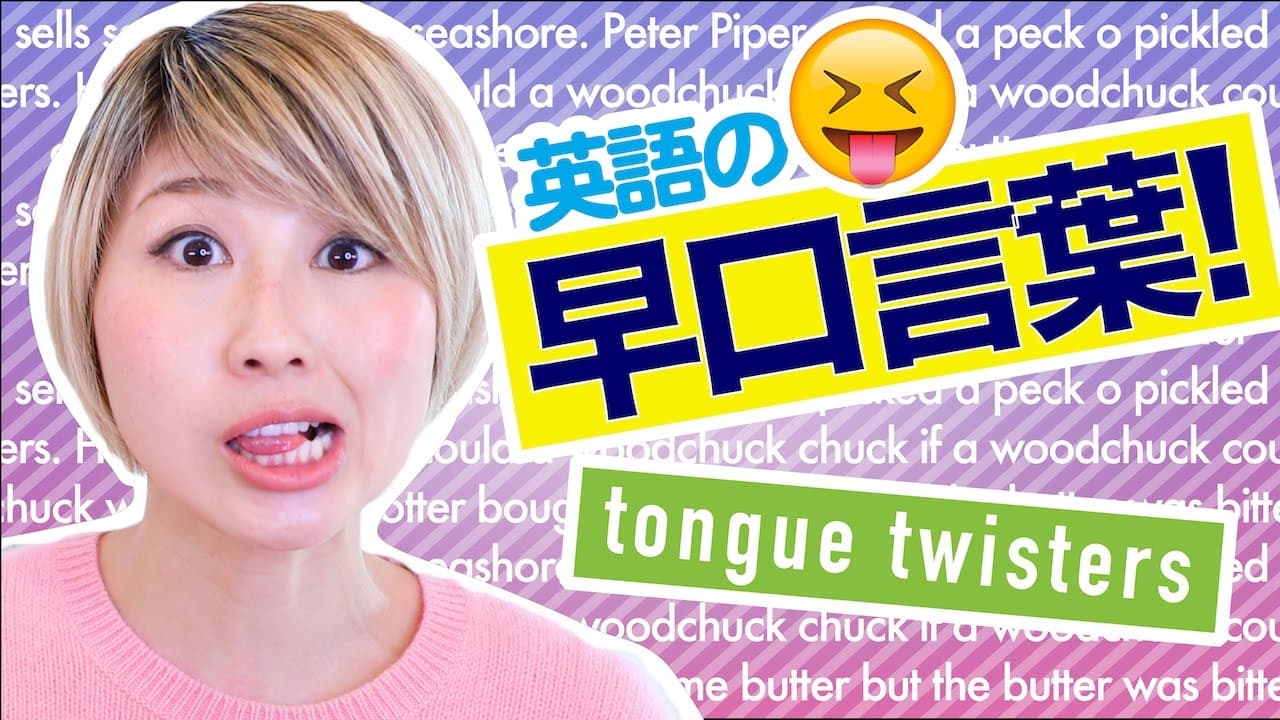
英語の早口言葉で発音の練習!// English tongue twisters!〔#521〕
TL;DR
Practicing English pronunciation with fun tongue twisters.
Transcript
hey guys it's okay so let's get started tongue twister Tong twister Tong twist thin sticks thick bricks thin sticks thick bricks thin sticks thick bricks thin sticks thick bricks th red leather yellow leather red leather yellow leather red leather yellow leather red leather yellow leather red leather yellow leather oh my gosh I said it okay next I ... Read More
Key Insights
- Tongue twisters are a fun and effective way to practice English pronunciation, focusing on challenging sounds and phrases.
- The video features popular tongue twisters such as 'She sells seashells by the seashore' and 'Peter Piper picked a peck of pickled peppers.'
- Tongue twisters help improve speech clarity and are often used in language learning to enhance pronunciation skills.
- The speaker shares their personal experience and challenges with each tongue twister, adding a personal touch to the practice session.
- Repetition is key in mastering tongue twisters, as demonstrated by the speaker's multiple attempts at each phrase.
- The video emphasizes the difference in tongue usage between English and Japanese, highlighting the challenges faced by non-native speakers.
- The playful nature of tongue twisters makes them an engaging tool for language learners of all ages.
- The speaker encourages viewers to practice along and have fun, promoting a positive and interactive learning experience.
Install to Summarize YouTube Videos and Get Transcripts
Explore YouTube Video Summarizer or Get YouTube Transcript Extractor
Questions & Answers
Q: What is the purpose of practicing tongue twisters?
The purpose of practicing tongue twisters is to improve pronunciation and speech clarity. Tongue twisters challenge speakers to articulate difficult sounds and phrases quickly and accurately, helping to enhance language skills. They are particularly useful for non-native speakers looking to improve their English pronunciation.
Q: Why does the speaker mention the difference between English and Japanese tongue usage?
The speaker mentions the difference between English and Japanese tongue usage to highlight the unique challenges faced by Japanese speakers when learning English. English requires different tongue movements and sounds, which can be difficult for Japanese speakers to master. This context helps explain why tongue twisters are a valuable practice tool.
Q: How does the speaker make the practice session engaging?
The speaker makes the practice session engaging by sharing personal experiences and challenges with each tongue twister. They encourage viewers to participate and practice along, creating a fun and interactive learning environment. The speaker's enthusiasm and humor add to the enjoyment of the session.
Q: What are some examples of tongue twisters featured in the video?
Some examples of tongue twisters featured in the video include 'She sells seashells by the seashore,' 'Peter Piper picked a peck of pickled peppers,' and 'How much wood could a woodchuck chuck if a woodchuck could chuck wood.' These classic phrases are used to practice challenging sounds and improve pronunciation.
Q: What advice does the speaker give for mastering tongue twisters?
The speaker advises viewers to practice tongue twisters repeatedly to master them. Repetition helps improve speech clarity and familiarity with difficult sounds. The speaker also suggests having fun and not taking the practice too seriously, as enjoyment can enhance the learning experience.
Q: How does the speaker address the difficulty of tongue twisters?
The speaker addresses the difficulty of tongue twisters by acknowledging their own challenges and mistakes during the practice session. They demonstrate persistence and humor, encouraging viewers to keep trying and not be discouraged by initial difficulties. This approach fosters a supportive and positive learning atmosphere.
Q: What is the overall tone of the video?
The overall tone of the video is light-hearted and encouraging. The speaker's playful approach and willingness to share personal experiences create an inviting and supportive environment for viewers. The focus is on having fun while learning, making the practice session enjoyable and engaging.
Q: How does the video cater to language learners of different levels?
The video caters to language learners of different levels by featuring a range of tongue twisters with varying degrees of difficulty. The speaker's explanations and demonstrations provide valuable insights for beginners, while the challenge of mastering each phrase appeals to more advanced learners. This inclusivity ensures that all viewers can benefit from the practice session.
Summary & Key Takeaways
-
The video showcases a variety of English tongue twisters, providing viewers with a fun way to practice pronunciation. The speaker demonstrates each tongue twister, sharing personal challenges and tips for improvement. The content is engaging, encouraging viewers to participate and enjoy the learning process.
-
Tongue twisters are presented as a valuable tool for enhancing English pronunciation skills. The speaker highlights the importance of repetition and practice, using popular phrases to illustrate common pronunciation challenges. The video is designed to be both educational and entertaining.
-
Viewers are invited to join the speaker in practicing tongue twisters, emphasizing the playful and interactive nature of the exercise. The content is suitable for language learners of all levels, offering insights into the nuances of English pronunciation through engaging and memorable phrases.
Read in Other Languages (beta)
Share This Summary 📚
Summarize YouTube Videos and Get Video Transcripts with 1-Click
Try YouTube Summary with ChatGPT & Claude or YouTube Transcript Generator
Explore More Summaries from バイリンガール英会話 | Bilingirl Chika 📚





Summarize YouTube Videos and Get Video Transcripts with 1-Click
Try YouTube Summary with ChatGPT & Claude or YouTube Transcript Generator