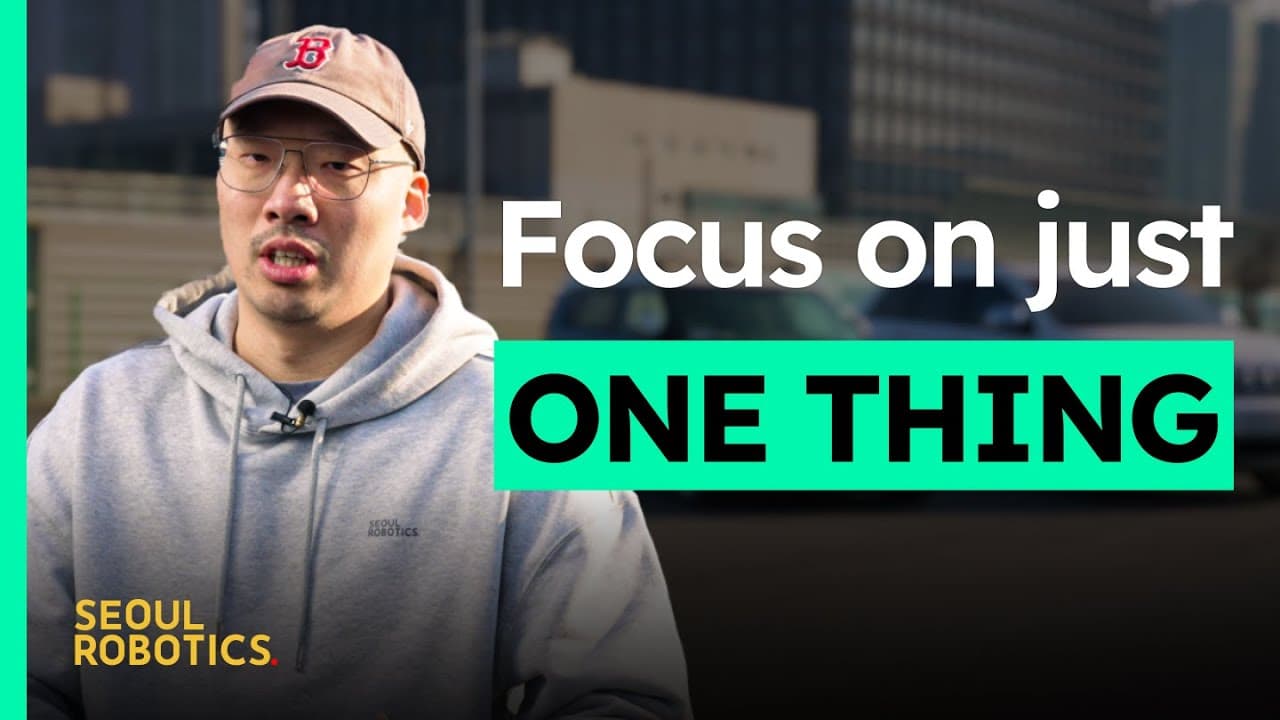
Next Tesla in the B2B Market | Captain of SEOUL ROBOTICS, Hanbin Lee
TL;DR
Seoul Robotics focuses on B2B autonomous driving to solve labor shortages.
Transcript
there was a lot of fight within the company out of 100 projects which one do we keep it alive we should actually keep some of it instead of dropping rest of the 99 problems but I said no we have to be the master of a one single product and one single problem we don't have resources to dilute our Focus I think I made the right call those 99 Problems... Read More
Key Insights
- Seoul Robotics focuses on B2B autonomous driving, addressing labor shortages in logistics and vehicle relocation sectors with innovative solutions.
- The company emphasizes the importance of mastering a single product rather than diversifying efforts across multiple projects.
- Seoul Robotics utilizes infrastructure-based sensors for autonomous driving, reducing costs and overcoming weather-related sensor limitations.
- The company's approach to autonomous driving involves embedding sensors in infrastructure, enabling efficient fleet management in logistics centers.
- Seoul Robotics' first major client, BMW, highlighted the need for automation in vehicle logistics due to labor shortages.
- The company draws parallels with AWS, Oracle, and Salesforce, positioning itself as a B2B backbone for autonomous driving technology.
- Seoul Robotics' technology leverages LIDAR and infrastructure sensors to manage fleets of vehicles, offering a unique solution different from Tesla and Waymo.
- The company aims to be a long-lasting leader in the autonomous driving sector, addressing societal challenges like driver shortages.
Install to Summarize YouTube Videos and Get Transcripts
Explore YouTube Video Summarizer or Get YouTube Transcript Extractor
Questions & Answers
Q: What is the primary focus of Seoul Robotics in the autonomous driving sector?
Seoul Robotics primarily focuses on providing B2B autonomous driving solutions, particularly in sectors facing labor shortages like logistics centers and vehicle relocation. Their technology aims to automate processes traditionally reliant on human drivers, using infrastructure-based sensors to manage vehicle fleets efficiently.
Q: How does Seoul Robotics' technology differ from that of Tesla and Waymo?
Unlike Tesla and Waymo, which focus on vehicle-based autonomous systems, Seoul Robotics employs infrastructure-based sensors. These sensors are embedded in the environment, allowing for efficient fleet management and overcoming challenges like weather interference, which affect vehicle-based systems.
Q: What challenges did Seoul Robotics face in its early years?
In its early years, Seoul Robotics faced challenges in finding the right market fit and dealing with limited resources. The company initially pursued multiple projects but eventually focused on mastering a single product, which led to significant advancements and a clearer market strategy.
Q: How does Seoul Robotics address the issue of sensor limitations in adverse weather conditions?
Seoul Robotics addresses sensor limitations in adverse weather by deploying infrastructure-based sensors, which are installed closer together. This setup allows for more robust data collection and processing, mitigating the effects of rain and snow on sensor performance and ensuring reliable autonomous operations.
Q: What was Seoul Robotics' first major project, and what problem did it solve?
Seoul Robotics' first major project was with BMW, addressing the problem of labor shortages in vehicle logistics. The project automated the process of moving cars from factories to transport hubs, traditionally done by human drivers, significantly improving efficiency and reducing labor dependency.
Q: What is the significance of the infrastructure-based approach in Seoul Robotics' technology?
The infrastructure-based approach allows Seoul Robotics to manage vehicle fleets more efficiently by embedding sensors in the environment rather than on vehicles. This reduces costs, overcomes weather-related sensor limitations, and enables scalable solutions for logistics and vehicle relocation.
Q: How does Seoul Robotics' philosophy align with successful tech companies?
Seoul Robotics' philosophy of focusing on mastering a single product aligns with successful tech companies like Apple and TSMC, which prioritize core competencies over diversification. This approach has led to significant advancements and a strong market position in the B2B autonomous driving sector.
Q: What future prospects does Seoul Robotics see for its technology?
Seoul Robotics envisions its technology as a long-lasting solution to societal challenges like driver shortages. By continuing to innovate and address specific industry needs, the company aims to be a leader in the autonomous driving sector, providing robust solutions across various domains.
Summary & Key Takeaways
-
Seoul Robotics is revolutionizing the B2B autonomous driving market by focusing on specific sectors facing labor shortages. Their infrastructure-based approach to sensor deployment offers a cost-effective solution, enabling seamless fleet management and logistics operations.
-
Led by CEO Hanbin Lee, the company prioritizes mastering a single product over diversifying, drawing inspiration from successful tech giants like Apple and TSMC. This focus has led to significant advancements in autonomous driving technology.
-
By embedding sensors in infrastructure rather than vehicles, Seoul Robotics overcomes traditional limitations of autonomous driving systems, such as weather interference, while offering a scalable and efficient solution for logistics and vehicle relocation.
Read in Other Languages (beta)
Share This Summary 📚
Summarize YouTube Videos and Get Video Transcripts with 1-Click
Try YouTube Summary with ChatGPT & Claude or YouTube Transcript Generator
Explore More Summaries from EO 📚

Summarize YouTube Videos and Get Video Transcripts with 1-Click
Try YouTube Summary with ChatGPT & Claude or YouTube Transcript Generator