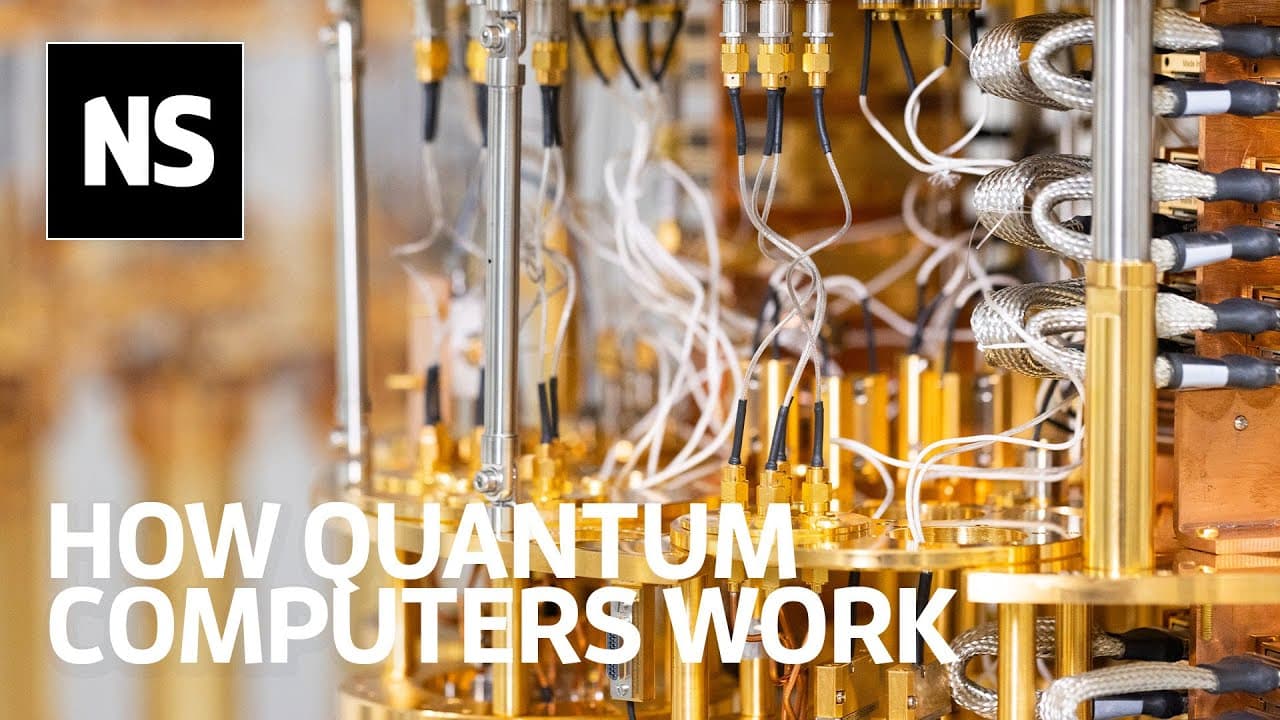
How quantum computers work: Explaining qubits to quantum superposition
TL;DR
Quantum computers use qubits and advanced technology to solve complex problems exponentially faster than conventional computers.
Transcript
we want to build the most powerful computer on the planet and that's a universal quantum computer quantum computer which is able to run any Quantum algorithm it does so by using Quantum error correction and built on a platform of silicon technology a quantum computer is the most powerful computer that we know how to build based on the laws of physi... Read More
Key Insights
- 💻 Quantum computers leverage quantum mechanics to solve complex problems exponentially faster than conventional computers.
- 💻 Qubits in quantum computers can exist in multiple states simultaneously, enabling efficient parallel computational processes.
- 👻 Using silicon transistors for qubits allows startups to scale quantum processes and address major computing challenges.
- 😎 Cooling quantum chips to near absolute zero is crucial to minimize errors and noise, ensuring accurate quantum operations.
- ♿ Cloud computing enables users to access quantum computing power remotely, revolutionizing quantum technology accessibility.
- 🐎 The race to market quantum computing systems involves significant investment and competition among companies.
- 💻 Quantum physics has the potential to transform computing capabilities, offering solutions to problems beyond traditional supercomputers.
Install to Summarize YouTube Videos and Get Transcripts
Explore YouTube Video Summarizer or Get YouTube Transcript Extractor
Questions & Answers
Q: How do quantum computers differ from conventional computers?
Quantum computers use qubits that can be in multiple states simultaneously due to quantum mechanics, allowing for exponentially faster problem-solving compared to conventional binary bits.
Q: What is the significance of using silicon transistors in quantum computing?
Silicon transistors are being used to create qubits in quantum computers, enabling scalable quantum processes that can tackle complex computing problems efficiently.
Q: Why do quantum computers need to be cooled to near absolute zero?
Quantum computers are cooled to suppress noise and errors, allowing qubits to function properly and perform quantum operations accurately.
Q: How are startups leveraging cloud computing in quantum technology development?
Startups are using cloud computing to provide users access to quantum computing power remotely, making quantum technology more accessible and versatile for various applications.
Summary & Key Takeaways
-
Quantum computers harness the power of quantum mechanics to solve problems in minutes that would take conventional computers ages.
-
Qubits, the basic unit of memory in quantum computers, can exist in multiple states simultaneously due to quantum superposition.
-
Startups are developing quantum computers using silicon transistors cooled to near absolute zero to revolutionize computing.
Read in Other Languages (beta)
Share This Summary 📚
Summarize YouTube Videos and Get Video Transcripts with 1-Click
Try YouTube Summary with ChatGPT & Claude or YouTube Transcript Generator
Explore More Summaries from New Scientist 📚


Summarize YouTube Videos and Get Video Transcripts with 1-Click
Try YouTube Summary with ChatGPT & Claude or YouTube Transcript Generator