How to Enhance Tumor Content in Genomic Studies
TL;DR
Macro dissection is a cost-effective method to increase tumor content in genomic studies, providing higher accuracy in results. This technique involves sectioning tissue samples, staining, and precise cutting to isolate tumor regions. It offers a practical alternative to more expensive and labor-intensive methods like laser micro dissection, making it accessible for many laboratories.
Transcript
okay Welcome to our webinar today everyone my name is Ron I'm the director of editorial here at Joe um and so today today we have a speaker Alana Maguire from the Mayo Clinic um so she published a Joe video article with us in 2022 um on enhancing tumor content so she'll be presenting today on that methodology and any recent developments um kind of ... Read More
Key Insights
- Macro dissection is a cost-effective method for increasing tumor content in genomic studies.
- High tumor content is desirable for genomic assays, often requiring at least 60% tumor content.
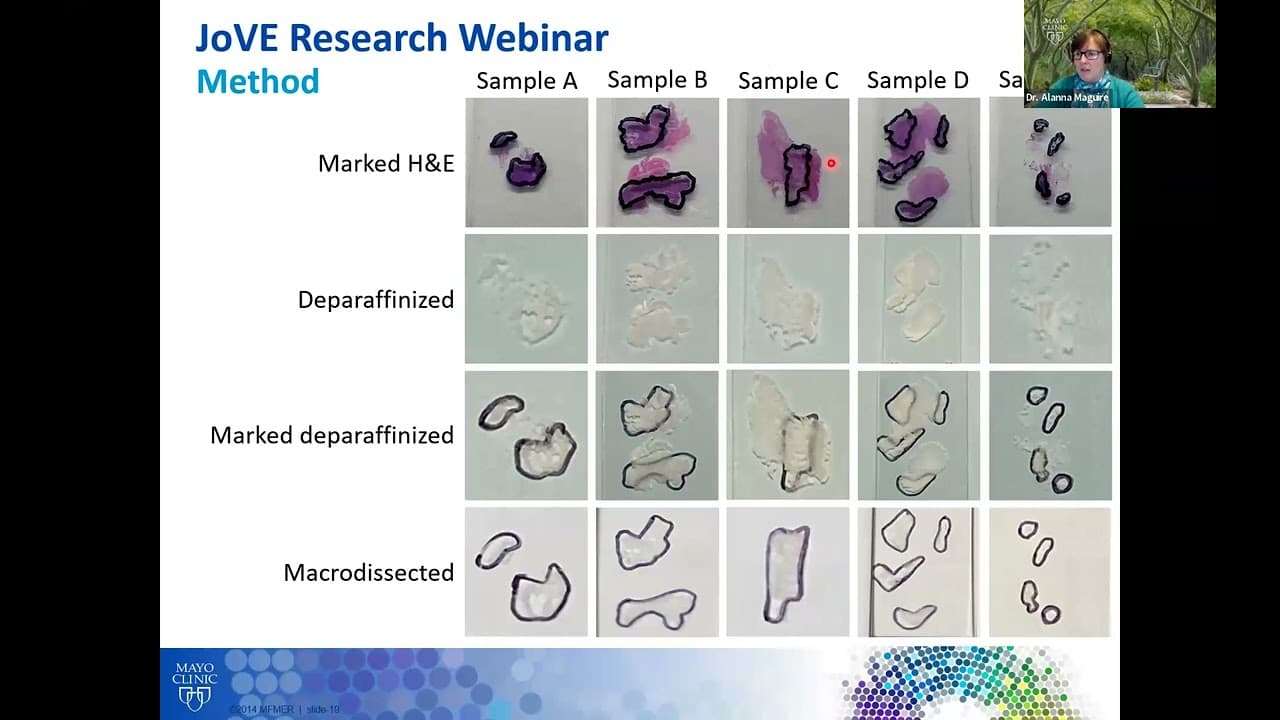
- Macro dissection involves sectioning, staining, and isolating tumor regions using a blade.
- The method increases tumor content significantly, often surpassing the 60% threshold.
- Alternative methods include manual and laser-guided micro dissection, each with varying precision and cost.
- Pathology support is crucial, though AI algorithms may reduce reliance on pathologists in the future.
- The method is accessible and can be implemented in most laboratories with basic equipment.
- Macro dissection changes the cell of origin or double-hit signature call in many samples, enhancing accuracy.
Install to Summarize YouTube Videos and Get Transcripts
Explore YouTube Video Summarizer or Get YouTube Transcript Extractor
Questions & Answers
Q: How to enhance tumor content for genomic assays?
Enhancing tumor content for genomic assays can be achieved through macro dissection, a cost-effective method involving sectioning, staining, and isolating tumor regions using a blade. This technique significantly increases tumor content, often surpassing the 60% threshold needed for accurate genomic analysis, and is accessible for most laboratories.
Q: What is macro dissection in tumor analysis?
Macro dissection in tumor analysis is a method used to enhance tumor content by manually sectioning tissue samples, staining them, and isolating tumor regions using a razor blade. This process increases the tumor content significantly, improving the accuracy of genomic assays, and is a cost-effective alternative to more precise methods.
Q: Why is high tumor content important in genomic studies?
High tumor content is important in genomic studies because it ensures that the genomic assays accurately reflect the tumor's genetic makeup. A higher tumor content reduces the noise from non-tumor tissues, leading to more precise and reliable results, which are crucial for understanding tumor behavior and potential treatment responses.
Q: What are the alternatives to macro dissection for tumor enhancement?
Alternatives to macro dissection for tumor enhancement include manual and laser-guided micro dissection. Manual micro dissection involves using a scalpel under a microscope, offering medium precision but requiring high skill. Laser-guided micro dissection provides high precision but is costly and requires specialized training and equipment.
Q: How does macro dissection compare to micro dissection?
Macro dissection is less precise than micro dissection but is more cost-effective and accessible, requiring basic laboratory equipment and pathology support. Micro dissection, particularly laser-guided, offers higher precision but involves higher costs and specialized skills. Macro dissection is suitable for enhancing tumor content to meet assay thresholds effectively.
Q: Can macro dissection be used on frozen tissues?
Macro dissection can potentially be adapted for use on frozen tissues, though it requires quick handling due to the tissues not being fixed. While the protocol is designed for formalin-fixed, paraffin-embedded tissues, with modifications, it might be applicable to frozen samples, though further validation would be necessary.
Q: What role does pathology support play in macro dissection?
Pathology support is crucial in macro dissection for accurately identifying and marking tumor regions on slides. A pathologist reviews stained tissue sections to demarcate tumor areas, ensuring that the dissection process isolates the desired regions. Future AI algorithms may assist or replace some aspects of this role, enhancing accessibility.
Q: How does macro dissection affect genomic assay results?
Macro dissection affects genomic assay results by increasing the tumor content in samples, which can change the cell of origin or double-hit signature calls. This enhancement leads to more accurate and reliable genomic profiles, as the increased tumor signal surpasses that of non-tumor tissues, reducing noise and improving assay precision.
Summary & Key Takeaways
-
Macro dissection enhances tumor content in genomic studies by sectioning and isolating tumor regions, providing a cost-effective alternative to more precise and expensive methods. This technique increases tumor content significantly, often surpassing the 60% threshold required for many assays, and can be implemented in most laboratories with basic equipment.
-
High tumor content is crucial for genomic assays, as it improves the accuracy of results. Macro dissection involves sectioning tissue samples, staining, and using a blade to isolate tumor regions. This method is accessible and practical, providing a significant increase in tumor content compared to non-enhanced samples.
-
Alternative tumor enhancement methods include manual and laser-guided micro dissection, each with varying levels of precision, effort, and cost. While pathology support is essential for macro dissection, future AI algorithms may reduce the need for pathologists, making the process even more accessible and efficient.
Read in Other Languages (beta)
Share This Summary 📚
Summarize YouTube Videos and Get Video Transcripts with 1-Click
Try YouTube Summary with ChatGPT & Claude or YouTube Transcript Generator