How Rocket Engines work | Tim Dodd and Lex Fridman
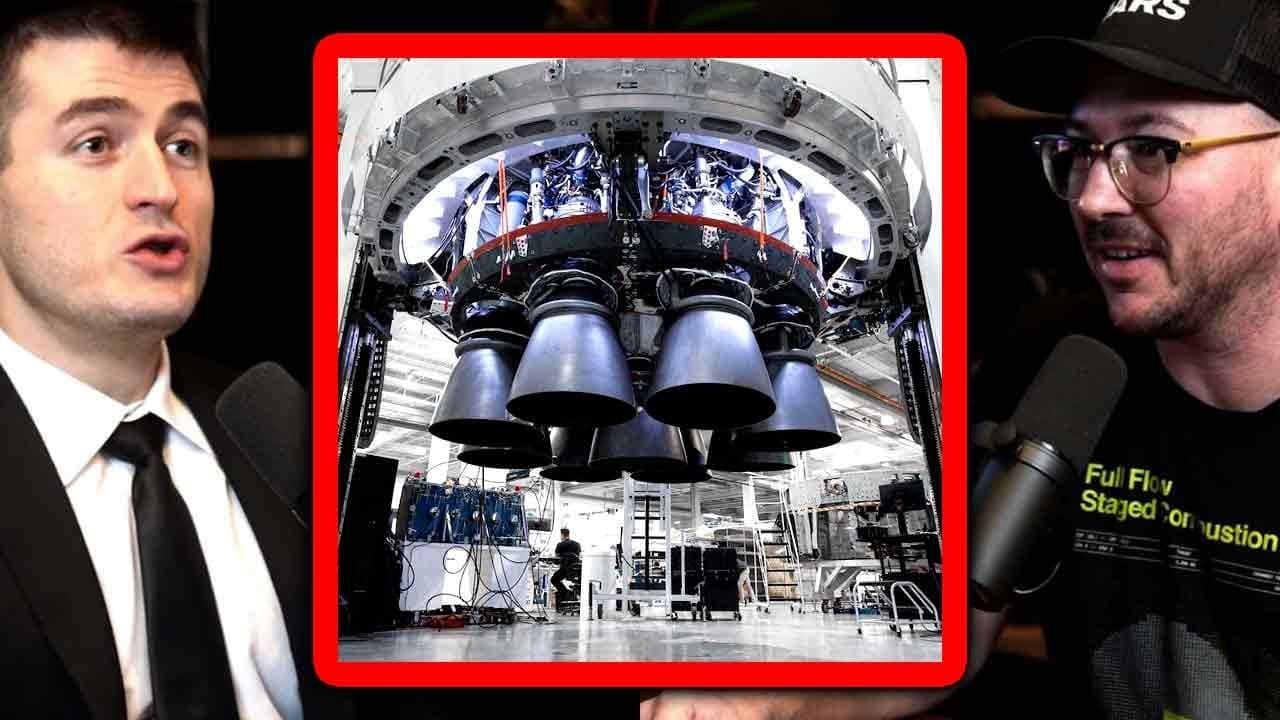
TL;DR
Rocket engines convert high pressure and heat into kinetic energy, with various types of fuel and engine cycles determining their efficiency and complexity.
Transcript
you have uh you have a few videos on this but how does a rocket engine work uh you've you're wearing some of the instruction manuals but uh for one one type of it like what what's the fuel what are the kind of types of different rockets that you can kind of give an overview yeah ultimately a rocket engine converts um high pressure and heat into kin... Read More
Key Insights
- 🚀 Rocket engines convert pressure and heat into kinetic energy to propel rockets.
- 🚒 Different types of rocket engines, fuels, and oxidizers determine their efficiency and performance.
- 😚 Rocket engine cycles, such as open, closed, and full flow, impact complexity and fuel utilization.
- 😎 Cooling methods, such as ablative and regenerative cooling, help prevent engine overheating.
- 🚒 Engine development requires extensive testing and failure analysis to improve performance and reliability.
- ☠️ High production rates and data-driven engineering enable SpaceX to advance engine technology.
Install to Summarize YouTube Videos and Get Transcripts
Explore YouTube Video Summarizer or Get YouTube Transcript Extractor
Questions & Answers
Q: How does a rocket engine work and what is its main purpose?
A rocket engine converts high pressure and heat into kinetic energy, which propels the rocket forward. Its main purpose is to convert pressure and heat into thrust.
Q: What are the different types of rocket fuels and oxidizers?
Common rocket fuels include liquid oxygen, RP-1 (kerosene), liquid methane, and liquid hydrogen. Liquid oxygen is often used as the oxidizer. Hypergolic fuels like nitrogen tetroxide and hydrazine are also used.
Q: What are the trade-offs between open cycle, closed cycle, and full flow rocket engine designs?
Open cycle engines are simple but inefficient, as they waste unused fuel. Closed cycle engines offer greater performance but are more complex, especially when using oxygen-rich mixtures. Full flow engines are the most efficient but also the most challenging to develop.
Q: How do rocket engines stay cool during operation?
Rocket engines use various cooling techniques, such as ablative cooling and regenerative cooling. Ablative cooling involves intentionally letting the engine walls erode to carry away heat, while regenerative cooling involves flowing propellant through channels in the walls to absorb heat.
Summary & Key Takeaways
-
Rocket engines convert high pressure and heat into kinetic energy, propelling the rocket forward.
-
Different types of rocket engines include cold gas thrusters, liquid fuel engines (using fuels like RP-1, liquid methane, and liquid hydrogen), and solid rocket boosters.
-
Rocket engine cycles, such as open cycle, closed cycle, and full flow, determine how propellants are used and affect performance and complexity.
Read in Other Languages (beta)
Share This Summary 📚
Summarize YouTube Videos and Get Video Transcripts with 1-Click
Try YouTube Summary with ChatGPT & Claude or YouTube Transcript Generator
Explore More Summaries from Lex Clips 📚




Summarize YouTube Videos and Get Video Transcripts with 1-Click
Try YouTube Summary with ChatGPT & Claude or YouTube Transcript Generator