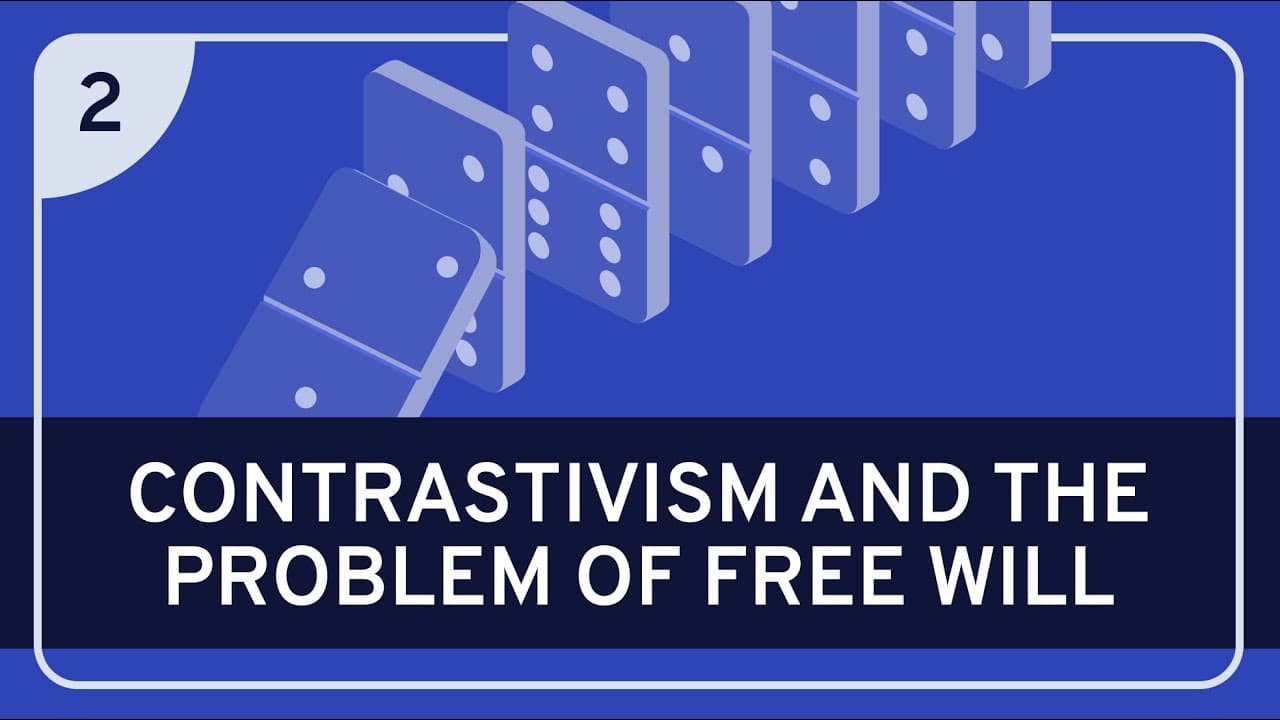
PHILOSOPHY - Language: Contrastivism #2 (Free Will)
TL;DR
Contrastivism offers a new perspective on free will, balancing determinism and freedom.
Transcript
hi my name is Walter Senate Armstrong I teach at Duke University in the philosophy department and the Keenan Institute for ethics in this video I want to introduce you to a new position on Free Will that is called contrastivism the best way to understand this new position is to compare it with old positions in the traditional debate that traditiona... Read More
Key Insights
- Contrastivism is a new philosophical approach to free will, differing from traditional views by focusing on relative alternatives.
- The debate on free will has been historically divided between incompatibilists and compatibilists, each with differing views on determinism.
- Incompatibilists argue that free will and determinism cannot coexist, while compatibilists believe they can, given certain conditions.
- Contrastivism introduces two types of freedom: freedom from causation (incompatible with determinism) and freedom from constraint (compatible with determinism).
- Philosophers can choose between these concepts of freedom based on the context, such as metaphysical or ethical considerations.
- Contrastivism encourages acknowledging the legitimacy of both concepts of freedom, reducing conflict between philosophical camps.
- This approach aims to resolve the ongoing debate by highlighting the importance of context in defining freedom.
- Contrastivism offers a path to philosophical peace by recognizing the validity of multiple perspectives on free will.
Install to Summarize YouTube Videos and Get Transcripts
Explore YouTube Video Summarizer or Get YouTube Transcript Extractor
Questions & Answers
Q: What is contrastivism in the context of free will?
Contrastivism is a philosophical approach that redefines free will by considering it relative to relevant alternatives rather than as an absolute concept. It introduces two types of freedom: freedom from causation, which is incompatible with determinism, and freedom from constraint, which is compatible. This approach helps resolve traditional debates on free will.
Q: How does contrastivism differ from traditional views on free will?
Traditional views on free will are typically divided between incompatibilists, who believe free will cannot coexist with determinism, and compatibilists, who argue it can. Contrastivism differs by focusing on the context and relevant barriers to freedom, offering two legitimate concepts of freedom that can coexist depending on the situation.
Q: What are the two types of freedom introduced by contrastivism?
Contrastivism introduces two types of freedom: freedom from causation and freedom from constraint. Freedom from causation is incompatible with determinism, meaning actions are not determined by prior events. Freedom from constraint is compatible with determinism, focusing on freedom from coercion, compulsion, or ignorance while still being determined by desires and values.
Q: How does contrastivism aim to resolve the debate on free will?
Contrastivism aims to resolve the debate on free will by acknowledging the legitimacy of both freedom from causation and freedom from constraint. It encourages philosophers to consider the context and relevant barriers to freedom, thus reducing conflict between incompatibilists and compatibilists and promoting a more nuanced understanding of free will.
Q: What are the philosophical implications of adopting contrastivism?
Adopting contrastivism allows philosophers to recognize the validity of multiple perspectives on free will, depending on the context. It shifts the focus from a binary debate to a more flexible understanding of freedom, considering both metaphysical and ethical implications. This approach can lead to more constructive discussions and potential resolutions in philosophical discourse.
Q: Why is the concept of context important in contrastivism?
In contrastivism, context is crucial because it determines which concept of freedom is applicable. Different situations, such as metaphysical inquiries about human nature or ethical considerations of responsibility, require different understandings of freedom. By focusing on context, contrastivism offers a more comprehensive and adaptable framework for discussing free will.
Q: How does contrastivism promote peace among philosophical camps?
Contrastivism promotes peace among philosophical camps by validating the legitimacy of both compatibilist and incompatibilist perspectives, depending on the context. It encourages philosophers to move beyond the binary debate and recognize that both freedom from causation and freedom from constraint have their place in understanding free will, thus reducing conflict and fostering dialogue.
Q: What role does determinism play in contrastivism?
In contrastivism, determinism is considered within the context of two types of freedom. Freedom from causation is incompatible with determinism, suggesting actions are not predetermined. In contrast, freedom from constraint is compatible with determinism, focusing on internal factors like desires and values. This dual approach allows for a more nuanced understanding of how determinism interacts with free will.
Summary & Key Takeaways
-
Walter Sinnott-Armstrong introduces contrastivism, a novel approach to free will, which considers freedom relative to relevant alternatives. It distinguishes between freedom from causation and freedom from constraint, offering a resolution to the age-old debate between compatibilists and incompatibilists.
-
Contrastivism provides a framework that acknowledges the legitimacy of both determinism and free will by specifying the context in which each concept applies. This approach helps in understanding the nuances of philosophical arguments about human freedom and responsibility.
-
By focusing on the context and relevant barriers to freedom, contrastivism seeks to end the philosophical war between different schools of thought on free will, promoting peace and understanding among philosophers.
Read in Other Languages (beta)
Share This Summary 📚
Summarize YouTube Videos and Get Video Transcripts with 1-Click
Try YouTube Summary with ChatGPT & Claude or YouTube Transcript Generator
Explore More Summaries from Wireless Philosophy 📚
Summarize YouTube Videos and Get Video Transcripts with 1-Click
Try YouTube Summary with ChatGPT & Claude or YouTube Transcript Generator