What Is a Perpetual Stew and How Is It Made?
TL;DR
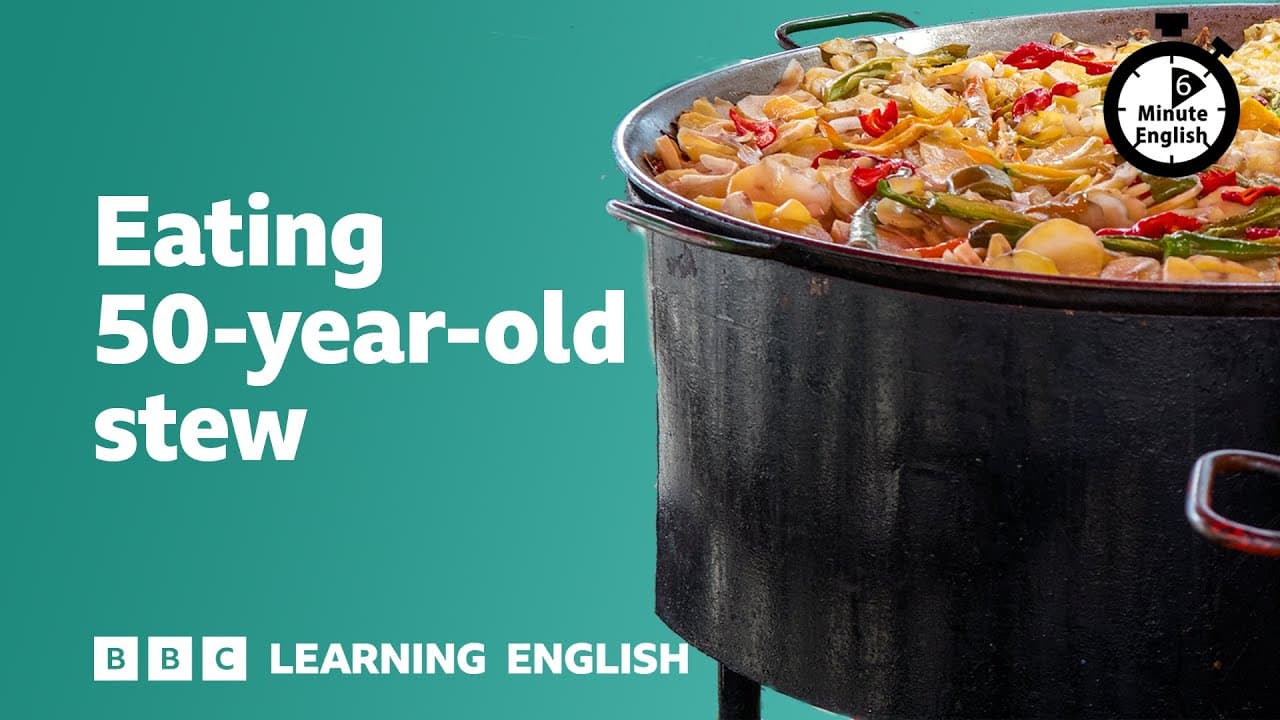
A perpetual stew is a dish where ingredients are continuously added to a pot, allowing it to simmer for years while developing rich flavors. Notable examples include the 50-year-old beef stew at Wattana Panich in Bangkok. To ensure safety and flavor, cooks must regularly replenish the stew with fresh ingredients and maintain strict hygiene.
Transcript
Hello, this is 6 Minute English from BBC Learning English. I'm Phil, and I'm Beth. Most people have eaten some unusual food at least once in their life. What's the most unusual thing you've ever eaten, Beth? Oh, I ate camel in Australia, and I really didn't like it, to be honest. What about you? I ate caiman in northern Argentina, and it was delici... Read More
Key Insights
- Perpetual stews are dishes where ingredients are continuously added, allowing them to simmer for years, creating a rich flavor over time.
- Wattana Panich in Bangkok is famous for its 50-year-old stew, a perpetual dish that has been simmering for decades.
- The main ingredient in Wattana Panich's 50-year-old stew is beef, contrary to the common assumption that it might be vegetables.
- Perpetual stews require regular replenishment with fresh ingredients and careful hygiene practices to ensure safety and flavor.
- Historically, perpetual stews were practical for people without easy access to fire starters, as they avoided the labor of starting a fire from scratch.
- In medieval times, only wealthy families could afford the resources to keep a pot simmering continuously due to the high cost of wood.
- The concept of perpetual stews is prevalent in various cultures, with some Chinese stews rumored to be over 100 years old.
- Cooking from scratch involves starting a process without pre-made components, and can be cumbersome, requiring time and effort.
Install to Summarize YouTube Videos and Get Transcripts
Explore YouTube Video Summarizer or Get YouTube Transcript Extractor
Questions & Answers
Q: What is a perpetual stew?
A perpetual stew is a dish where ingredients are continuously added and simmered over a long period, sometimes years. The pot is never fully emptied, allowing the flavors to develop and intensify over time. This method requires regular replenishment and careful hygiene practices.
Q: What is the main ingredient in Wattana Panich's stew?
The main ingredient in Wattana Panich's 50-year-old stew is beef. This might be surprising to some who assume that vegetables are more commonly used in such long-lasting dishes. The beef is continuously simmered and replenished with fresh ingredients to maintain the stew's rich flavor.
Q: How do perpetual stews relate to historical cooking practices?
Perpetual stews have historical significance as they were practical for people without easy access to fire starters. In medieval times, keeping a stew pot simmering avoided the labor of starting a fire from scratch, providing a ready meal. Only wealthy families could afford the resources for continuous simmering.
Q: What cultural examples of perpetual stews are mentioned?
The discussion mentions perpetual stews in Thailand and China. Wattana Panich in Bangkok is famous for its 50-year-old stew, while in China, some stews are rumored to be over 100 years old. These dishes reflect the cultural tradition of maintaining and replenishing a single pot over time.
Q: What are the challenges of maintaining a perpetual stew?
Maintaining a perpetual stew requires regular replenishment with fresh ingredients and careful attention to hygiene to prevent spoilage. The process involves simmering the stew at a temperature just below boiling and ensuring the pot is never completely emptied, which demands constant monitoring and effort.
Q: What does cooking from scratch mean in the context of perpetual stews?
Cooking from scratch in the context of perpetual stews means starting the cooking process without using pre-made components. It involves preparing ingredients from their raw state, which can be cumbersome, requiring significant time and effort. This contrasts with the ongoing nature of perpetual stews, which are continuously replenished.
Q: Why might perpetual stews be less common today?
Perpetual stews might be less common today due to modern conveniences like refrigeration and easy access to cooking fuels. These advancements reduce the need to keep a pot simmering continuously. Additionally, maintaining a perpetual stew requires significant time, effort, and attention to hygiene, which may not align with contemporary lifestyles.
Q: How does the concept of perpetual stews relate to sustainability?
Perpetual stews can be seen as a sustainable cooking practice, as they minimize food waste by continuously using and replenishing ingredients. This method allows for efficient use of resources, as the stew pot is never fully emptied, and new ingredients are added to maintain the dish's volume and flavor over time.
Summary & Key Takeaways
-
Perpetual stews are a unique culinary tradition where ingredients are continuously added, allowing the dish to simmer for years. This practice is prevalent in various cultures, including Thailand and China.
-
Wattana Panich, a restaurant in Bangkok, is renowned for its 50-year-old beef stew. This perpetual stew is maintained by regularly adding fresh ingredients and ensuring proper hygiene.
-
Historically, perpetual stews were practical for those without easy access to fire starters. They provided a ready meal and avoided the effort of starting a fire from scratch.
Read in Other Languages (beta)
Share This Summary 📚
Summarize YouTube Videos and Get Video Transcripts with 1-Click
Try YouTube Summary with ChatGPT & Claude or YouTube Transcript Generator
Explore More Summaries from BBC Learning English 📚

Summarize YouTube Videos and Get Video Transcripts with 1-Click
Try YouTube Summary with ChatGPT & Claude or YouTube Transcript Generator