How Can Machines Learn to Understand Human Empathy?
TL;DR
Machines can learn empathy by using advanced machine learning and NLP techniques that model interpersonal emotions. Effective approaches include tailoring responses based on user profiles and employing feature engineering to recognize and adapt to emotional cues. This capability significantly enhances interactive self-help applications in mental health care, ultimately aiming to improve user outcomes.
Transcript
so several people today have mentioned things about teaching the limits of AI teaching them certain skills to make them more human and so our next guest is Casey Sackett from robot who is going to talk about how to teach empathy to a machine all right yes I think that was a really great segue I think a number of the themes I'm gonna be talking abou... Read More
Key Insights
- 😨 Empathy is important in mental health care, as it contributes to therapeutic alliance and positive treatment outcomes.
- 👤 Machine learning and NLP techniques can be used to understand and respond to users' emotions, personalize interactions, and provide a sense of similarity.
- 🧑🏫 Feature engineering is crucial for teaching machines empathy, as sentiment analysis may not capture the complexities of different domains.
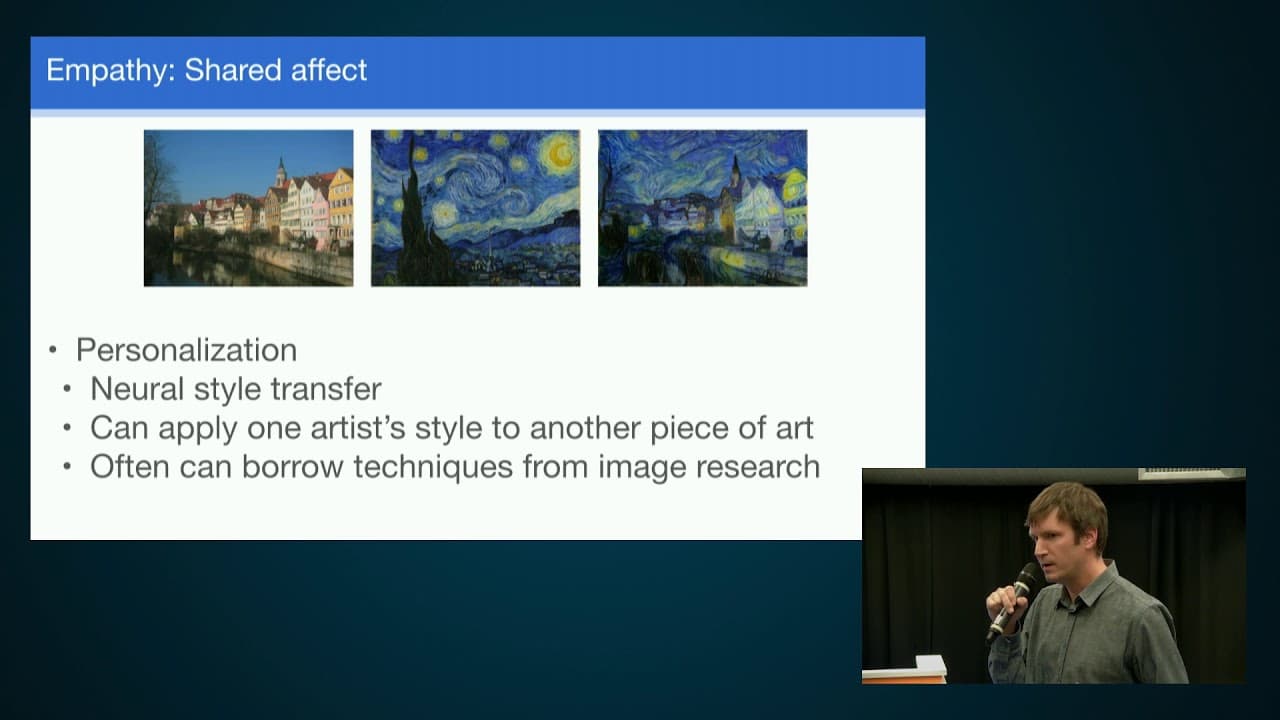
- 👊 Personalized and creative approaches, including style transfer and persona chat dialogue, can enhance empathy in machines.
- 👨🔬 Teaching empathy to machines requires staying up-to-date with research, being domain-specific, and considering various lines of research such as reinforcement learning and adversarial networks.
- 🧑⚕️ The ultimate goal is to improve mental health outcomes and make psychological tools accessible to everyone.
Install to Summarize YouTube Videos and Get Transcripts
Explore YouTube Video Summarizer or Get YouTube Transcript Extractor
Questions & Answers
Q: How is empathy related to mental health care?
Empathy plays a crucial role in therapeutic alliance, client-therapist rapport, and successful counseling conversations, which are key factors in improving mental health outcomes.
Q: How does Woebot use machine learning and NLP to teach empathy?
Woebot uses techniques like sentiment analysis, semantic similarity, clustering, and style transfer to understand users' emotions, personalize responses, and provide a sense of similarity or shared emotions.
Q: What are some challenges in teaching empathy to machines?
One challenge is the lack of a clear objective function or output layer for empathy. Additionally, traditional sentiment analysis may not work well in all domains, highlighting the importance of domain-specific feature engineering.
Q: How does Woebot handle crisis situations?
Woebot has a crisis detection system and, if a user expresses explicit intentions to harm themselves or others, it refers them to appropriate resources and encourages seeking human help.
Summary & Key Takeaways
-
Casey Sackett from Woebot Labs discusses the importance of empathy in mental health care and the need to teach machines to empathize.
-
Woebot is an app that uses a chatbot to provide interactive self-help to users and has shown significant results in reducing depression symptoms.
-
The content explores the definition of empathy, machine learning and NLP approaches to empathy, and provides examples from various domains.
Read in Other Languages (beta)
Share This Summary 📚
Summarize YouTube Videos and Get Video Transcripts with 1-Click
Try YouTube Summary with ChatGPT & Claude or YouTube Transcript Generator
Explore More Summaries from This Week in Startups 📚






Summarize YouTube Videos and Get Video Transcripts with 1-Click
Try YouTube Summary with ChatGPT & Claude or YouTube Transcript Generator