10 Times Video Games KNEW What You Were Trying To Do
TL;DR
Video games often cleverly anticipate player actions and reactions.
Transcript
(upbeat jingle) - [Falcon] Developers have to anticipate a lot when they're making a game. But sometimes you can tell they know their audience, a little too well. Hi folks, it's Falcon. Today on Gameranx, 10 times video games knew what you were trying to do. Starting off with number 10, we're talking about "Horizon Call of the Mountain" and creepin... Read More
Key Insights
- 👾 Developers often anticipate and incorporate player behavior into game mechanics to enhance immersion and engagement.
- 😒 The use of humor in character reactions can elevate the gaming experience, reinforcing a game’s interactive nature.
- 👾 Games like "Baldur's Gate 3" illustrate the importance of detailed consequences for player choices, encouraging exploration and creativity.
- 👻 Creative design choices, such as allowing violent resolutions to puzzles, can resonate with player frustrations and expectations.
- 👾 Player instincts to test boundaries are a common theme, with many games rewarding or punishing such behavior in clever ways.
- 🪺 Genre-blending elements, like comedic easter eggs in serious narratives, provide depth and richness to character interactions.
- 👨💻 Challenging conventional gaming codes creates unique experiences that keep players invested and engaged.
Install to Summarize YouTube Videos and Get Transcripts
Explore YouTube Video Summarizer or Get YouTube Transcript Extractor
Questions & Answers
Q: How do developers create realistic reactions for characters in VR games?
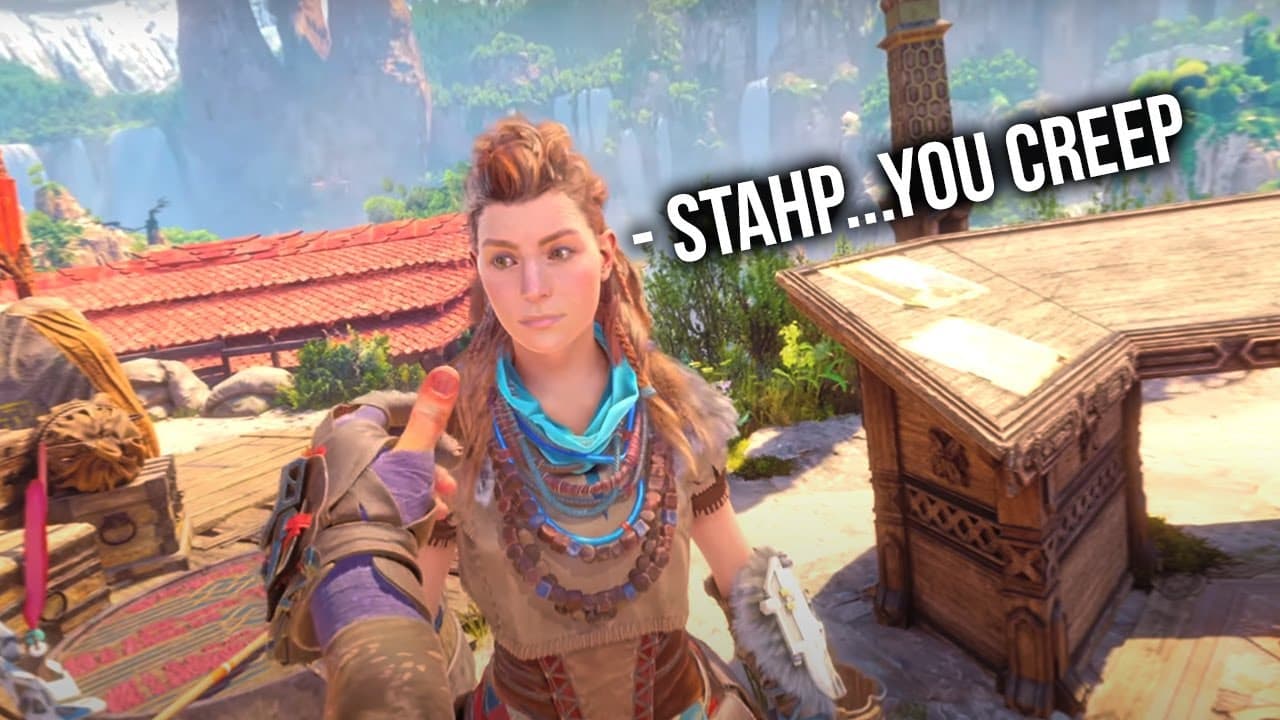
Developers design VR game characters, like Aloy in "Horizon Call of the Mountain," to react believably to player interactions. This realism enhances immersion, as players often engage in unintended, mischievous behaviors. Aloy's annoyed looks emphasize the natural dynamics between the character and players, capturing genuine reactions that resonate with gamers.
Q: What makes "Baldur's Gate 3" unique in player interactions?
"Baldur's Gate 3" stands out due to its intricate design that rewards player curiosity. An example is a unique dialogue response from Astarion when players activate a blood shower, revealing how the game accommodates interactions players wouldn’t typically expect. This attention to detail enriches the gameplay experience and encourages exploration.
Q: How does "Serious Sam 4" challenge traditional puzzle mechanics?
"Serious Sam 4" flips expectations by allowing players to solve a puzzle by simply shooting it. This subversion of common gaming conventions acknowledges player frustrations with tedious puzzle mechanics, giving gamers the freedom to engage in gameplay consistent with the frenetic action style of the series.
Q: Why do players often shoot NPCs like Luis in "Resident Evil 4"?
Players typically shoot NPCs such as Luis due to instinctual distrust, stemming from their portrayal and the gameplay dynamics. "Resident Evil 4" cleverly incorporates this behavior, leading to a cutscene where Luis retaliates, creating entertaining consequences that reinforce player choices while adding depth to character interactions.
Q: What is noteworthy about the "Doom" series' character interactions?
The "Doom" series showcases its awareness of player intentions, like how players instinctively want to harm Samuel Hayden. The developers preemptively counter this by placing protective barriers, leading to humorous responses to player aggression, thus enhancing the narrative while allowing room for player agency within a story-driven context.
Q: How does "Elden Ring" utilize traps to manipulate player behavior?
"Elden Ring" effectively employs traps to play on player instincts, designed to exploit typical rushed behaviors. One notable trap leads players into ambushes through cleverly timed mechanics, illustrating the game’s understanding of player psychology and enhancing the challenge through strategic gameplay design.
Q: What common gaming trope does "Selaco" challenge?
"Selaco" humorously defies the common gaming trope of the keycode 0451. Instead of rewarding players, the game punishes them for inputting this familiar code, giving them damage instead. This twist is a playful jab at gaming conventions and showcases developers' awareness of common player behaviors.
Q: In what way does "Yakuza 0" engage players with embarrassing situations?
"Yakuza 0" keenly recognizes player tendencies to explore unconventional content, like watching awkward erotic videos for achievements. The inclusion of a trophy for this action allows players to navigate embarrassment with an excuse, reflecting developers' understanding of gamer psychology and social nuances in gameplay.
Summary & Key Takeaways
-
The content explores ten instances where video games knowingly played into player behavior, demonstrating a deep understanding of their audience.
-
Each example illustrates how developers crafted game mechanics and scenarios that directly reflect what players are likely to do or think during gameplay.
-
From VR interactions to unexpected character deaths, these elements heighten the gaming experience by adding humor, depth, and realism to player decisions.
Read in Other Languages (beta)
Share This Summary 📚
Summarize YouTube Videos and Get Video Transcripts with 1-Click
Try YouTube Summary with ChatGPT & Claude or YouTube Transcript Generator
Explore More Summaries from gameranx 📚



Summarize YouTube Videos and Get Video Transcripts with 1-Click
Try YouTube Summary with ChatGPT & Claude or YouTube Transcript Generator