Would a New Draft Solve Military Inequality? | Michael Desch | Big Think
TL;DR
Americans show superficial support for the military, with a small percentage serving, prompting a call for broader recognition and careful use of military force.
Transcript
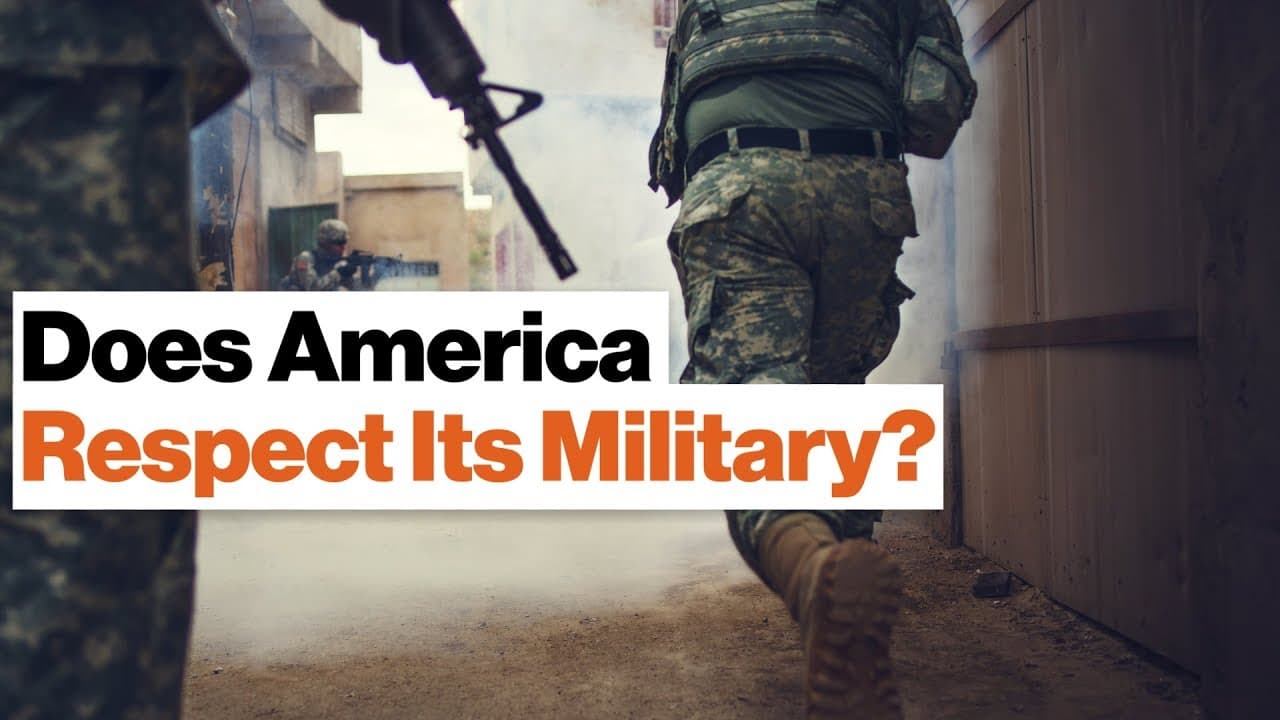
So if you ask most Americans, "Do they respect and have confidence in our men and women in uniform?" they will give a resounding "yes." But when you scratch the surface, this patina of respect for our military turns out to be a mile wide but less than an inch deep. First of all very few Americans are willing to actually serve in uniform. During Wor... Read More
Key Insights
- 😑 American support for the military is largely superficial, with a vast disparity in the number of people actually serving versus those expressing support.
- 🐕🦺 The burden of military service falls disproportionately on a very small percentage of society.
- 🤙 Calls for broader recognition and careful consideration of military force to truly support the troops.
- 🙈 Implementing a draft is not seen as a viable solution due to various challenges.
- 🎖️ More than mere rhetoric, true support for the military involves careful consideration of military actions and the sacrifices made by those in uniform.
- 😑 Many Americans express a moral obligation to be selective in the use of military force to protect those who bear the burden of service.
- 🤟 There is a need for a shift towards a more genuine and thoughtful approach to supporting the troops beyond symbolic gestures.
Install to Summarize YouTube Videos and Get Transcripts
Explore YouTube Video Summarizer or Get YouTube Transcript Extractor
Questions & Answers
Q: Why is there a disparity between Americans' rhetoric in support of the military and actual service numbers?
The disparity arises from the fact that while many Americans express support for the military, only a small percentage actually chooses to serve in uniform.
Q: What is the author's proposed solution to address the lack of true support for the military?
The author suggests broader recognition of the sacrifices made by the military and a more careful and selective approach to using military force to truly support the troops.
Q: How does the author suggest affirmatively supporting the military beyond rhetoric?
The author recommends not only waving the flag but also ensuring that military action is truly necessary for the security of the country before sending troops into harm's way.
Q: Why does the author believe that a draft is not a viable solution to address the lack of support for the military?
The author argues that implementing a draft would not guarantee an equal burden of service and raises practical and political challenges.
Summary & Key Takeaways
-
American support for the military is widespread but superficial, with a small percentage actually serving.
-
The burden of military service falls disproportionately on a very small percentage of society.
-
Calls for broader recognition and careful consideration of military force to truly support the troops.
Read in Other Languages (beta)
Share This Summary 📚
Summarize YouTube Videos and Get Video Transcripts with 1-Click
Try YouTube Summary with ChatGPT & Claude or YouTube Transcript Generator
Explore More Summaries from Big Think 📚



Summarize YouTube Videos and Get Video Transcripts with 1-Click
Try YouTube Summary with ChatGPT & Claude or YouTube Transcript Generator