[CMP Part4 ] CMP Slurry & Mechanism (1 of 2)
TL;DR
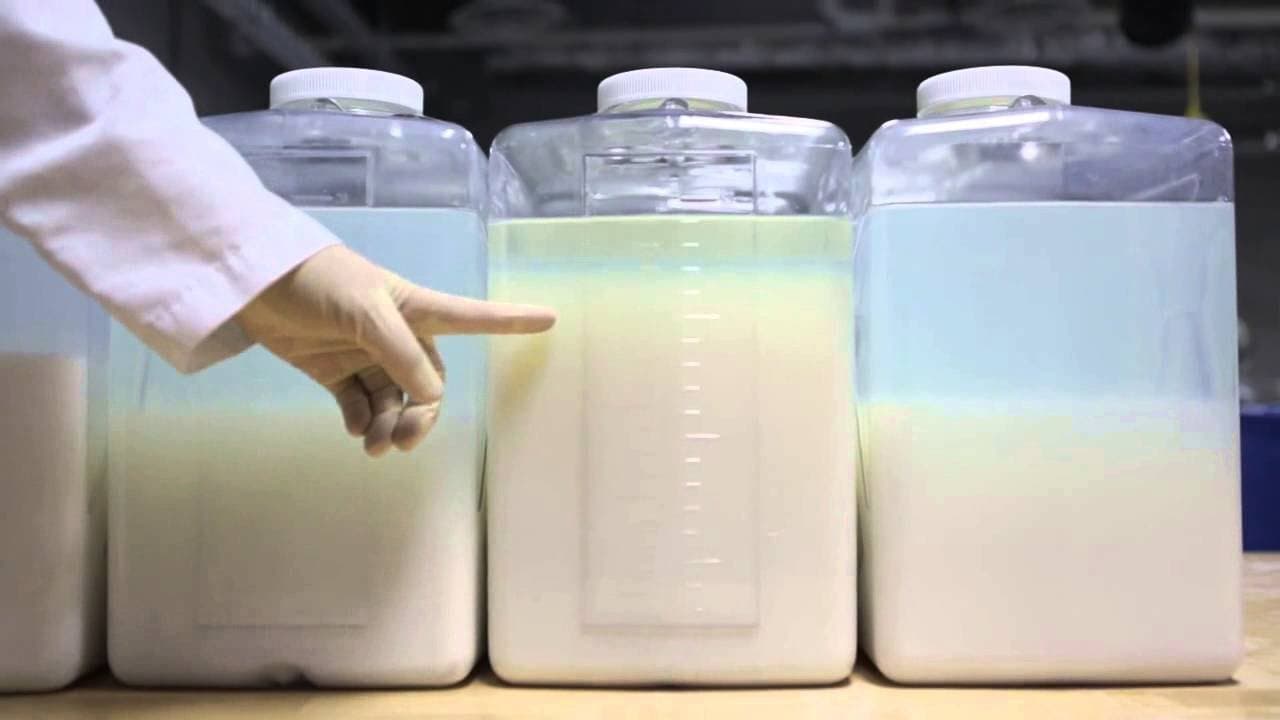
CMP slurry is vital in semiconductor fabrication for precise wafer surface characteristics.
Transcript
hello silicon Pioneers welcome back to the channel where we dive into the intricate world of semiconductors I'm semi Sherpa and today we're continuing our exploration of chemical mechanical planarization or CMP a vital process in device fabrication silicon wafer Fab this is episode 4 of our CMP Series in episode 1 we introduced CMP ... Read More
Key Insights
- CMP slurry plays a critical role in achieving desired wafer surface characteristics in semiconductor fabrication, balancing material removal rate, selectivity, and defect minimization.
- Silica and ceria abrasives are key components in CMP slurry, with ceria preferred for its higher selectivity and removal rates in dielectric CMP processes.
- The synthesis of abrasives, such as fumed vs. colloidal silica and calcined vs. wet ceria, affects their performance in CMP applications, impacting cost, efficiency, and defect rates.
- Dispersants are crucial in CMP slurries to maintain particle stability and prevent aggregation, which can lead to scratches and defects on wafer surfaces.
- Different types of CMP slurries are tailored for specific materials like silicon oxide, silicon nitride, and metals, each requiring unique formulations to optimize performance.
- The dielectric CMP process involves partial and stopping CMP, with ceria abrasives offering advantages in selectivity and removal rates over silica.
- Additives in CMP slurries, such as pH adjusters and polymers, are used to control selectivity, dishing, and erosion, ensuring precise material removal.
- Advancements in ceria abrasives and slurry formulations aim to enhance planarization and defect control, meeting the stringent demands of advanced semiconductor manufacturing.
Install to Summarize YouTube Videos and Get Transcripts
Explore YouTube Video Summarizer or Get YouTube Transcript Extractor
Questions & Answers
Q: What is the role of CMP slurry in semiconductor fabrication?
CMP slurry is crucial in semiconductor fabrication as it enables precise wafer surface characteristics by balancing material removal rate, selectivity, and minimizing defects. It involves the use of abrasives like silica and ceria, along with various additives, to achieve the desired polishing outcomes for different materials and processes.
Q: Why are ceria abrasives preferred over silica in dielectric CMP?
Ceria abrasives are preferred in dielectric CMP due to their higher selectivity and removal rates compared to silica. The strong chemical bonding between ceria and silicon oxide enhances material removal efficiency, while their lower hardness reduces scratch defects, making them suitable for advanced semiconductor manufacturing processes.
Q: How do dispersants affect CMP slurry performance?
Dispersants are essential in CMP slurries as they prevent abrasive particles from aggregating, maintaining a stable suspension. This stability is crucial for reducing scratches and defects on wafer surfaces. Dispersants achieve this by providing electrostatic stabilization and steric hindrance, ensuring uniform particle distribution and effective polishing.
Q: What are the key differences between fumed and colloidal silica abrasives?
Fumed silica abrasives are produced via a top-down approach, offering cost-effectiveness and scalability but with a higher risk of aggregation and scratches. Colloidal silica, produced through a bottom-up method, provides uniform particle size and shape, reducing scratch defects but at a higher production cost, making it suitable for precision polishing applications.
Q: How do pH levels influence the CMP process with ceria abrasives?
pH levels significantly influence the CMP process with ceria abrasives by affecting the electrostatic interactions between abrasives and the substrate. Optimal pH enhances electrostatic attraction, promoting strong cerium-oxygen-silicon bonds, which facilitate efficient material removal. Maintaining pH below 8 maximizes this attraction, while higher pH levels can lead to repulsion and reduced removal rates.
Q: What strategies are used to enhance selectivity in STI CMP?
In STI CMP, selectivity is enhanced through the use of ceria abrasives with strong chemical affinity for silicon oxide, pH adjustments to control electrostatic interactions, and chemical additives like monomers and polymers that selectively absorb onto surfaces. These strategies ensure high oxide removal rates while minimizing nitride removal, achieving precise planarization.
Q: Why is understanding CMP slurry formulation important for next-generation devices?
Understanding CMP slurry formulation is crucial for next-generation devices as it allows for the development of slurries that can handle new materials, tighter design tolerances, and complex architectures. Mastering slurry formulation ensures precise chemical and mechanical interactions, essential for achieving the stringent performance requirements of advanced semiconductor manufacturing.
Q: What are the challenges associated with using ceria abrasives in CMP?
Ceria abrasives present challenges such as dispersion stability due to their high density, which can lead to settling in slurry form. Strategies like using dispersants, centrifugation, and filtration are employed to maintain uniform distribution. Additionally, ceria's reactivity with oxidizing agents limits its use in metal CMP processes, requiring careful formulation management.
Summary & Key Takeaways
-
CMP slurry is essential for precise semiconductor fabrication, balancing material removal rate, selectivity, and minimizing defects. This episode explores the role of abrasives like silica and ceria in optimizing these processes.
-
The synthesis methods of abrasives, such as fumed vs. colloidal silica and calcined vs. wet ceria, impact their effectiveness in CMP applications, influencing cost, efficiency, and defect rates.
-
Dispersants and additives in CMP slurries are critical for maintaining particle stability, controlling selectivity, and minimizing defects like scratches and dishing, ensuring optimal performance in semiconductor manufacturing.
Read in Other Languages (beta)
Share This Summary 📚
Summarize YouTube Videos and Get Video Transcripts with 1-Click
Try YouTube Summary with ChatGPT & Claude or YouTube Transcript Generator