Learning to smile again: BBC News Review
TL;DR
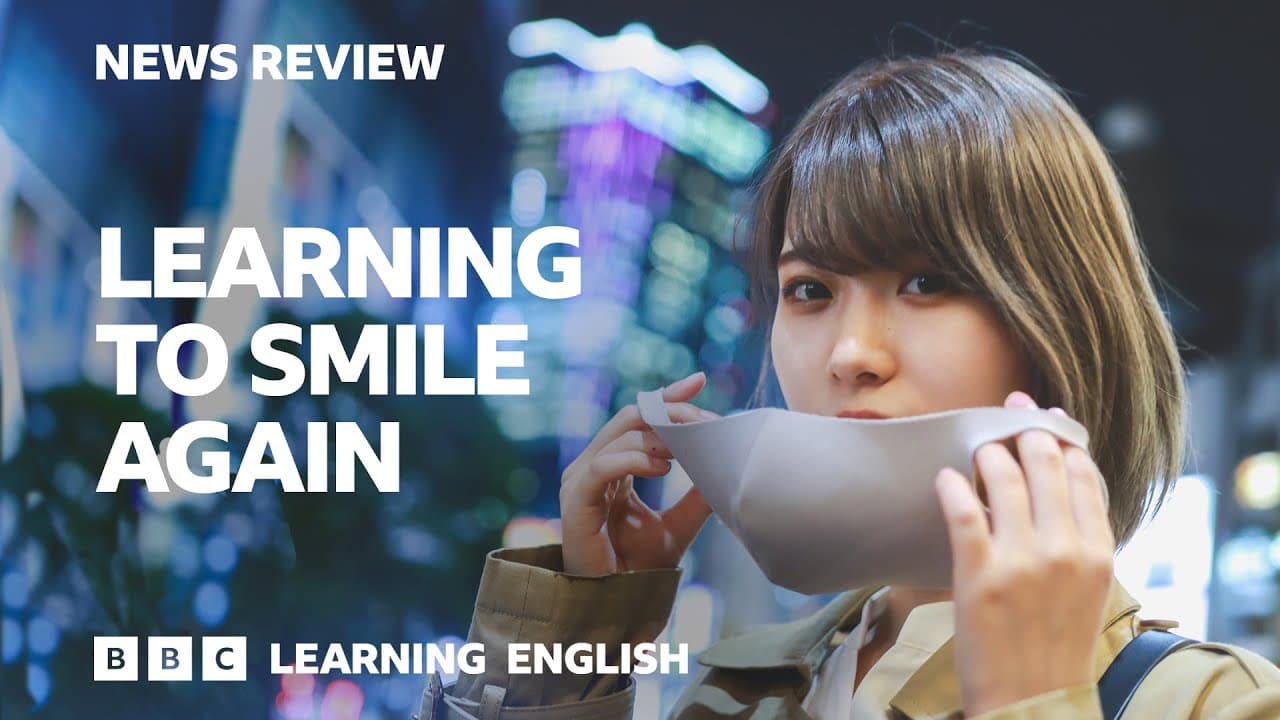
Japan's mask removal prompts smile lessons.
Transcript
Learning to smile again. This is News Review from BBC learning English. I'm Neil. And I'm Sian. Make sure you watch to the end to learn vocabulary about this story. Don't forget to subscribe to our channel, like this video, and try the quiz on our website. Now, the story: People in Japan have been taking lessons on how to smile again. The law's now... Read More
Key Insights
- In Japan, the end of mandatory mask-wearing has led to a unique challenge where people feel they have forgotten how to smile, prompting the rise of 'smile coaches'.
- The term 'grin' refers to a big smile, often used to describe happiness or mischief, and is a key vocabulary word in discussing post-mask life in Japan.
- The verb 'ditches' means to throw away or discard something, and it can apply to physical items, ideas, or even relationships.
- The phrase 'life after' is used to describe a future without a current condition or situation, such as life after masks in Japan.
- The end of mask mandates in Japan is seen as a significant cultural shift, with implications for social interactions and public behavior.
- The playful use of language, such as the pun on 'grin and bear it' versus 'grin and bare it', highlights the linguistic nuances in discussing mask removal.
- The concept of 'life after' is versatile, applicable to various life transitions, such as life after university or life after a famous career.
- BBC Learning English provides resources to enhance vocabulary and comprehension through engaging content like this news review.
Install to Summarize YouTube Videos and Get Transcripts
Explore YouTube Video Summarizer or Get YouTube Transcript Extractor
Questions & Answers
Q: Why are 'smile coaches' becoming popular in Japan?
With the removal of mask mandates, many people in Japan feel they have forgotten how to smile naturally. Smile coaches are becoming popular to help individuals relearn and practice smiling, which is seen as an important social skill, especially after the prolonged period of mask-wearing during the pandemic.
Q: What is the significance of the word 'grin' in the context of the video?
The word 'grin' is highlighted as a type of big smile, often associated with positive emotions or mischief. In the context of the video, it is used to discuss the cultural shift in Japan as people adjust to showing their smiles again in public after the end of mask mandates.
Q: How is the word 'ditches' used in the video?
In the video, 'ditches' is used as a verb meaning to throw away or discard something. It is applied in the context of Japan's mask policies, where people are 'ditching' their masks as they are no longer required by law, symbolizing a move towards a new normal.
Q: What does the phrase 'life after' signify in the video?
The phrase 'life after' is used to describe a future without a current condition or situation. In the video, it refers to the period following the end of mask mandates in Japan, exploring how life and social interactions might change as people adapt to not wearing masks.
Q: How does the video use language to engage viewers?
The video uses playful language and puns, such as the joke on 'grin and bear it' versus 'grin and bare it', to engage viewers. This approach not only makes the content more entertaining but also helps in teaching vocabulary and expressions related to the topic effectively.
Q: What cultural impacts does the video suggest regarding the end of mask mandates in Japan?
The video suggests that the end of mask mandates in Japan has significant cultural impacts, particularly on social interactions. People are relearning how to express emotions like smiling, which is crucial for communication and social bonding, highlighting the broader implications of this policy change.
Q: What resources does BBC Learning English offer to help with vocabulary learning?
BBC Learning English offers various resources, including news reviews, vocabulary lessons, and practical examples, to help learners improve their English. The content is designed to be engaging and informative, using real-life contexts and playful language to enhance understanding and retention.
Q: How does the concept of 'life after' apply to different life transitions?
The concept of 'life after' is versatile and applies to various life transitions, such as life after university, life after a famous career, or life after a significant cultural change like mask-wearing. It encapsulates the idea of adapting to new circumstances and preparing for future challenges.
Summary & Key Takeaways
-
The removal of mask mandates in Japan has led to a cultural challenge where many individuals feel they have forgotten how to smile, resulting in the emergence of 'smile coaches' to help people regain this social skill.
-
Key vocabulary words such as 'grin', 'ditches', and 'life after' are explored in the context of Japan's transition away from mandatory mask-wearing, providing linguistic insights and practical examples.
-
BBC Learning English's news review uses playful language and real-life examples to teach vocabulary, emphasizing the cultural and social impacts of Japan's new mask policies.
Read in Other Languages (beta)
Share This Summary 📚
Summarize YouTube Videos and Get Video Transcripts with 1-Click
Try YouTube Summary with ChatGPT & Claude or YouTube Transcript Generator
Explore More Summaries from BBC Learning English 📚
Summarize YouTube Videos and Get Video Transcripts with 1-Click
Try YouTube Summary with ChatGPT & Claude or YouTube Transcript Generator