India-China Relations - What PM Modi Should Do
TL;DR
The content discusses India's foreign policy challenges, particularly regarding China and Russia.
Transcript
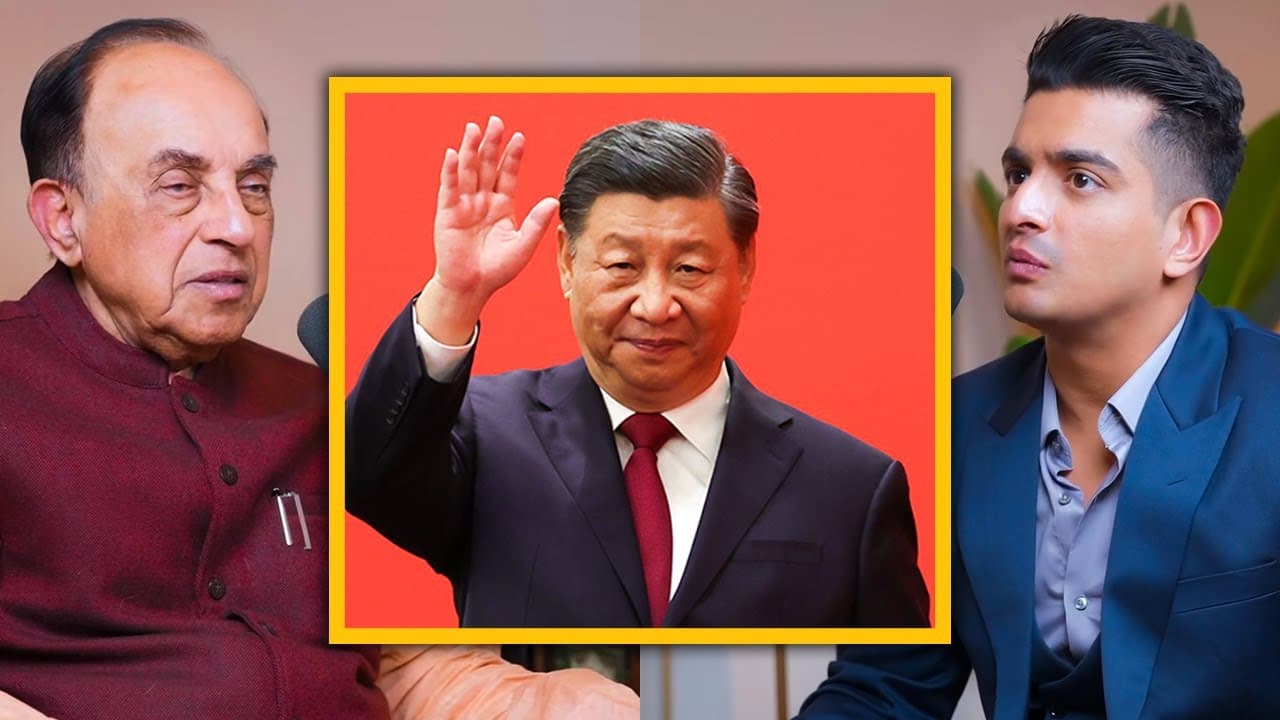
satisfy your need for happiness through your own curiosity with the r show how much of foreign policy is PM modi's will all of it what is the foreign policy policy means what you are what are you a non-aligned party you not aligned with anybody have you said that anywhere if you're not aligned then why are youy buying all kinds of junk from uh Russ... Read More
Key Insights
- 💍 India's foreign policy challenges are characterized by contradictions, particularly its non-alignment while engaging with Russia.
- 🌍 The speaker emphasizes the need for decisive military actions against China to address territorial disputes and assert national sovereignty.
- 💪 Historical military engagements serve as reminders that India can take strong action when motivated.
- ✊ Trade relationships can significantly influence India's geopolitical positioning and perceptions among global powers.
- 🥺 India's potential to become a leading global power hinges on sustainable economic growth and strategic military policies.
- 🎖️ The criticism of buffer zones reflects a call for more aggressive diplomatic and military strategies in territorial negotiations.
- 🇨🇳 Domestic political calculations may be influencing India's hesitance to confront China directly.
Install to Summarize YouTube Videos and Get Transcripts
Explore YouTube Video Summarizer or Get YouTube Transcript Extractor
Questions & Answers
Q: What is the main concern regarding India's foreign policy?
The primary concern revolves around India's ambiguous stance as a non-aligned nation while maintaining significant trading relationships with Russia and complex interactions with China. This creates confusion about India’s strategic direction and commitment to asserting its sovereignty, especially given the ongoing tensions with China over territorial claims.
Q: How does the speaker view China's influence on India?
The speaker believes that China poses a significant threat to India's territorial integrity. They argue that China's aggressive actions in border areas highlight India's weakness and lack of a decisive response. The speaker urges India to adopt a more confrontational stance to reclaim its territory and assert itself as a regional power.
Q: What historical references does the speaker make to support their argument?
The speaker cites historical instances where India successfully engaged with China militarily, such as the skirmishes in Nathu La in 1967 and the Su Chu Valley conflict in 1988. These examples are used to illustrate that with determination, India can confront aggressive actions and potentially drive Chinese forces back, as seen in the past.
Q: What are the implications of India’s current trade practices with Russia?
India's trade with Russia, especially using the rupee-ruble arrangement, raises questions about its commitment to a non-aligned position. This trade pattern can complicate India's diplomatic relationships and may impact how other nations perceive India's foreign policy, particularly in the context of Western sanctions against Russia.
Q: What does the speaker propose as a solution for India's position?
The speaker suggests that for India to emerge as a significant global player, it must focus on achieving consistent economic growth—ideally around 10% annually for five years—and develop a robust military strategy to counter China’s influence. This would help shift India's perception from being a third-factor player to a first-factor entity in global politics.
Q: Why does the speaker criticize the concept of a buffer zone with China?
The speaker criticizes the concept of a buffer zone as ineffective, asserting that it merely delineates territories claimed by both nations without resolving the underlying conflict. They argue that India should take a more assertive stand to demand that Chinese forces withdraw from disputed areas rather than accept a compromised position.
Summary & Key Takeaways
-
The discussion highlights India's non-alignment in foreign policy while questioning its trade relations, especially with Russia, and interactions with China.
-
There is a strong emphasis on the need for India to assert its military strengths against China, referencing historical conflicts.
-
The speaker suggests that India has the potential to become a leading global power if it achieves consistent economic growth and addresses geopolitical tensions.
Read in Other Languages (beta)
Share This Summary 📚
Summarize YouTube Videos and Get Video Transcripts with 1-Click
Try YouTube Summary with ChatGPT & Claude or YouTube Transcript Generator
Explore More Summaries from TRS Clips 📚




Summarize YouTube Videos and Get Video Transcripts with 1-Click
Try YouTube Summary with ChatGPT & Claude or YouTube Transcript Generator