Galactic Disruption - Professor Joseph Silk
TL;DR
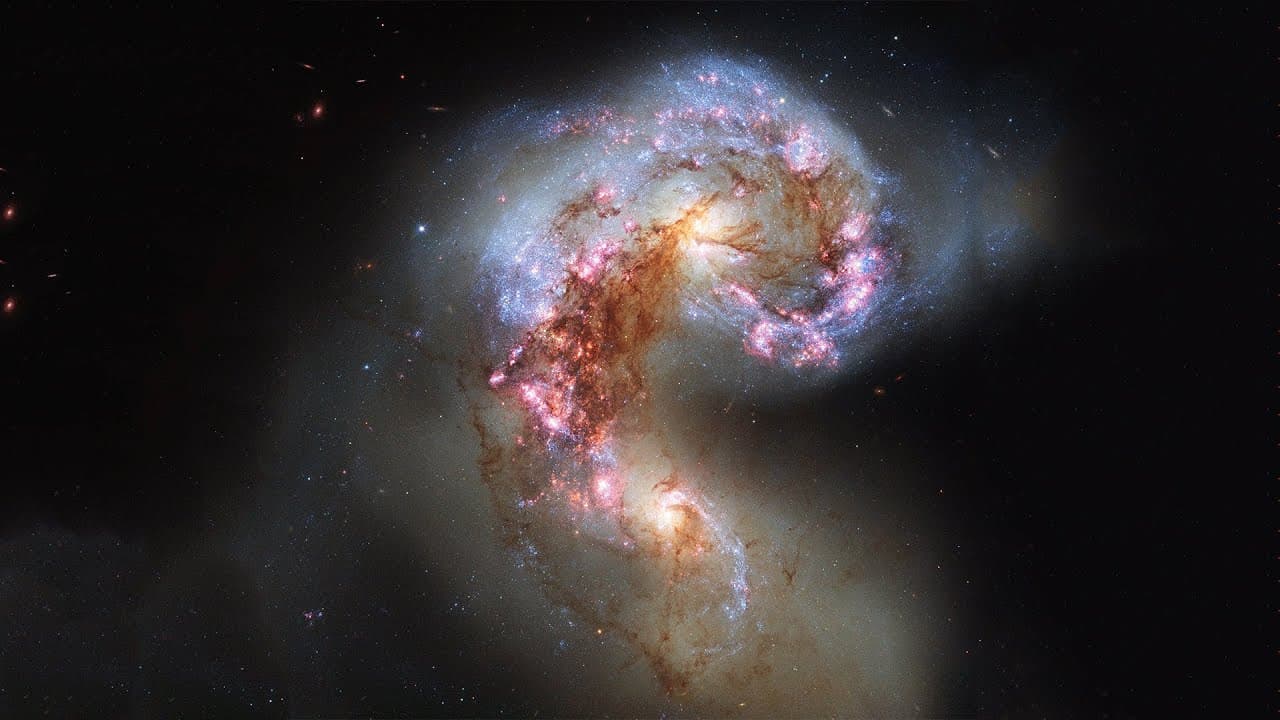
Galaxies can collide and leave behind debris trails, providing insights into past events on a larger scale.
Transcript
okay so let's move on to the next pit of debris on a larger scale that I want to tell you about let's move on from single stars I want to take you on two entire galaxies so galaxies are fragile things when one galaxy approaches another and they do there are so many of them they can actually be disrupted and leave debris trails behind and so we can ... Read More
Key Insights
- 🍃 Galaxies can be disrupted and leave behind debris trails when they collide with each other.
- 🤩 Debris trails consist of stars and can be observed as faint streams surrounding galaxies.
- 🙈 Computer simulations can reproduce the patterns seen in debris trails, confirming their origins.
- 👻 Studying debris trails allows scientists to unravel the history of galaxy mergers and their effects on the structure of galaxies.
- 🫤 Debris trails provide insights into events that occurred millions of years ago, predating even the existence of dinosaurs.
- 🌥️ The study of debris trails on a larger scale helps understand the mixing and distribution of material from distant galaxies.
- 🔭 Debris trails can be observed and captured using both professional and amateur telescopes.
Install to Summarize YouTube Videos and Get Transcripts
Explore YouTube Video Summarizer or Get YouTube Transcript Extractor
Questions & Answers
Q: How do galaxies create debris trails when they collide?
When one galaxy approaches another, the gravitational forces pull on the inner parts of the approaching galaxy more strongly than the outer parts, leading to stretching and eventual separation of stars. This results in the formation of debris trails.
Q: How can debris trails from colliding galaxies be studied?
Debris trails can be observed using powerful telescopes and CCD cameras. They appear as faint streams surrounding galaxies. Computer simulations also help in understanding and reproducing these patterns.
Q: What can debris trails from colliding galaxies tell us about the past?
Debris trails serve as fossils of violent events that occurred millions of years ago. By studying these patterns, scientists can gain insights into the history of galaxy mergers and the resulting changes in the structure of galaxies.
Q: Why is studying debris trails on a larger scale important?
Studying debris trails on a larger scale, beyond the Milky Way, helps scientists understand the mixing and distribution of material from distant galaxies. It provides insights into the evolution of the region surrounding our own galaxy.
Summary & Key Takeaways
-
Galaxies can be disrupted and leave behind debris trails when they collide with each other.
-
These debris trails consist of stars and can provide information about past events when galaxies merged.
-
By studying these debris trails, scientists can learn about phenomena on a larger scale beyond single stars.
Read in Other Languages (beta)
Share This Summary 📚
Summarize YouTube Videos and Get Video Transcripts with 1-Click
Try YouTube Summary with ChatGPT & Claude or YouTube Transcript Generator
Explore More Summaries from Gresham College 📚


Summarize YouTube Videos and Get Video Transcripts with 1-Click
Try YouTube Summary with ChatGPT & Claude or YouTube Transcript Generator