How to Identify Overcompensation in CEO Salaries
TL;DR
To identify overcompensation in CEO salaries, compare CEO pay to employee salaries, looking for ratios of 50 to 100 times the average employee pay as reasonable. Additionally, check if CEO compensation aligns with company performance metrics, particularly free cash flow growth, ensuring that it includes shares linked to genuine performance, not inflated figures.
Transcript
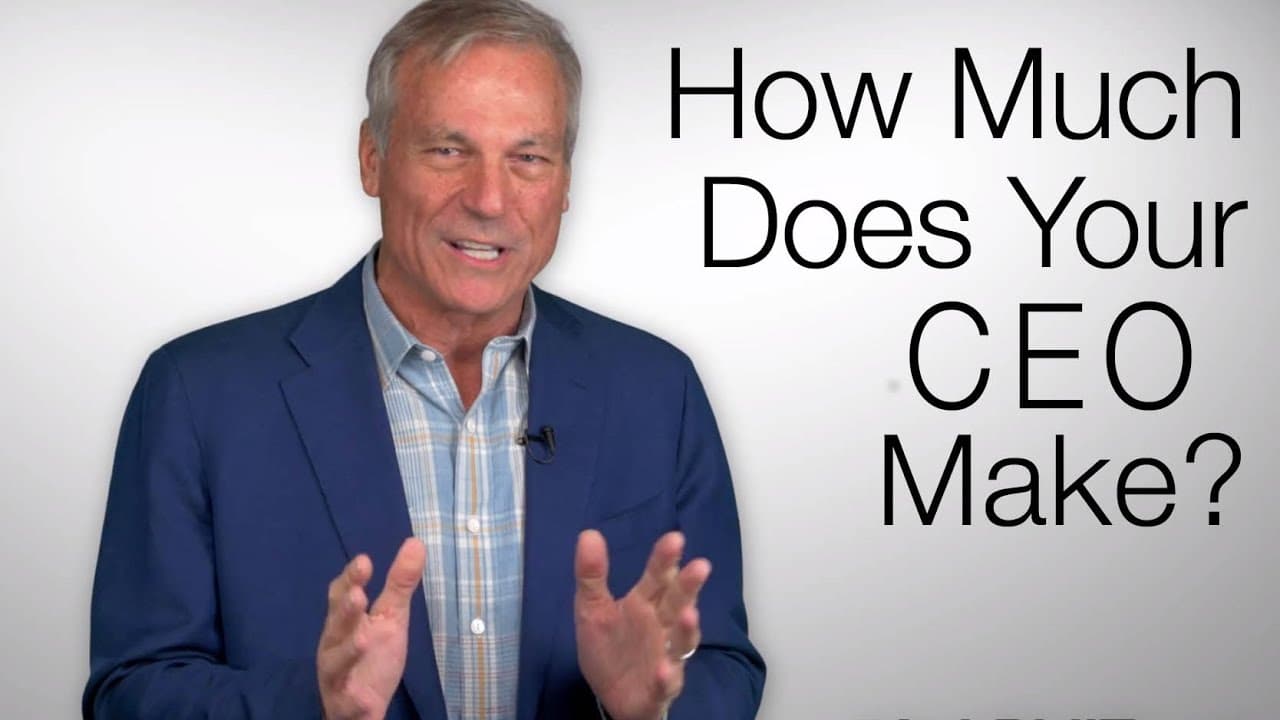
all right guys i'm phil town and we are going to do a q a today so let's get started we have a group of questions that we want to get rolling on that are kind of similar to each other so we can get into a little bit of a theme here herbert from facebook asks how to recognize whether a ceo is being overcompensated or compensation is conflicting with... Read More
Key Insights
- 🥺 CEOs now make 500 times more than the average employee, leading to concerns about fairness and the alignment of interests.
- 🖐️ Consultants play a role in inflating CEO pay through benchmarking against similar companies.
- 🍻 CEO pay should be tied to company performance and include shares linked to real performance.
- 🥶 Recognizing overcompensation is challenging, but indicators include significant pay gaps and lack of free cash flow growth.
- ❓ Shareholders and investors can pressure companies to align CEO pay with performance and advocate for greater transparency.
- ❓ Employees and stakeholders can influence CEO pay through collective action and engagement in corporate decision-making.
- 🪡 Legislation or regulations may be needed to address excessive CEO pay and ensure proper accountability.
Install to Summarize YouTube Videos and Get Transcripts
Explore YouTube Video Summarizer or Get YouTube Transcript Extractor
Questions & Answers
Q: How can you recognize whether a CEO is being overcompensated or if their compensation conflicts with shareholder interests?
Look for indicators such as the CEO's pay being significantly higher than that of employees, lack of growth in free cash flow, and inflated pay based on benchmarking against similar companies. Also, consider if the CEO's pay includes shares tied to real performance.
Q: Are there any regulations in place to control CEO pay?
There are no specific regulations, but shareholders and investors can pressure companies to align CEO pay with performance through voting and proxy statements. Some countries also have regulations on disclosing executive compensation.
Q: What can be done to address the growing disparity in CEO pay?
Shareholders and investors can advocate for transparent and reasonable CEO pay, tying it to performance and the interests of shareholders. Additionally, legislation or regulations could be introduced to curb excessive compensation and ensure greater accountability.
Q: How can employees and stakeholders influence CEO pay decisions?
Employees and stakeholders can voice their concerns through unions, collective bargaining, or engaging with shareholder activism groups. They can also participate in annual general meetings and use their voting rights to influence executive compensation.
Summary & Key Takeaways
-
In 1980, CEOs made 44 times the average employee's salary, but this has now risen to 500 times.
-
CEOs have used consultants to benchmark their pay against similar companies, leading to inflated compensation.
-
It is important for CEOs' pay to be aligned with the company's performance and for it to include shares tied to real performance.
Read in Other Languages (beta)
Share This Summary 📚
Summarize YouTube Videos and Get Video Transcripts with 1-Click
Try YouTube Summary with ChatGPT & Claude or YouTube Transcript Generator
Explore More Summaries from Rule #1 Investing 📚



Summarize YouTube Videos and Get Video Transcripts with 1-Click
Try YouTube Summary with ChatGPT & Claude or YouTube Transcript Generator