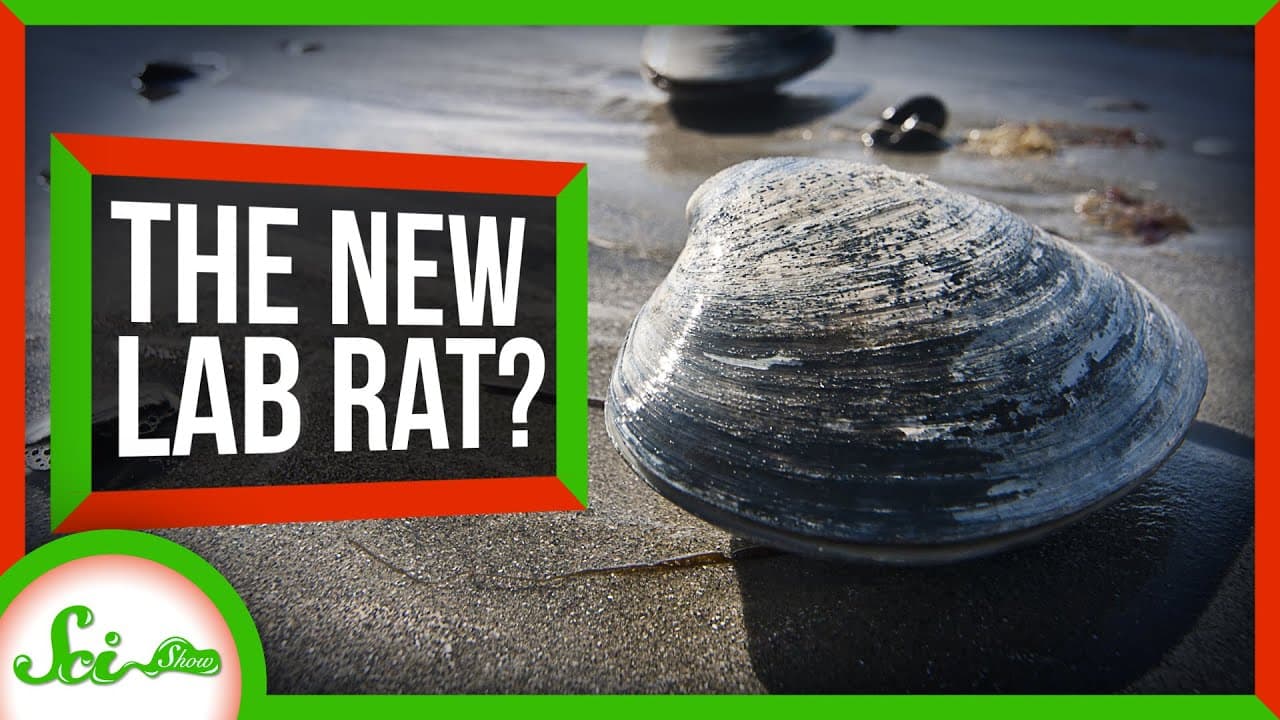
Bivalves Could Be the New Lab Rats
TL;DR
Bivalves like mussels, clams, and oysters are emerging as new model organisms in scientific research due to their unique biology and potential to provide insights into immunity, contagious cancers, and bone formation.
Transcript
Thanks to Brilliant for supporting this episode. Go to Brilliant.org/SciShow to check out their course on Scientific Thinking. [♪ INTRO] Think of animals traditionally used in scientific research, and you probably think: rats, mice, guinea pigs, fruit flies... But there might be a new player in town, and it’s one we’re more used to seeing at the ra... Read More
Key Insights
- 👶 Bivalves are emerging as new model organisms in scientific research due to their biological traits and potential to provide insights into various aspects of human health and disease.
- 💄 They possess an immune system that relies on antimicrobial peptides instead of antibodies, making them an interesting subject for studying immunity.
- ♋ Contagious cancers in bivalves can shed light on the spread of cancer within human bodies and provide new avenues for research and treatment.
- 💁 The formation of bivalve shells, particularly the nacre layer, has implications for understanding bone formation and repair in humans.
Install to Summarize YouTube Videos and Get Transcripts
Explore YouTube Video Summarizer or Get YouTube Transcript Extractor
Questions & Answers
Q: How do bivalves with no adaptive immune system defend against disease-causing pathogens?
Bivalves produce antimicrobial peptides that can kill microbes, providing them with a defense mechanism against pathogens without the need for antibodies.
Q: How are contagious cancers in bivalves being studied as a model for human cancers?
Understanding how contagious cancers spread between bivalve species can provide insights into the spread of cancer within the human body and potentially lead to new treatment strategies.
Q: How can studying bivalve shell formation contribute to our understanding of bone formation and repair?
Nacre, the iridescent layer in bivalve shells, has been found to stimulate bone-forming cells and show potential in aiding the mineralization and growth of bones in various animals, including humans.
Q: How are bivalves being used to study tissue implants?
Oysters, known for their pearl-growing abilities, are being used as models to study tissue implants. Understanding how the genetically distinct tissues interact in oysters can help improve implant and bone graft procedures in humans.
Summary & Key Takeaways
-
Bivalves, such as mussels, clams, and oysters, are being used as model organisms in scientific research to understand basic biological questions.
-
Bivalves can provide insights into immunity as they encounter disease-causing pathogens in the ocean without getting sick.
-
Contagious cancer found in bivalves has inspired scientists to study it as a model for human cancers.
-
The way bivalves form their shells, particularly nacre, can teach us about bone formation and repair.
Read in Other Languages (beta)
Share This Summary 📚
Summarize YouTube Videos and Get Video Transcripts with 1-Click
Try YouTube Summary with ChatGPT & Claude or YouTube Transcript Generator
Explore More Summaries from SciShow 📚


Summarize YouTube Videos and Get Video Transcripts with 1-Click
Try YouTube Summary with ChatGPT & Claude or YouTube Transcript Generator