How Did You Get Here?! (Unexpected Ways Species Travel the World)
TL;DR
Species can end up in unexpected places due to factors like human influence, range fragmentation, continental drift, and unique biological adaptations for dispersion.
Transcript
[♪ INTRO] In most cases, the way species spread from place to place is relatively easy to understand. Like, squirrel is born. Squirrel grows up. Squirrel decides they’re sick of living in the same old tree where they’ve always lived. So they wander to the next habitat over, and before you know it, the entire continent is covered with squirrels. It’... Read More
Key Insights
- 🖐️ Human activity has played a significant role in disjunct distributions, unintentionally spreading species to new locations.
- 🥺 Range fragmentation can lead to disjunct distributions, as populations are separated by gaps caused by changing climates or geographic barriers.
- 👻 Unique biological adaptations, such as buoyant seeds in mangrove trees and resilient eggs in killifish, allow species to spread to distant habitats.
- 🌍 Continental drift and the breakup of ancient supercontinents have influenced the distribution of species across the globe.
- 💱 Disjunct distributions provide insights into evolutionary history and the changing landscapes of the Earth over millions of years.
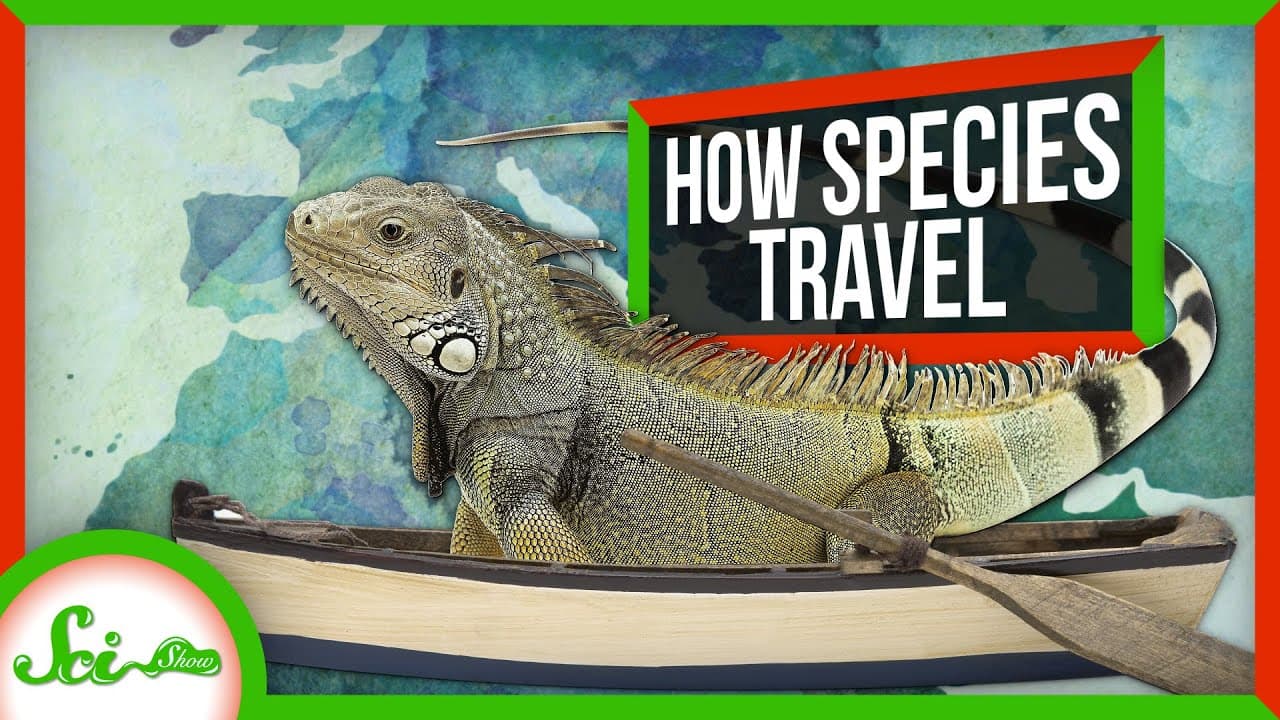
- ❤️🩹 Rafting, a form of distribution through floating debris, may explain how animals like iguanas and lemurs ended up on isolated islands.
Install to Summarize YouTube Videos and Get Transcripts
Explore YouTube Video Summarizer or Get YouTube Transcript Extractor
Questions & Answers
Q: How does human activity contribute to disjunct distributions?
Humans, as long-distance travelers and habitual migrants, unintentionally transport species to new locations, leading to disjunct distributions. For example, genetic evidence suggests that pygmy shrews in Ireland were brought by humans on boats carrying hay.
Q: How does range fragmentation contribute to disjunct distributions?
Range fragmentation occurs when populations of the same species are separated by significant gaps, resulting in disjunct distributions. Screaming hairy armadillos, for instance, live in two distinct sections with 500 kilometers between them, likely caused by shifting climates over time.
Q: How did marsupials end up in Australia?
Marsupials evolved in North America and spread south during the late Precambrian when the continents were part of the supercontinent Gondwana. They eventually reached Australia by foot before the continents separated and drifted to their current locations.
Q: How do unique biological adaptations contribute to disjunct distributions?
Mangrove trees, with their buoyant seeds, can travel long distances through water, allowing them to colonize diverse coastlines worldwide. Similarly, killifish eggs can survive digestion, allowing them to be dispersed through bird droppings, as demonstrated by their presence in remote bodies of water.
Summary & Key Takeaways
-
Disjunct distribution occurs when closely related species are separated by large geographical distances, sometimes across oceans.
-
Human activity, such as migration and trade, can be a major driver of disjunct distributions, bringing species to new locations unintentionally.
-
Range fragmentation, caused by gaps between populations, can also lead to disjunct distributions, as seen in the case of screaming hairy armadillos.
-
Geographic forces and unique biological adaptations, like buoyant seeds in mangrove trees and resilient eggs in killifish, can explain how species end up in diverse habitats.
Read in Other Languages (beta)
Share This Summary 📚
Summarize YouTube Videos and Get Video Transcripts with 1-Click
Try YouTube Summary with ChatGPT & Claude or YouTube Transcript Generator
Explore More Summaries from SciShow 📚


Summarize YouTube Videos and Get Video Transcripts with 1-Click
Try YouTube Summary with ChatGPT & Claude or YouTube Transcript Generator