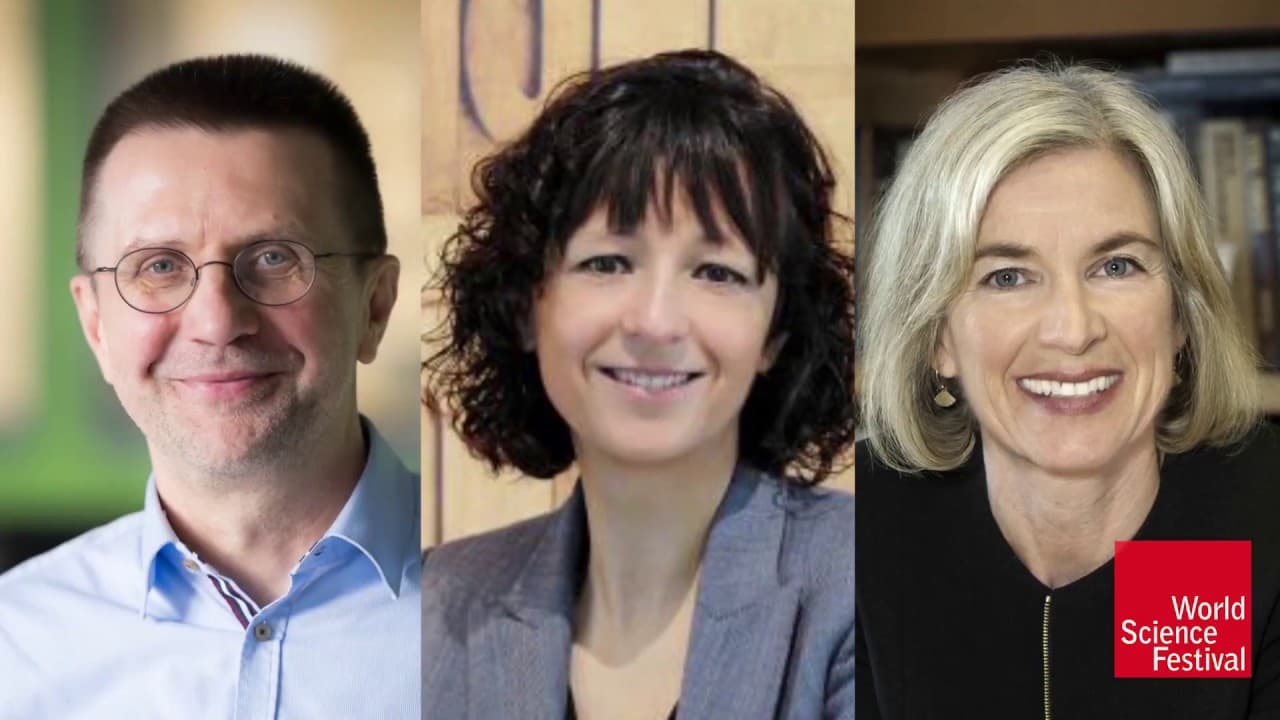
2018 Kavli Prize Winners - NANOSCIENCE: Doudna, Charpentier and Siksnys
TL;DR
CRISPR, a groundbreaking gene editing technology, has the potential to treat diseases, revolutionize food production, and even revive extinct species.
Transcript
from its potential to treat cancer and edit out disease-causing mutations in embryos to its ability to revolutionize food production and even revive extinct mammals the broad applications of CRISPR are staggering CRISPR is often referred to as one of the most significant breakthroughs of this century and arguably the last 50 years or so the winners... Read More
Key Insights
- ❓ CRISPR has the potential to revolutionize healthcare by treating genetic diseases and correcting mutations in human genes.
- 🖐️ Jennifer Doudna, Emmanuelle Charpentier, and Virginijus Šikšnys played pivotal roles in understanding and advancing CRISPR technology.
- 😵 Collaboration and cross-continental partnerships have been instrumental in the progress of CRISPR research.
- 💄 There are concerns surrounding the ethical use of CRISPR, particularly in making permanent changes to future generations' genetic makeup.
- 🏑 Despite concerns, the possibilities and positive impact of CRISPR on various fields such as healthcare and conservation are undeniable.
- ♿ CRISPR is democratizing technology by reducing the cost and accessibility of gene editing.
- 🈸 The potential applications of CRISPR extend beyond healthcare, with possibilities in agriculture and reviving extinct species.
Install to Summarize YouTube Videos and Get Transcripts
Explore YouTube Video Summarizer or Get YouTube Transcript Extractor
Questions & Answers
Q: What is CRISPR and why is it considered a significant breakthrough?
CRISPR is a gene editing technology that can repair genes and correct mutations. It is revolutionary because it offers the potential to treat genetic diseases and has broad applications in various fields.
Q: How did the collaboration between Doudna, Charpentier, and Šikšnys contribute to the understanding of CRISPR?
The cross-continental partnership between Doudna, Charpentier, and Šikšnys allowed them to study how CRISPR recognizes and edits DNA. Their research laid the foundation for the development of CRISPR as a tool for gene editing.
Q: What are the potential risks and ethical concerns associated with CRISPR?
Some scientists argue that caution should be exercised when making genetic changes that can be passed on to future generations. Ethical concerns arise regarding the extent of gene editing and potential unintended consequences.
Q: What are the future possibilities for CRISPR technology?
CRISPR has limitless potential, from treating genetic disorders and revolutionizing food production to bringing back extinct species. Its applications continue to be explored, and there is always more to be discovered.
Summary & Key Takeaways
-
CRISPR is a powerful tool that can repair genes and correct mutations in human genes, making it a game-changer in treating genetic diseases.
-
Jennifer Doudna, Emmanuelle Charpentier, and Virginijus Šikšnys won the 2018 Kavli Prize for their pioneering work in CRISPR.
-
Despite concerns, the wide-ranging applications of CRISPR, from healthcare to conservation, make it an incredible discovery.
Read in Other Languages (beta)
Share This Summary 📚
Summarize YouTube Videos and Get Video Transcripts with 1-Click
Try YouTube Summary with ChatGPT & Claude or YouTube Transcript Generator
Explore More Summaries from World Science Festival 📚



Summarize YouTube Videos and Get Video Transcripts with 1-Click
Try YouTube Summary with ChatGPT & Claude or YouTube Transcript Generator