The life and philosophy of Slavoj Žižek | Interview
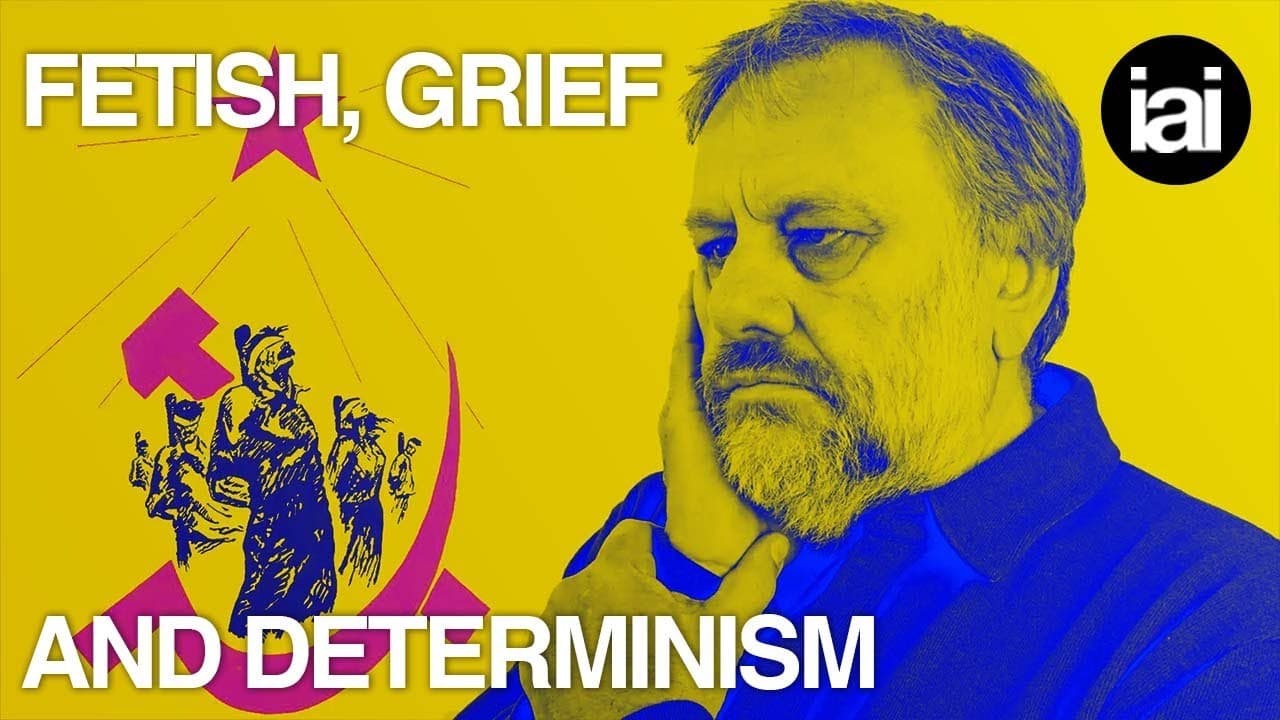
TL;DR
Ideology has evolved from being seen as a lie to a more cynical and calculated concept, challenging the traditional Enlightenment belief in rational actors and individual freedom.
Transcript
it's not my free act if I throw a coin up and set head tail or what no that's contingency freedom is a necessity of its own you've said that recently things have changed with ideology that you were saying until now ideology was just a lie but now it's a it's more cynical thing in a very precise sense that you know what you're doing I would call in ... Read More
Key Insights
- 😌 Ideology has evolved from being seen as a lie to a more cynical and calculated concept.
- 🧑🏭 Alternative strategies exist to undermine ideological stances, challenging the belief in rational actors.
- 💅 The example of the man's breakdown over the death of his wife's pet illustrates the complex layers within ideology.
- 🧑🏭 Figures like Heinrich Himmler used ethical justifications, such as Oriental spiritualism, to reconcile horrific acts with moral righteousness.
- 🥶 Brain-computer interfaces have the potential to challenge traditional notions of subjectivity and free will.
- 🔇 The speaker believes that freedom should be understood as a positive decision and an ontological necessity.
- 👻 The openness of nature and history allows for multiple possibilities and interpretations.
Install to Summarize YouTube Videos and Get Transcripts
Explore YouTube Video Summarizer or Get YouTube Transcript Extractor
Questions & Answers
Q: How does the speaker view the role of ideology in society?
The speaker suggests that ideology has become more cynical and calculated, challenging the belief in rational actors and individual freedom. He argues that there are different strategies to undermine ideological stances.
Q: Can you provide an example of undermining ideological stances?
The speaker gives the example of a man who broke down after the death of his wife's pet. This pet served as a fetish that embodied his wife, and its death symbolized the loss of his wife, leading to his breakdown. The speaker uses this example to highlight the underlying layers of ideology and how they can be undermined.
Q: How does Heinrich Himmler's ethical justification relate to ideology?
Himmler justified the Holocaust as the highest ethical act, using a rhetorical trick of Oriental spiritualism found in texts like the Bhagavad Gita. By claiming that life is an appearance and that the main thing is to fulfill one's duty, he tried to reconcile the horrific acts with a sense of moral righteousness. The speaker sees this as a manifestation of the cynicism within ideology.
Q: How does technology, specifically brain-computer interfaces, affect notions of subjectivity and free will?
The speaker acknowledges that brain-computer interfaces have the potential to challenge traditional notions of subjectivity and free will. He mentions that he explores this topic in his upcoming book on freedom, where he tries to find ways to save freedom in the face of neurobiological determinism.
Key Insights:
- Ideology has evolved from being seen as a lie to a more cynical and calculated concept.
- Alternative strategies exist to undermine ideological stances, challenging the belief in rational actors.
- The example of the man's breakdown over the death of his wife's pet illustrates the complex layers within ideology.
- Figures like Heinrich Himmler used ethical justifications, such as Oriental spiritualism, to reconcile horrific acts with moral righteousness.
- Brain-computer interfaces have the potential to challenge traditional notions of subjectivity and free will.
- The speaker believes that freedom should be understood as a positive decision and an ontological necessity.
- The openness of nature and history allows for multiple possibilities and interpretations.
- To understand historical events, one should consider other possible outcomes and explore the concept of superposition.
Summary & Key Takeaways
-
The speaker discusses the shift in ideology, stating that it has become more cynical and calculated in nature.
-
He argues that while rational argumentation may not be effective, there are alternative strategies to undermine ideological stances.
-
The speaker provides examples, such as the case of a man who broke down after the death of his wife's pet and draws parallels with the ethical justifications used by figures like Heinrich Himmler.
Read in Other Languages (beta)
Share This Summary 📚
Summarize YouTube Videos and Get Video Transcripts with 1-Click
Try YouTube Summary with ChatGPT & Claude or YouTube Transcript Generator
Explore More Summaries from The Institute of Art and Ideas 📚

Summarize YouTube Videos and Get Video Transcripts with 1-Click
Try YouTube Summary with ChatGPT & Claude or YouTube Transcript Generator