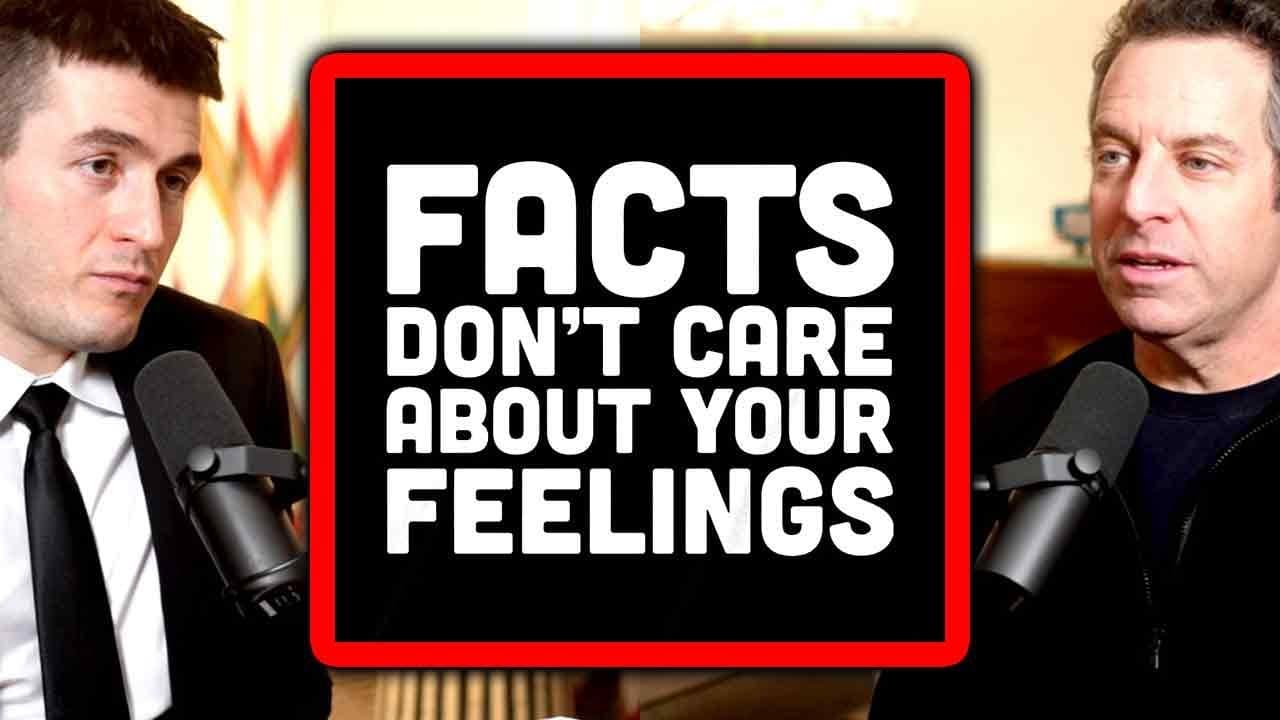
Sam Harris on truth vs feelings | Lex Fridman Podcast Clips
TL;DR
Empathy and reason play different roles in making a net positive impact on the world, with cognitive empathy being more effective than emotional empathy.
Transcript
what is more effective at making a net positive impact on the world empathy or Reason it depends on what you mean by empathy there are two at least two kinds of empathy there's the the cognitive form which is you know I would argue even a species of reason it's it's just understanding another person's point of view you know you understand why they'... Read More
Key Insights
- 🅰️ There are two types of empathy: cognitive empathy and emotional empathy.
- 🥺 Emotional contagion, a type of emotional empathy, can lead to biased and disproportional reactions.
- 🌥️ Personal stories with identifiable protagonists are more compelling than large-scale data.
- 💄 Reason is a better tool for making ethical decisions.
- 🆘 Cognitive empathy helps us understand others' perspectives and navigate relationships effectively.
- ❓ Emotional empathy may be an obstacle to ethical behavior in certain situations.
- 🌥️ Our moral psychology tends to prioritize the suffering of individuals over larger-scale issues.
Install to Summarize YouTube Videos and Get Transcripts
Explore YouTube Video Summarizer or Get YouTube Transcript Extractor
Questions & Answers
Q: How can empathy be divided into different types?
Empathy can be divided into cognitive empathy, which involves understanding another person's perspective, and emotional empathy, which involves experiencing and sharing another person's emotions.
Q: Why can emotional contagion be an unhelpful guide for ethical behavior?
Emotional contagion, or the emotional empathy that causes us to feel what others feel, can lead to biased and disproportionate reactions. We may prioritize the suffering of a single individual over larger-scale issues because of emotional contagion.
Q: Why do we find stories with a single protagonist more compelling than data about genocide?
Our moral psychology tends to be more engaged by personal stories that we can easily empathize with, rather than abstract data. This bias can hinder our ability to address larger-scale problems like genocide.
Q: Is reason more effective than empathy in making ethical decisions?
Reason is a better tool for making big decisions about mitigating human suffering and protecting values. It allows us to consider a wider range of factors and make more objective assessments.
Summary & Key Takeaways
-
There are two types of empathy: cognitive empathy, which involves understanding another person's point of view, and emotional empathy, which involves experiencing another person's emotions.
-
Emotional contagion, a type of emotional empathy, can be a bad guide for ethical behavior and moral intuitions.
-
We tend to be more compelled by stories with a single identifiable protagonist and struggle to empathize with large-scale issues like genocide.
Read in Other Languages (beta)
Share This Summary 📚
Summarize YouTube Videos and Get Video Transcripts with 1-Click
Try YouTube Summary with ChatGPT & Claude or YouTube Transcript Generator
Explore More Summaries from Lex Clips 📚




Summarize YouTube Videos and Get Video Transcripts with 1-Click
Try YouTube Summary with ChatGPT & Claude or YouTube Transcript Generator