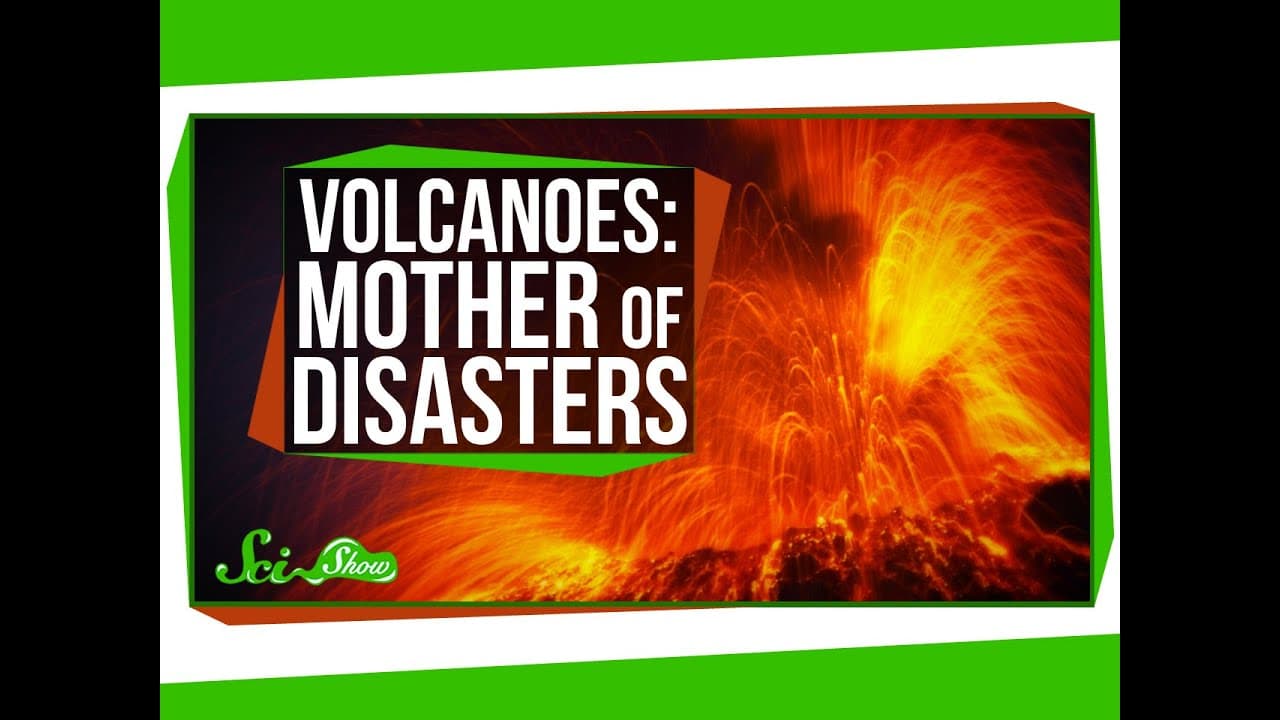
Volcanoes: Mother of Disasters
TL;DR
Volcanic eruptions can cause natural disasters, alter climates, and even impact disease patterns, with significant global consequences.
Transcript
The word volcano probably calls to mind flowing lava, tropical islands, and maybe the tragic destruction at Pompeii. But volcanoes can be bigger, badder, and have wider-ranging effects than you might expect. The aftermath of huge volcanic eruptions can cause other natural disasters or widespread cooling, and they’ve even altered the DNA of a diseas... Read More
Key Insights
- 🌐 Volcanic eruptions can have widespread consequences, including altering the climate, causing cooling, and contributing to global warming and ocean acidification.
- 😎 Eruptions can result in volcanic winters, which affect large regions with cooling temperatures.
- 💁 Volcanoes can cause droughts by inhibiting raindrop formation through the dispersal of particles in the atmosphere.
- 🌊 The impacts of volcanic eruptions extend to tsunamis, which can result from underwater eruptions or explosive debris entering the ocean.
- 😎 The 1815 Mount Tambora eruption had significant global effects, including cooling temperatures, leading to famine and the spread of a new strain of cholera bacteria.
- ❓ Volcanic eruptions have influenced the course of history, including inspiring Mary Shelley's novel Frankenstein.
Install to Summarize YouTube Videos and Get Transcripts
Explore YouTube Video Summarizer or Get YouTube Transcript Extractor
Questions & Answers
Q: How do volcanic eruptions affect the Earth's climate?
Volcanic eruptions can release greenhouse gases like carbon dioxide, contribute to global warming, and cause ocean acidification. They can also release sulfur dioxide, which forms droplets of sulfuric acid in the stratosphere, leading to cooling of the lower atmosphere.
Q: How do volcanic eruptions cause droughts?
Volcanic eruptions can prevent raindrops from forming by dispersing water molecules over numerous ash or particle droplets. This delays rain formation, leading to less rainfall and potentially causing droughts.
Q: Can volcanic eruptions create tsunamis?
Yes, big underwater eruptions, volcanic collapses, or explosive debris from eruptions can generate tsunamis. The 1883 Krakatoa eruption caused the largest volcanic tsunami, affecting sea levels worldwide.
Q: How did the 1815 Mount Tambora eruption impact the global climate?
The Mount Tambora eruption released particles that remained in the atmosphere for two years, causing global temperatures to cool by as much as 3°C. This led to a "year without a summer" in 1816, affecting agriculture and resulting in widespread famine.
Summary & Key Takeaways
-
Volcanic eruptions occur when molten rock, called magma, is forced onto the Earth's surface through vents or cracks. They can form as tectonic plates move apart, towards each other, or over hotspots.
-
Volcanic activity is characterized by lava flows and heat, but more explosive eruptions can release particles and gases into the atmosphere, impacting climate and ecosystems.
-
Volcanoes can cause cooling, volcano winters, droughts, tsunamis, and even alter disease patterns, as seen in the case of the 1815 Mount Tambora eruption and the spread of cholera.
Read in Other Languages (beta)
Share This Summary 📚
Summarize YouTube Videos and Get Video Transcripts with 1-Click
Try YouTube Summary with ChatGPT & Claude or YouTube Transcript Generator
Explore More Summaries from SciShow 📚


Summarize YouTube Videos and Get Video Transcripts with 1-Click
Try YouTube Summary with ChatGPT & Claude or YouTube Transcript Generator