How to Eat When You Don't Have a Mouth: Lessons From 5 Animals
TL;DR
Animals without mouths have evolved different strategies to obtain nutrients, such as using external stomachs, relying on bacterial partners, or absorbing nutrients through their skin.
Transcript
humans along with most other animals cannot make their own food I mean we can whip up a sandwich if we're feeling peckish but we have to consume proteins and sugars and other essential molecules made by something else and we do that with the help of our very useful body part our mouths but not all animals have a mouth and even some that have one ar... Read More
Key Insights
- 🤑 Mouth-less animals, like placozoans and hydra, provide clues about the evolution of mouths in animals.
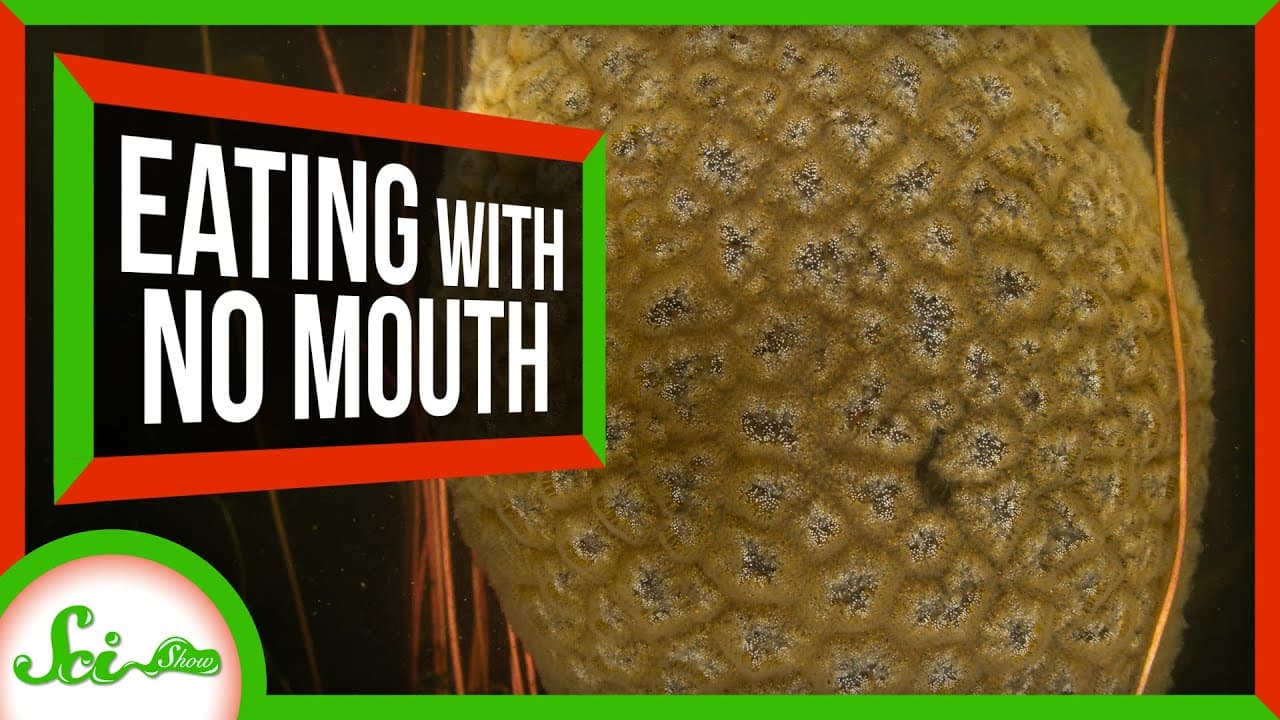
- 😅 Colonial animals, such as bryozoans, showcase collective feeding strategies where only some individuals eat.
- 🙈 Symbiotic relationships with bacteria, like those seen in Paracatenula, have existed for hundreds of millions of years, providing insights into how these relationships evolve and are maintained.
- 🤱 Hagfish's ability to absorb nutrients through its skin suggests a potential evolutionary switch from skin feeding to feeding through a gut in vertebrates.
Install to Summarize YouTube Videos and Get Transcripts
Explore YouTube Video Summarizer or Get YouTube Transcript Extractor
Questions & Answers
Q: How do placozoans obtain nutrients without a mouth?
Placozoans rely on hair-like projections called cilia to move on algae. Certain cells on their underside secrete chemicals to digest algae and absorb released nutrients.
Q: What is the feeding strategy of bryozoans?
Bryozoans are filter feeders, and only some individuals in the colony, called autos Owens, use their mouths to collect food particles from the water. Other members of the colony, heteros Owens, obtain nutrients through connective pores from the autos Owens.
Q: How does Hydra vulgaris ingest food without a mouth?
When Hydra vulgaris captures prey with its tentacles, it releases hooked Barb's that grab onto the victim. The animal then undergoes cell contractions to open an opening, ingests the food, and later closes the hole.
Q: How do chemosynthetic bacteria help Paracatenula obtain nutrients?
The bacteria live inside the cells of Paracatenula and act like food-producing organelles, providing nutrients to the worm in the form of droplets. The bacteria's genomes are tiny but capable of producing a range of nutrients.
Summary & Key Takeaways
-
The phylum Placozoa consists of the simplest animal known, which lacks a mouth and relies on hair-like cell projections to move on algae and absorb nutrients.
-
Bryozoans are colonial animals that have individual mouths, but only some members of the colony eat while others obtain nutrients through connective pores.
-
Hydra vulgaris is a small, mouth-less animal that uses tentacles to capture prey, then opens a hole in its body to ingest the food and later closes the opening.
-
Paracatenula, a marine flatworm, lacks a mouth or gut and relies on chemosynthetic bacteria living inside its cells to provide nutrients.
-
Hagfish, the only vertebrate on the list, can absorb nutrients through its skin when feeding on dead animals.
Read in Other Languages (beta)
Share This Summary 📚
Summarize YouTube Videos and Get Video Transcripts with 1-Click
Try YouTube Summary with ChatGPT & Claude or YouTube Transcript Generator
Explore More Summaries from SciShow 📚

Summarize YouTube Videos and Get Video Transcripts with 1-Click
Try YouTube Summary with ChatGPT & Claude or YouTube Transcript Generator