How to Create Facebook Ads that CONVERT (ULTIMATE AD WALKTHROUGH)
TL;DR
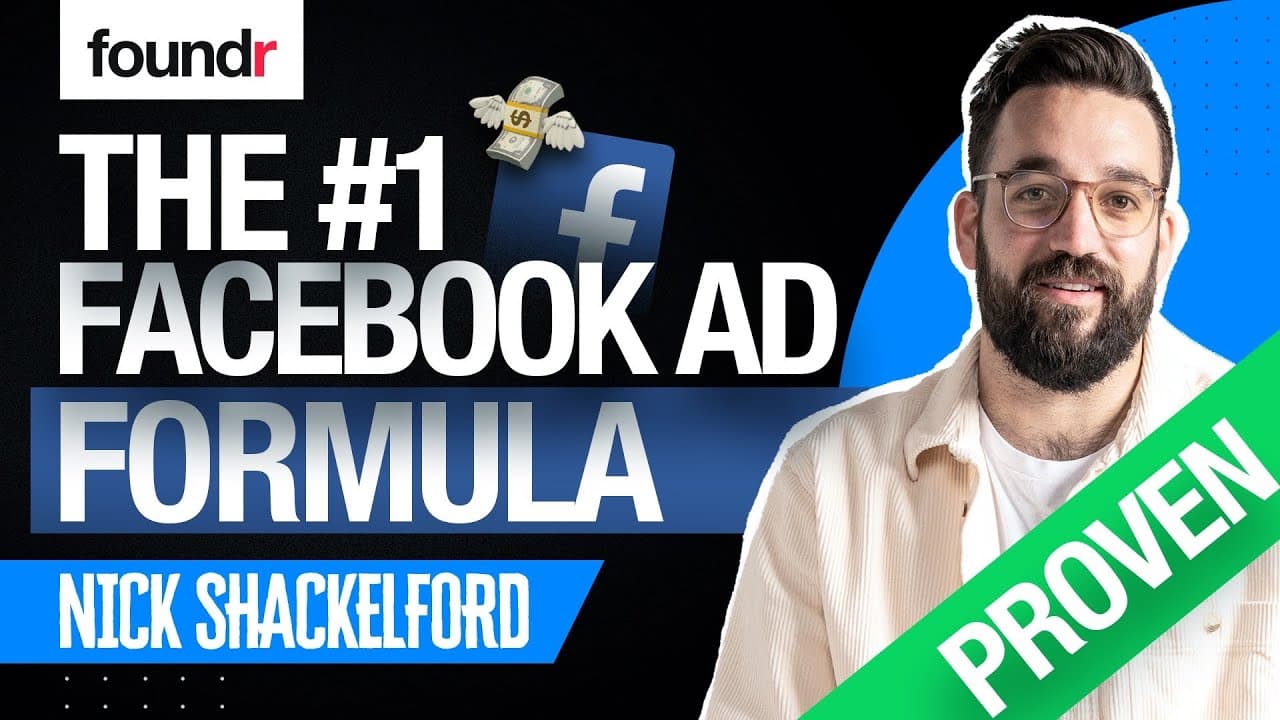
Learn to create high-converting Facebook ads using proven frameworks.
Transcript
something for me to highlight this ad has spent over a hundred and fifty thousand dollars and it's only been live for less than a month why does it work let me show you why what's up everybody welcome back now in this lesson we're gonna get all sorts of creative and what i'm talking about specifically is ad copy and ad create we're gonna talk throu... Read More
Key Insights
- The importance of ad copy and creative elements is emphasized, focusing on the angle, hook, problem-solution, and call to action.
- Analyzing customer reviews, especially on platforms like Amazon, can provide insights into effective ad copy and highlight key product benefits.
- Using testimonials and social proof in ads builds trust and validates product claims, enhancing consumer confidence.
- Ad copy should be concise, focusing on benefits and unique selling propositions, while removing unnecessary fluff.
- Different stages of the marketing funnel require tailored ad strategies, from top-of-funnel awareness to bottom-of-funnel conversion.
- Visual elements in ads, such as images and videos, should support the ad copy and highlight product features and benefits.
- Testing different hooks and demographics in ads can optimize performance by targeting specific consumer triggers and pain points.
- Content bricks, including problem-solution, benefits, and objections, should be strategically placed to maximize ad effectiveness.
Install to Summarize YouTube Videos and Get Transcripts
Explore YouTube Video Summarizer or Get YouTube Transcript Extractor
Questions & Answers
Q: What is the main focus of the video?
The main focus of the video is on creating high-converting Facebook ads by utilizing a proven ad creation framework. It emphasizes the importance of ad copy and creative elements, such as angles, hooks, problem-solution presentations, and calls to action, to effectively engage and convert consumers.
Q: How can customer reviews be used in ad creation?
Customer reviews, especially from platforms like Amazon, can be analyzed to identify common themes and key product benefits. By exporting and examining both positive and negative reviews, advertisers can craft ad copy that highlights strengths and avoids weaknesses, ultimately creating more compelling and trustworthy ads.
Q: Why is social proof important in ads?
Social proof, such as testimonials and user reviews, is important in ads because it builds trust and credibility with potential customers. By showcasing real experiences and endorsements, advertisers can validate product claims, reduce consumer skepticism, and increase the likelihood of conversion by reassuring potential buyers.
Q: What role do visual elements play in ads?
Visual elements, like images and videos, play a crucial role in ads by supporting the ad copy and highlighting product features and benefits. They help capture consumer attention, demonstrate product use, and enhance the overall message of the ad, making it more engaging and persuasive to the target audience.
Q: How should ad strategies be tailored for different funnel stages?
Ad strategies should be tailored for different funnel stages by focusing on awareness at the top, consideration in the middle, and conversion at the bottom. Each stage requires specific messaging and tactics, such as creating engaging content for awareness, providing detailed information for consideration, and emphasizing calls to action for conversion.
Q: What is the concept of content bricks?
The concept of content bricks involves strategically placing key ad elements, such as problem-solution, benefits, and objections, within an ad to maximize its effectiveness. By organizing these components into a cohesive structure, advertisers can create ads that effectively communicate their message and drive consumer action.
Q: Why is testing ad components important?
Testing ad components, such as hooks and demographics, is important because it allows advertisers to optimize ad performance by identifying what resonates with the target audience. By experimenting with different variations, advertisers can determine the most effective elements for engaging consumers and driving conversions, ultimately improving ad ROI.
Q: What is the recommended approach before creating ad content?
Before creating ad content, it is recommended to focus on developing a strong ad copy strategy. By understanding the target audience, identifying key selling points, and organizing content bricks, advertisers can create a clear and compelling message that guides the creation of visual assets, ensuring alignment and consistency in the final ad.
Summary & Key Takeaways
-
The video provides a detailed walkthrough on creating effective Facebook ads, focusing on ad copy and creative elements. It highlights the importance of understanding customer needs and using social proof to build trust. Various strategies for different stages of the marketing funnel are discussed to optimize ad performance.
-
By analyzing customer reviews and leveraging testimonials, advertisers can craft compelling ad copy that resonates with consumers. The video emphasizes the significance of visual elements in ads, such as images and videos, to support the ad's message and demonstrate product benefits effectively.
-
Testing and iterating ad components, like hooks and demographics, is crucial for optimizing ad performance. The concept of content bricks is introduced, guiding advertisers to strategically place elements like problem-solution, benefits, and objections to enhance ad effectiveness and drive conversions.
Read in Other Languages (beta)
Share This Summary 📚
Summarize YouTube Videos and Get Video Transcripts with 1-Click
Try YouTube Summary with ChatGPT & Claude or YouTube Transcript Generator
Explore More Summaries from Foundr 📚





Summarize YouTube Videos and Get Video Transcripts with 1-Click
Try YouTube Summary with ChatGPT & Claude or YouTube Transcript Generator