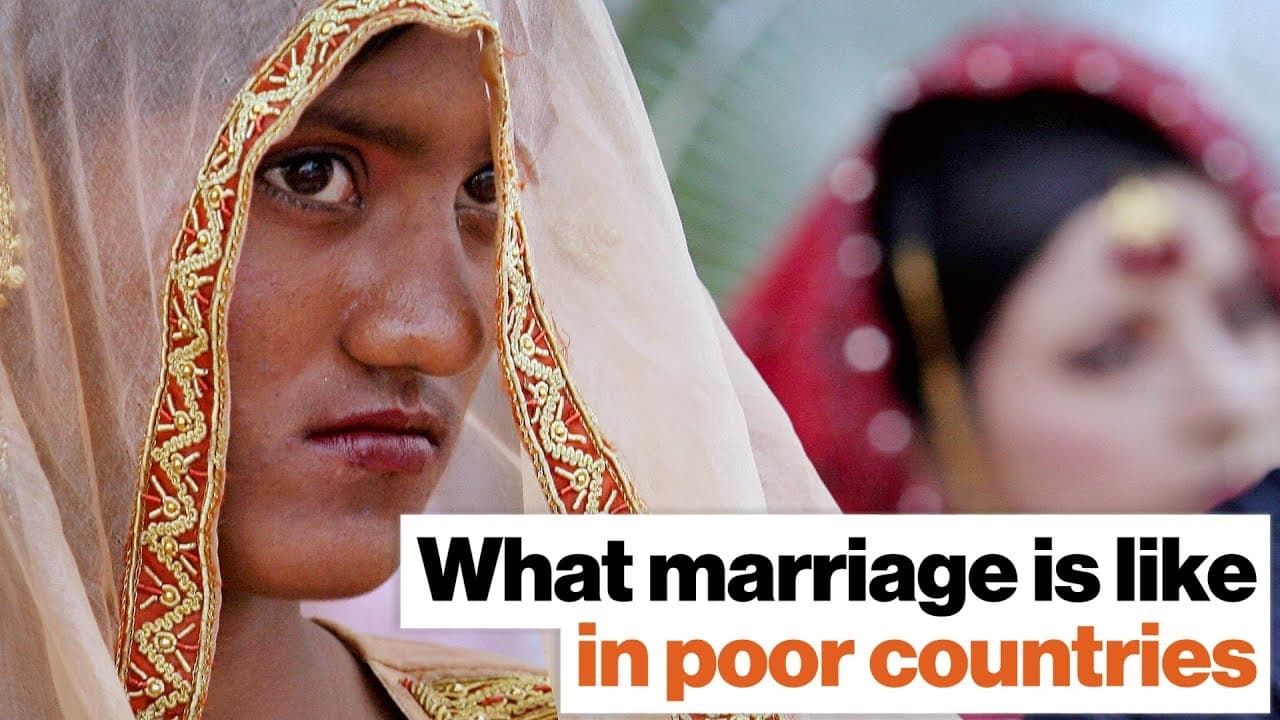
What marriage is like in poor countries | Judith Bruce | Big Think
TL;DR
Marriage for women in poorer countries is an economic arrangement that dictates their social and economic standing.
Transcript
When I decided to do this work—obviously I’m a female and I was an adolescent once—I began to think about the shape of females’ lives and I became very interested in knowing more about the most excluded girls in the most excluded and poorest communities. Obviously all women face some difference in their experience (regardless of where they are) as ... Read More
Key Insights
- 🤵 Marriage in poorer communities is often an economic exchange rather than a romantic partnership.
- 🕵️♀️ Female income is crucial for supporting dependents, yet it is undervalued and often redirected for others.
- 🧔♀️ Societal norms and language downplay the economic contributions of women, reinforcing gender inequalities.
- 👶 Women's social and economic status is closely tied to their marital and child-bearing roles in developing countries.
- 🧔♀️ The control over women's earnings, decisions, and mobility is significantly greater within the institution of marriage.
- 🧔♀️ Marriage serves as a means of economic control over women's sexuality, fertility, and overall survival.
- 🧍♀️ In many societies, women's choices regarding marriage and child-bearing greatly impact their social and economic standing.
Install to Summarize YouTube Videos and Get Transcripts
Explore YouTube Video Summarizer or Get YouTube Transcript Extractor
Questions & Answers
Q: How does economic dependency on marriage affect women in poorer communities?
Economic dependency through marriage restricts women's autonomy, leading to control over their earnings and decisions by men, impacting their overall economic survival.
Q: How is female income redistributed differently from male income in these communities?
Female income is often used to support multiple dependents at a much higher rate than male income, showcasing the unequal economic burden placed on women.
Q: In what way do societal norms and language perpetuate the economic control of women through marriage?
Societal norms and language minimize the economic contributions of women, portraying marriage as a sentimental relationship while ignoring the economic arrangements and dependency involved.
Q: How do marriage and child-bearing impact the social and economic mobility of women in developing countries?
Women's social inclusion and economic prospects are heavily tied to their marital and child-bearing status, limiting their opportunities and autonomy in society.
Summary & Key Takeaways
-
Women in poorer communities face economic dependency on marriage and child-bearing.
-
Female income is redistributed for the benefit of others at a much higher rate than male income.
-
The social and economic status of women is deeply intertwined with marriage and child-bearing.
Read in Other Languages (beta)
Share This Summary 📚
Summarize YouTube Videos and Get Video Transcripts with 1-Click
Try YouTube Summary with ChatGPT & Claude or YouTube Transcript Generator
Explore More Summaries from Big Think 📚




Summarize YouTube Videos and Get Video Transcripts with 1-Click
Try YouTube Summary with ChatGPT & Claude or YouTube Transcript Generator