How does a Lie Detector Test Work? + more videos | #aumsum #kids #science #education #children
TL;DR
Lie detector tests work by measuring vital signs like breathing, pulse, and sweat to detect lies.
Transcript
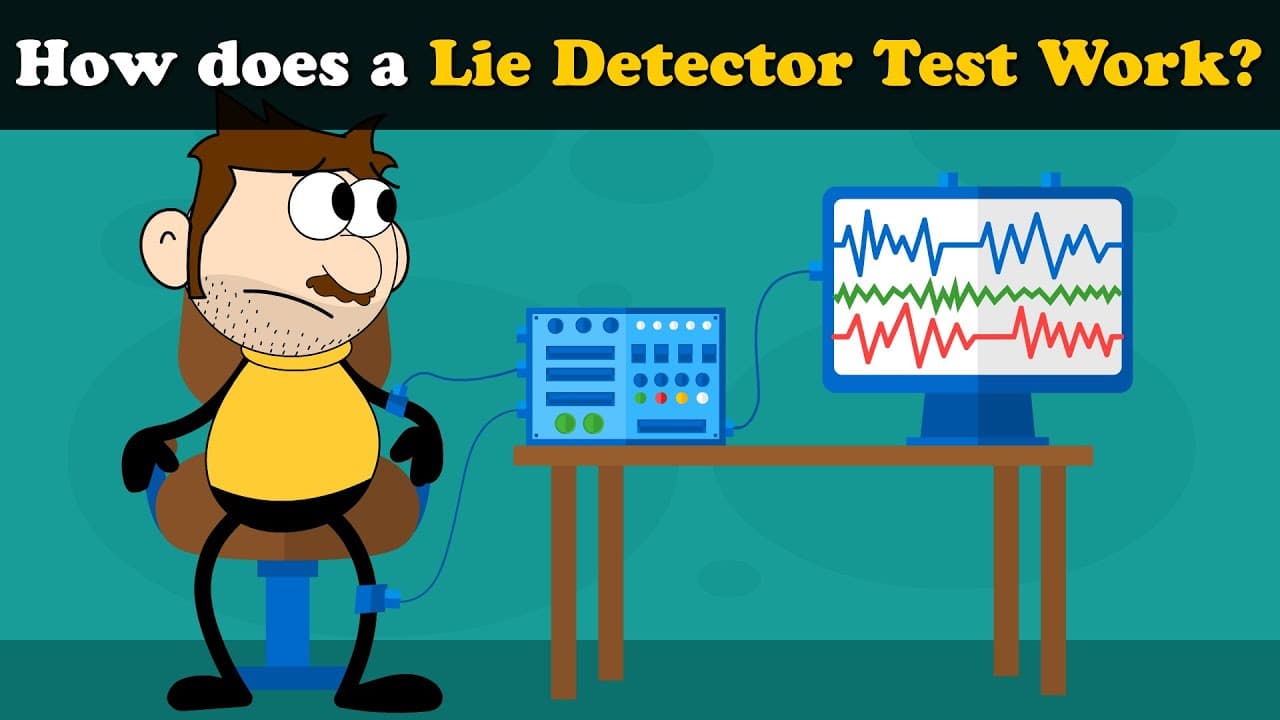
It's AumSum Time. How does a Lie Detector Test Work? Simple. AumSum taught it how to catch a Lie. Oh AumSum. To buy AumSum merchandise visit AumSum.com. A polygraph machine consists of multiple sensors. Whose response is recorded in the form of a graph on a single strip of paper. These sensors are attached to the person taking the Lie Detector Test... Read More
Key Insights
- 😒 Polygraph machines use sensors to monitor vital signs like breathing, pulse, and perspiration during lie detector tests.
- 😌 Changes in vital signs can indicate possible deception, leading examiners to suspect lying.
- 😌 Lie detector tests are based on the assumption that physiological responses differ when a person is lying.
- 😌 The accuracy of lie detector tests can be influenced by various factors, leading to potential errors.
- 😌 Monitoring arm and leg movements can provide additional information in detecting lies during a polygraph test.
- ❓ It is essential for examiners to interpret the recorded data accurately to determine the likelihood of deception.
- 😌 Despite their use in certain settings, lie detector tests are not infallible and have limitations in detecting lies accurately.
Install to Summarize YouTube Videos and Get Transcripts
Explore YouTube Video Summarizer or Get YouTube Transcript Extractor
Questions & Answers
Q: How does a polygraph machine work during a lie detector test?
A polygraph machine measures various physiological responses such as breathing rate, pulse, blood pressure, perspiration, and body movements to detect lies. These responses are recorded on a paper strip for analysis by the examiner.
Q: What vital signs do lie detector tests typically monitor?
Lie detector tests usually monitor breathing rate, pulse, blood pressure, perspiration (sweat), and sometimes arm and leg movements. Changes in these vital signs can indicate possible deception.
Q: What do examiners look for in the data recorded during a lie detector test?
Examiners analyze the recorded data from a lie detector test to identify significant changes in vital signs while specific questions are asked. These changes may suggest that the person is lying.
Q: Are lie detector tests always accurate in detecting lies?
Lie detector tests are not foolproof and can sometimes produce false results. Factors like anxiety, stress, or other physiological conditions can influence the test outcomes.
Summary & Key Takeaways
-
Lie detector tests use a polygraph machine with sensors to measure breathing rate, pulse, blood pressure, perspiration, and body movements.
-
The examiner asks questions while monitoring the person's vital signs for significant changes, indicating possible deception.
-
A significant change in vital signs during specific questions may suggest that the person is lying.
Read in Other Languages (beta)
Share This Summary 📚
Summarize YouTube Videos and Get Video Transcripts with 1-Click
Try YouTube Summary with ChatGPT & Claude or YouTube Transcript Generator
Explore More Summaries from It's AumSum Time 📚






Summarize YouTube Videos and Get Video Transcripts with 1-Click
Try YouTube Summary with ChatGPT & Claude or YouTube Transcript Generator