Ch 4: 3-Monopolistic Competition
TL;DR
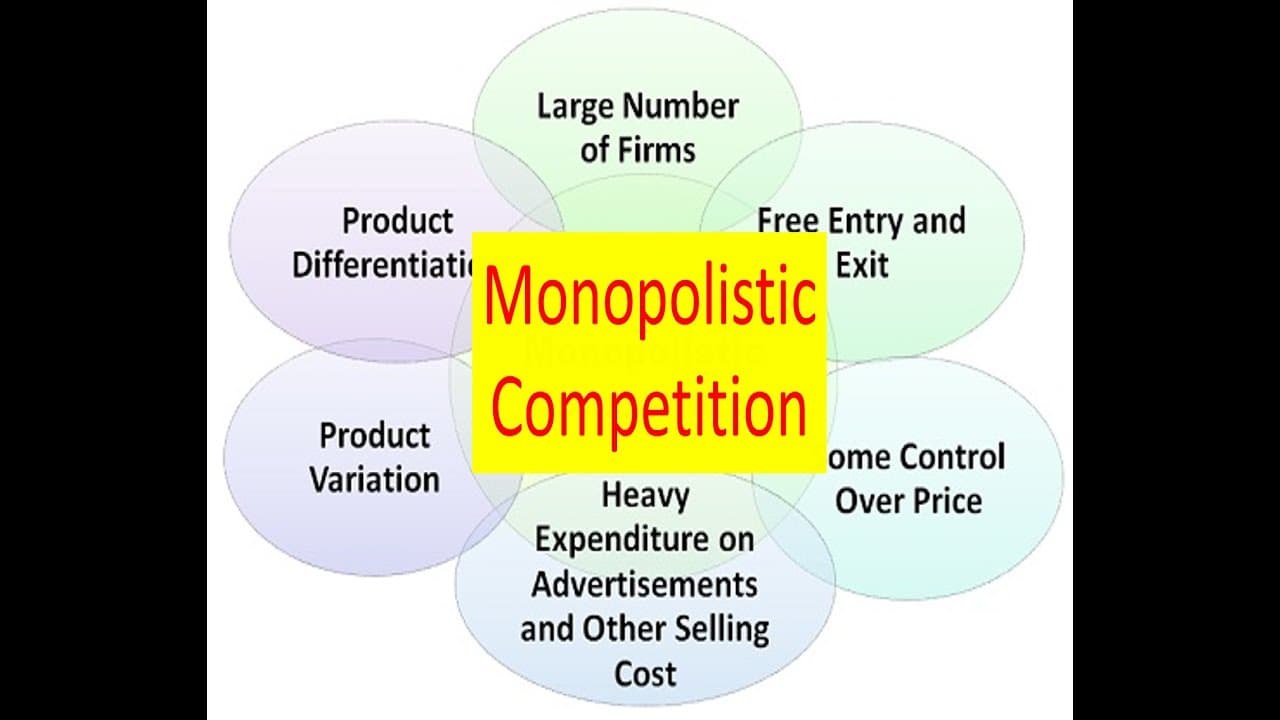
Monopolistic competition is a market structure that combines elements of monopoly and perfect competition, with firms producing differentiated products and having some degree of pricing power.
Transcript
hello everybody and welcome today we will discuss about monopolistic competition previously in the successive two lessons we discussed about perfectly competitive market structure and monopoly market structure by the way those two market structures are opposite and they are found on the opposite extreme of the market structure so they have they hav... Read More
Key Insights
- 💯 Monopolistic competition is a market structure that combines elements of both perfect competition and monopoly, with firms producing differentiated products and having some pricing power.
- 🔬 Firms in monopolistic competition compete through product differentiation and marketing, investing heavily in advertising.
- 🏃 In the short run, monopolistic competition can result in profits or losses, but in the long run, economic profit is eliminated due to free entry and exit.
- 🚱 Advertising is an important non-price method of competition in monopolistic competition, increasing demand and decreasing its elasticity.
- 🥺 Firms in monopolistic competition operate in excess capacity and do not operate at minimum average total cost, leading to inefficiencies.
- 💯 Prices in monopolistic competition are higher than marginal costs, making it less efficient than perfect competition.
- 👶 The long-run equilibrium in monopolistic competition occurs when demand is equal to average total cost, with no new firms being attracted to the market.
Install to Summarize YouTube Videos and Get Transcripts
Explore YouTube Video Summarizer or Get YouTube Transcript Extractor
Questions & Answers
Q: How does monopolistic competition differ from perfect competition and monopoly?
Monopolistic competition combines elements of both perfect competition and monopoly. Unlike perfect competition, firms in monopolistic competition produce differentiated products. However, unlike monopoly, there are many small firms in monopolistic competition.
Q: How do firms in monopolistic competition compete?
Firms in monopolistic competition compete through product differentiation and marketing. They heavily invest in branding and advertising to make their products stand out from competitors.
Q: How does advertising impact demand in monopolistic competition?
Advertising in monopolistic competition increases demand and makes it less elastic. It shifts the demand curve to the right, resulting in higher demand and less price sensitivity.
Q: What is the long-run equilibrium in monopolistic competition?
In the long run, firms in monopolistic competition earn zero economic profit due to free entry and exit. Demand becomes tangent to average total cost, and no new firms are attracted to the market.
Summary & Key Takeaways
-
Monopolistic competition is a type of imperfect market structure characterized by many small firms producing differentiated products.
-
Firms in monopolistic competition have some degree of pricing power due to their differentiated products.
-
Advertising is an important non-price method of competition in monopolistic competition, as it can increase demand and decrease its elasticity.
Read in Other Languages (beta)
Share This Summary 📚
Summarize YouTube Videos and Get Video Transcripts with 1-Click
Try YouTube Summary with ChatGPT & Claude or YouTube Transcript Generator
Explore More Summaries from Solomon Getachew 📚



Summarize YouTube Videos and Get Video Transcripts with 1-Click
Try YouTube Summary with ChatGPT & Claude or YouTube Transcript Generator