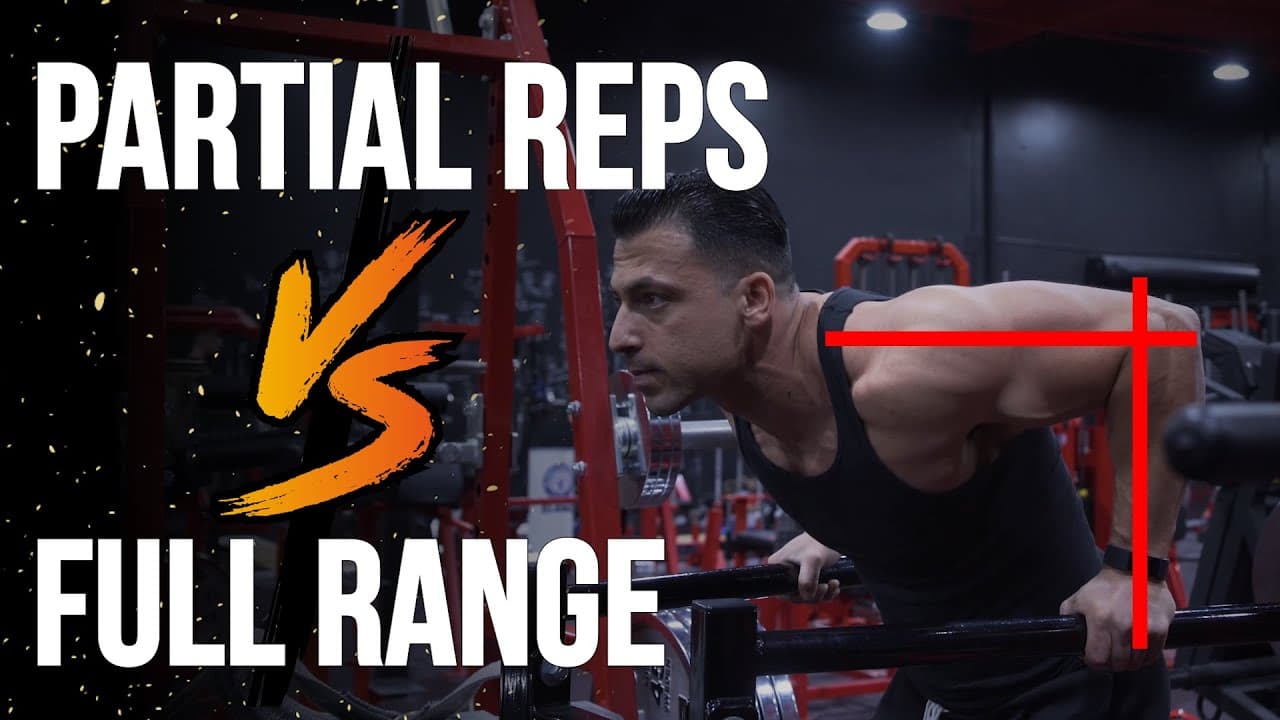
Partial Reps Vs. Full Reps for Building Muscle
TL;DR
Full reps are superior for muscle growth and strength.
Transcript
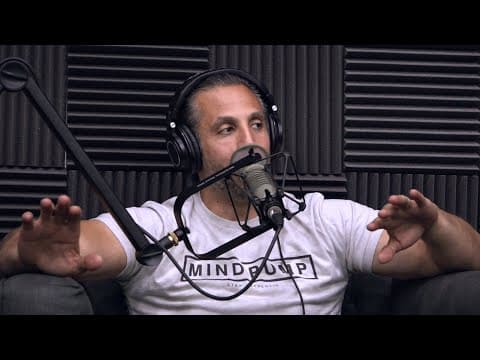
first question is from robert bowers1 what are your thoughts on partial reps versus full range of motion for hypertrophy okay so head to head if you were to compare and they've done this in lots of studies right partial repetitions to full reps the full reps build more muscle and build greater strength along a greater continuum in other words stren... Read More
Key Insights
- Full range of motion exercises are more effective for building muscle and strength across a broader spectrum compared to partial reps.
- Partial reps can be useful for increasing intensity and volume, but they should be reserved for advanced lifters.
- Full range of motion provides functional strength and flexibility, which is beneficial for overall physical performance.
- Partial reps may be beneficial in specific scenarios, such as when a lifter reaches failure and wants to increase intensity.
- Partial reps can be adapted for individual needs, like those with limited mobility, by focusing on the range of motion they can control.
- Bodybuilders often use partial reps to achieve muscle pumps, but this approach has limitations in terms of overall strength and flexibility.
- Training with full range of motion can improve functional flexibility, which is often superior to traditional flexibility exercises.
- Initial fitness certifications often promote partial reps for safety, but full reps offer better results once proper technique is mastered.
Install to Summarize YouTube Videos and Get Transcripts
Explore YouTube Video Summarizer or Get YouTube Transcript Extractor
Questions & Answers
Q: What are the benefits of full range of motion exercises for hypertrophy?
Full range of motion exercises provide broader strength gains and muscle development compared to partial reps. They improve functional flexibility and allow for strength development across a wider range of motion, which is beneficial for overall physical performance and aesthetics.
Q: Are partial reps ever superior to full reps?
Partial reps can be superior in specific scenarios, such as when a lifter reaches failure and wants to add more intensity to their workout. However, they should be used sparingly and are generally more suitable for advanced lifters who know how to incorporate them effectively.
Q: How can partial reps be adapted for individuals with limited mobility?
Partial reps can be adapted for individuals with limited mobility by focusing on the range of motion they can control. This approach allows them to gradually increase their range of motion and strength, ultimately working towards full range of motion exercises.
Q: Why do bodybuilders use partial reps, and what are the limitations?
Bodybuilders use partial reps to achieve muscle pumps, which can enhance muscle size and appearance. However, this method has limitations in terms of overall strength and flexibility, as it does not provide the same functional benefits as full range of motion exercises.
Q: How does full range of motion training improve functional flexibility?
Full range of motion training improves functional flexibility by building strength throughout the entire range of motion. This approach enhances both flexibility and strength, allowing for better physical performance and reducing the risk of injury during various activities.
Q: Why do some fitness certifications promote partial reps?
Some fitness certifications promote partial reps as a safety measure, aiming to reduce the risk of injury by limiting the range of motion. However, this approach often leads to suboptimal results compared to full range of motion training, which offers better muscle growth and flexibility.
Q: What is the role of partial reps in advanced lifting techniques?
In advanced lifting techniques, partial reps can be used to target specific weak points in a lift or to increase intensity when a lifter reaches failure. They are a tool for adding variety and challenge to a workout, but should not replace full range of motion exercises.
Q: How does full range of motion training affect muscle aesthetics?
Full range of motion training positively affects muscle aesthetics by promoting balanced muscle growth and improving overall body symmetry. It allows for the development of functional strength and flexibility, which contribute to a well-rounded, aesthetically pleasing physique.
Summary & Key Takeaways
-
Full range of motion exercises are generally more effective than partial reps for muscle growth and strength. Partial reps can be useful for advanced lifters seeking to increase intensity but should not replace full reps in a training regimen.
-
Partial reps can be beneficial in certain situations, such as when a lifter reaches failure and wants to continue training. They are also useful for individuals with limited mobility who are working to increase their range of motion.
-
Bodybuilders often use partial reps to achieve muscle pumps, but this method is not always optimal for building functional strength and flexibility. Full range of motion training is more effective for overall physical performance.
Read in Other Languages (beta)
Share This Summary 📚
Summarize YouTube Videos and Get Video Transcripts with 1-Click
Try YouTube Summary with ChatGPT & Claude or YouTube Transcript Generator
Explore More Summaries from Mind Pump Show 📚




Summarize YouTube Videos and Get Video Transcripts with 1-Click
Try YouTube Summary with ChatGPT & Claude or YouTube Transcript Generator