6 Ways Species Rely on Humans for Survival
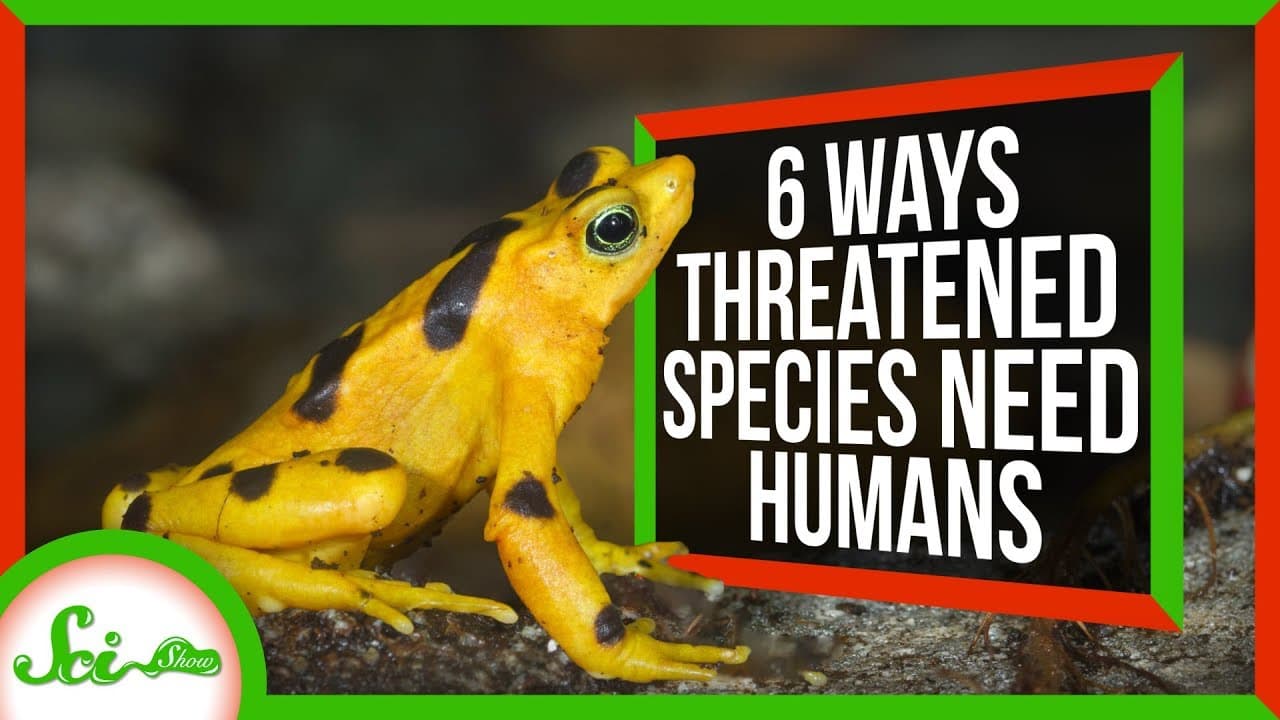
TL;DR
Human intervention is necessary to save species that have declined dramatically due to factors such as lead poisoning, disease, invasive species, fire suppression, and the loss of pollinators.
Transcript
{♫Intro♫} It’s not a secret that we haven’t been the greatest at taking care of the planet we live and depend on. But thankfully, there are countless conservation efforts happening all over the world to try and undo some of that damage. Because, y’know, better late than never. When a species’ population is in decline, we can try to find measures to... Read More
Key Insights
- 🥺 Lead poisoning and the spread of the chytrid fungus are significant factors contributing to the conservation-reliance of certain species.
- ❓ Invasive species pose threats to various animals, including Galápagos tortoises and amphibians.
- ❤️🔥 Fire suppression can negatively impact species like the Karner blue butterfly that rely on natural fire cycles for their survival.
- 🌱 The loss of pollinators, as seen in the alula plant, can result in the need for human intervention to preserve the species.
- ❤️🔥 Conservation efforts, such as captive breeding programs, removal of invasive species, and controlled fires, have shown success in supporting endangered species' populations.
- ❓ Understanding the impact humans have on biodiversity is crucial for effective conservation strategies.
Install to Summarize YouTube Videos and Get Transcripts
Explore YouTube Video Summarizer or Get YouTube Transcript Extractor
Questions & Answers
Q: Why are California condors considered conservation-reliant?
California condors have become conservation-reliant due to lead poisoning from ammunition fragments. Their population is heavily dependent on captive breeding programs and ongoing management to protect them from poisoning and increase their numbers.
Q: How did the Panamanian golden frog become conservation-reliant?
The spread of the chytrid fungus, introduced through the global amphibian trade, has wiped out the entire wild population of Panamanian golden frogs. Managed breeding facilities and research efforts are focused on protecting the frogs and developing techniques for their eventual reintroduction into the wild.
Q: What threats have led to the conservation-reliance of Galápagos tortoises?
Galápagos tortoises faced overharvesting in the past, followed by the introduction of invasive species such as black rats, goats, and pigs. These invasives prey on the tortoises and disrupt their habitats. Conservation efforts include breeding programs and the removal of invasive predators to repopulate the islands.
Q: Why is fire suppression a concern for the Karner blue butterfly?
Fire suppression prevents the wild lupine, the Karner blue butterfly's primary food source, from thriving. The butterfly's population has declined significantly as a result. To address this, scientists and land managers are using prescribed fires to mimic natural conditions and protect the species.
Q: How are conservationists preserving the alula plant in Hawai'i?
Conservationists rappel down steep cliffs to manually transfer pollen between alula plants. The collected fruit is used to grow and care for the plants in greenhouses. The goal is to eventually reintroduce the plants into the wild, even though they are heavily dependent on human intervention.
Summary & Key Takeaways
-
Some species, like the California condor, have become conservation-reliant due to lead poisoning from ammunition fragments. Captive breeding programs and careful management are necessary to boost their population.
-
The Panamanian golden frog is conservation-reliant because of the spread of the chytrid fungus. Research is being conducted to protect the frogs and develop strategies for reintroduction into the wild.
-
Galápagos tortoises are conservation-reliant due to overharvesting in the past and the presence of invasive species. Breeding programs and efforts to eradicate invasive predators have been successful in repopulating the islands.
-
The Karner blue butterfly relies on fires to thrive, but fire suppression has led to a significant decline in its population. Scientists are using prescribed fires to simulate natural conditions and protect the species.
-
The alula plant in Hawai'i is conservation-dependent due to the loss of its pollinator. Conservationists manually transfer pollen between plants and cultivate them in greenhouses to ensure their survival.
Read in Other Languages (beta)
Share This Summary 📚
Summarize YouTube Videos and Get Video Transcripts with 1-Click
Try YouTube Summary with ChatGPT & Claude or YouTube Transcript Generator
Explore More Summaries from SciShow 📚


Summarize YouTube Videos and Get Video Transcripts with 1-Click
Try YouTube Summary with ChatGPT & Claude or YouTube Transcript Generator