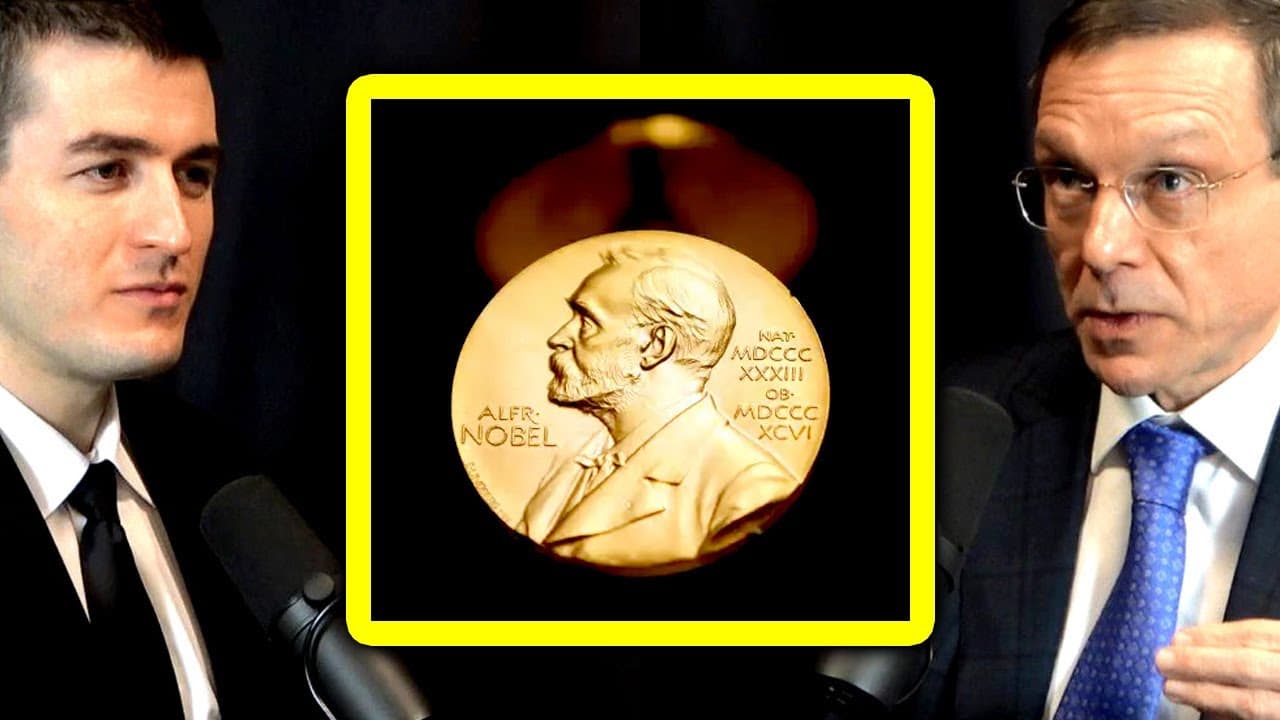
The Nobel Prize is bad for science | Avi Loeb and Lex Fridman
TL;DR
Prizes and honors in science and literature may not be important as they can hinder independent work and distort the natural progression of scientific discovery.
Transcript
so you've had an interaction and perhaps a bit of a friendship with stephen hawking uh does it make you sad that he didn't win the nobel well all together i don't assign great importance to prizes because as you said you know jean-paul starter who i admired as a teenager because i was interested in philosophy when i grew up on a farm in israel uh y... Read More
Key Insights
- 😃 Prizes and honors may not hold significant importance in the eyes of the speaker.
- 🪡 Independence and fulfillment can be achieved without the need for external recognition.
- 🔬 Prizes can hinder the natural progression of science and discourage the embracing of uncertainty.
- 🏛️ Transparent communication of evidence is crucial for building public trust.
- 👻 The absence of prizes would allow scientists and writers to focus solely on their work, without distractions.
- 🏑 Prizes can create a false perception of infallibility in scientific and literary fields.
- 🪛 Science should be driven by evidence and the pursuit of knowledge, rather than external validation.
Install to Summarize YouTube Videos and Get Transcripts
Explore YouTube Video Summarizer or Get YouTube Transcript Extractor
Questions & Answers
Q: How does the speaker view the importance of prizes in science and literature?
The speaker does not assign great importance to prizes, as they can distract from independent work and fulfillment.
Q: What is the consequence of not being motivated by prizes?
Not being motivated by prizes allows for a more fulfilling life, with the freedom to pursue one's own interests and not be swayed by external expectations.
Q: How do prizes distort the way science is conducted?
Prizes can discourage risk-taking and promote the presentation of only conclusive results, hindering the natural progression of scientific discovery through trial and error.
Q: What approach should scientists take in communicating evidence to the public?
Scientists should be sincere and transparent about the completeness or uncertainties in the evidence, rather than claiming infallibility. This builds trust and credibility with the public.
Summary & Key Takeaways
-
The speaker doesn't assign great importance to prizes, using Jean-Paul Sartre's example of rejecting the Nobel prize.
-
The absence of prizes allows for a more fulfilling life, free from external pressures and expectations.
-
Prizes can distort the scientific process by discouraging risk-taking and presenting a false image of infallibility.
Read in Other Languages (beta)
Share This Summary 📚
Summarize YouTube Videos and Get Video Transcripts with 1-Click
Try YouTube Summary with ChatGPT & Claude or YouTube Transcript Generator
Explore More Summaries from Lex Clips 📚
Summarize YouTube Videos and Get Video Transcripts with 1-Click
Try YouTube Summary with ChatGPT & Claude or YouTube Transcript Generator