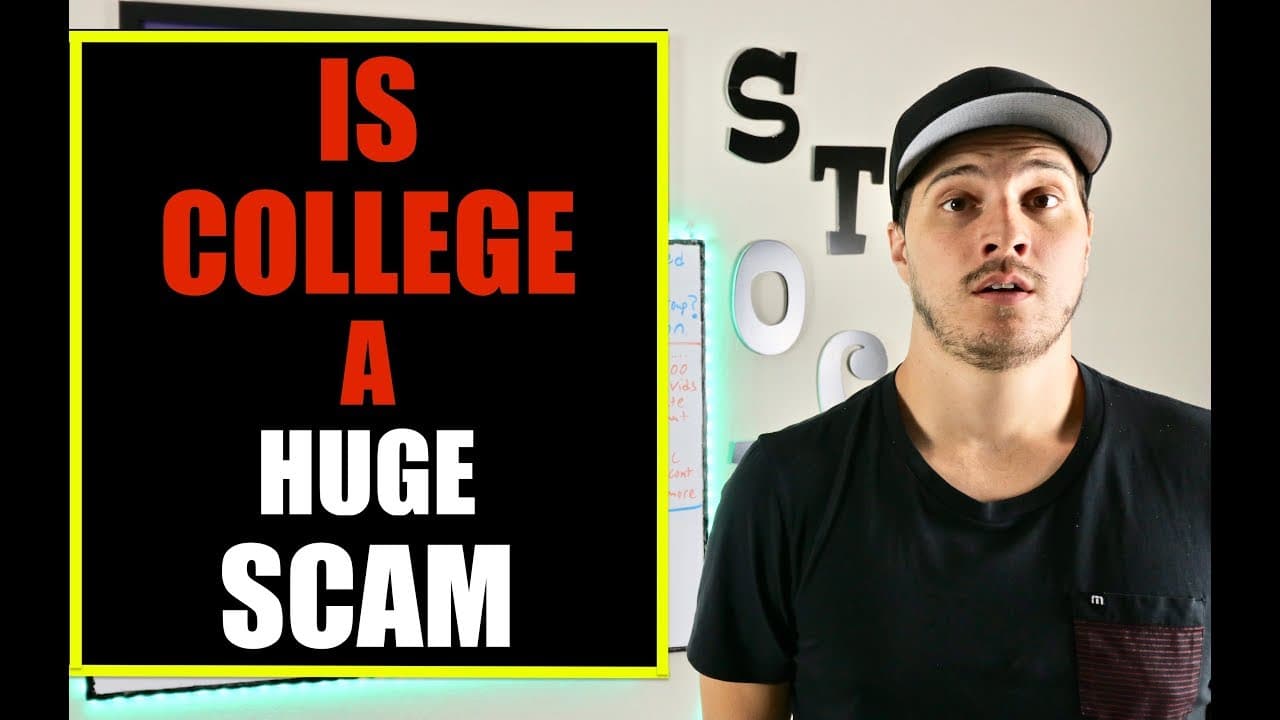
Should You Go To College Or Dropout?
TL;DR
College is expensive; consider scholarships, parental support, personal goals, or avoid debt.
Transcript
well guys I want to go ahead and start out today's video by looking at a little something ridiculous okay we're talking about college today we're talking about should you go to college should you drop out of college more student loan borrowers carry six-figure balances Alicia Bookman student loan balance is nearly a half a million dollars the share... Read More
Key Insights
- 🧑🎓 College tuition costs and student loan debt are increasing, impacting individuals' financial well-being.
- 💨 Various ways to pay for college, including scholarships, parental support, personal savings, or taking out loans, require careful consideration.
- ✋ Personal assessment of goals, financial readiness, and potential ROI is vital when deciding on pursuing higher education.
- 🌱 Taking on substantial debt for college without a clear plan may hinder future financial stability and investment opportunities.
Install to Summarize YouTube Videos and Get Transcripts
Explore YouTube Video Summarizer or Get YouTube Transcript Extractor
Questions & Answers
Q: What are the main ways to pay for college?
The main ways to pay for college include scholarships, parental support, personal savings, and taking out loans. Each method has its advantages and disadvantages, impacting the decision to pursue higher education.
Q: Is college worth it if it involves taking on significant debt?
Taking on substantial debt for college is generally discouraged due to the financial burden it places on individuals. It may hinder future financial stability and limit investment opportunities, making it crucial to evaluate the cost-benefit analysis of obtaining a college degree.
Q: How should individuals decide whether to go to college or drop out?
Individuals should evaluate their personal goals, financial situations, and career prospects when deciding whether to pursue higher education or drop out. It is essential to consider the long-term implications of each decision on future success and financial well-being.
Q: Are there alternative pathways to success besides traditional college education?
There are alternative pathways to success, such as vocational training, apprenticeships, entrepreneurship, or self-education. It is crucial to explore different options based on individual preferences, skills, and career goals to achieve success without incurring significant debt.
Summary & Key Takeaways
-
College costs and student loan debts are skyrocketing, with many struggling with high balances.
-
Different ways to pay for college include scholarships, parental support, personal savings, or taking out loans.
-
Personal evaluation is crucial; consider goals, financial situations, and the potential return on investment.
Read in Other Languages (beta)
Share This Summary 📚
Summarize YouTube Videos and Get Video Transcripts with 1-Click
Try YouTube Summary with ChatGPT & Claude or YouTube Transcript Generator
Explore More Summaries from Financial Education 📚




Summarize YouTube Videos and Get Video Transcripts with 1-Click
Try YouTube Summary with ChatGPT & Claude or YouTube Transcript Generator