Can Antler Stem Cells Help Humans Heal Faster?
TL;DR
Antler stem cells from deer can regenerate entire organs and promote rapid healing, showing potential for faster recovery in other mammals. Researchers have successfully transplanted these cells into mice, prompting them to grow antlers, and have demonstrated their ability to repair broken bones and speed up skin healing in rats. This research could lead to new treatments for humans in the future.
Transcript
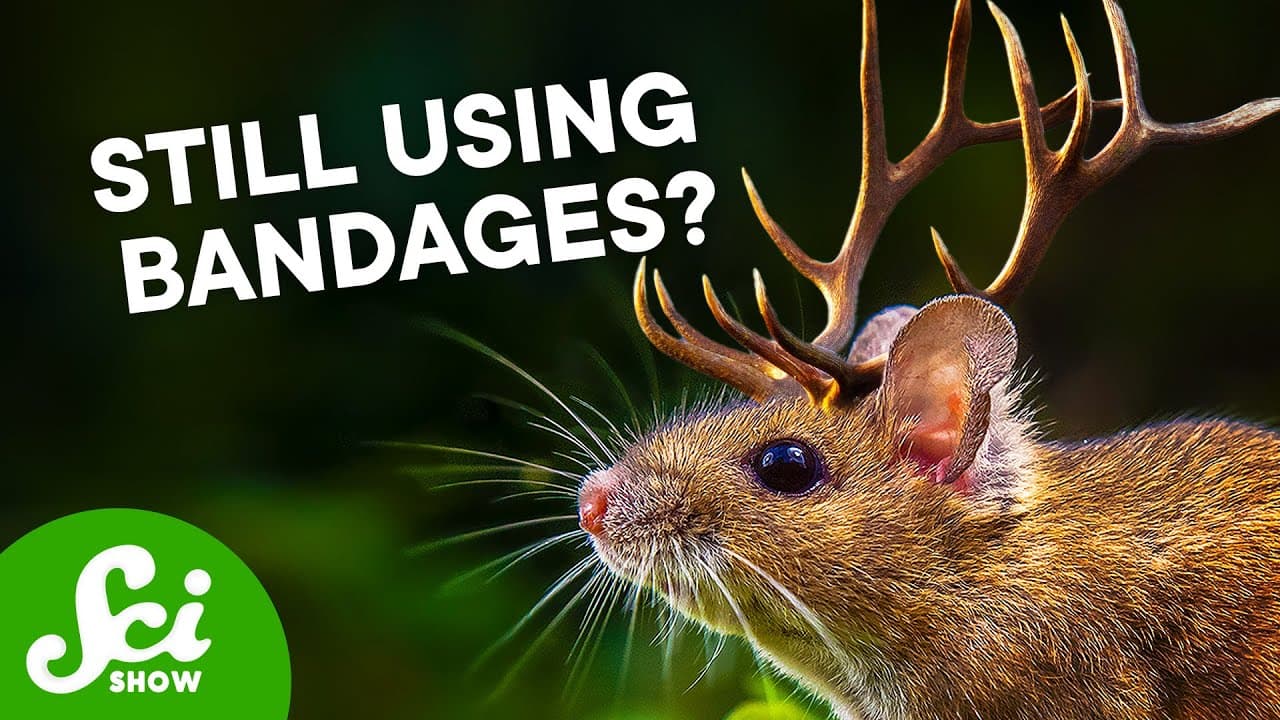
You’ve heard the old adage that time heals all wounds. But when time’s not on your side, there’s a lesser known saying that deer heal wounds much faster. Yeah, no that one’s… that one’s not real. But the science of deer healing wounds is. And to get to that point in medicine, scientists had to first put antlers on mice. Stay with me. It’s all go... Read More
Key Insights
- 🦌 Deer are capable of regenerating entire organs, specifically their antlers, which makes them unique among mammals.
- ☠️ Antlers are the fastest-growing bones in any animal and owe their quick growth to antler stem cells.
- 👨🔬 Research has shown that antler stem cells can be transplanted into mice, resulting in the growth of miniature antlers.
- ☠️ Antler stem cells have also been used to repair broken bones in rabbits, filling the gaps and promoting healing.
- 🥳 In addition to bone repair, antler stem cells have been found to accelerate skin healing in rats, reducing healing time by 9 days.
- 💨 The high concentration of growth factors in antler stem cells is believed to be the reason behind their fast healing properties.
- ☠️ These findings have the potential for future applications in humans for faster healing and regrowth of bones and tissues.
Install to Summarize YouTube Videos and Get Transcripts
Explore YouTube Video Summarizer or Get YouTube Transcript Extractor
Questions & Answers
Q: Why can deer regenerate their antlers while other mammals cannot regenerate entire organs?
Deer possess special antler stem cells that are highly concentrated with growth factors, which allow for fast growth and regeneration of antlers.
Q: Can these antler stem cells be transplanted into other mammals?
Yes, researchers have successfully transplanted antler stem cells into mice, resulting in the growth of miniature antlers, suggesting that these cells can function in other mammalian species.
Q: Besides repairing broken bones, what other healing benefits do antler stem cells offer?
Antler stem cells have been shown to accelerate the healing of skin wounds in rats, reducing the healing time by 9 days compared to rats without these cells.
Q: Have these antler stem cells been tested in humans?
No, the use of antler stem cells in humans has not been tested due to ethical considerations and the newness of the research.
Summary & Key Takeaways
-
Deer are the only mammals that can regenerate entire organs, such as their antlers, from scratch.
-
Special antler stem cells play a crucial role in the fast growth and regeneration of antlers.
-
Scientists have successfully transplanted antler stem cells into mice, leading to the growth of miniature antlers, and have also used these cells to repair broken bones and accelerate skin healing in rats.
Read in Other Languages (beta)
Share This Summary 📚
Summarize YouTube Videos and Get Video Transcripts with 1-Click
Try YouTube Summary with ChatGPT & Claude or YouTube Transcript Generator
Explore More Summaries from SciShow 📚


Summarize YouTube Videos and Get Video Transcripts with 1-Click
Try YouTube Summary with ChatGPT & Claude or YouTube Transcript Generator