Why no one wants to host the Olympics
TL;DR
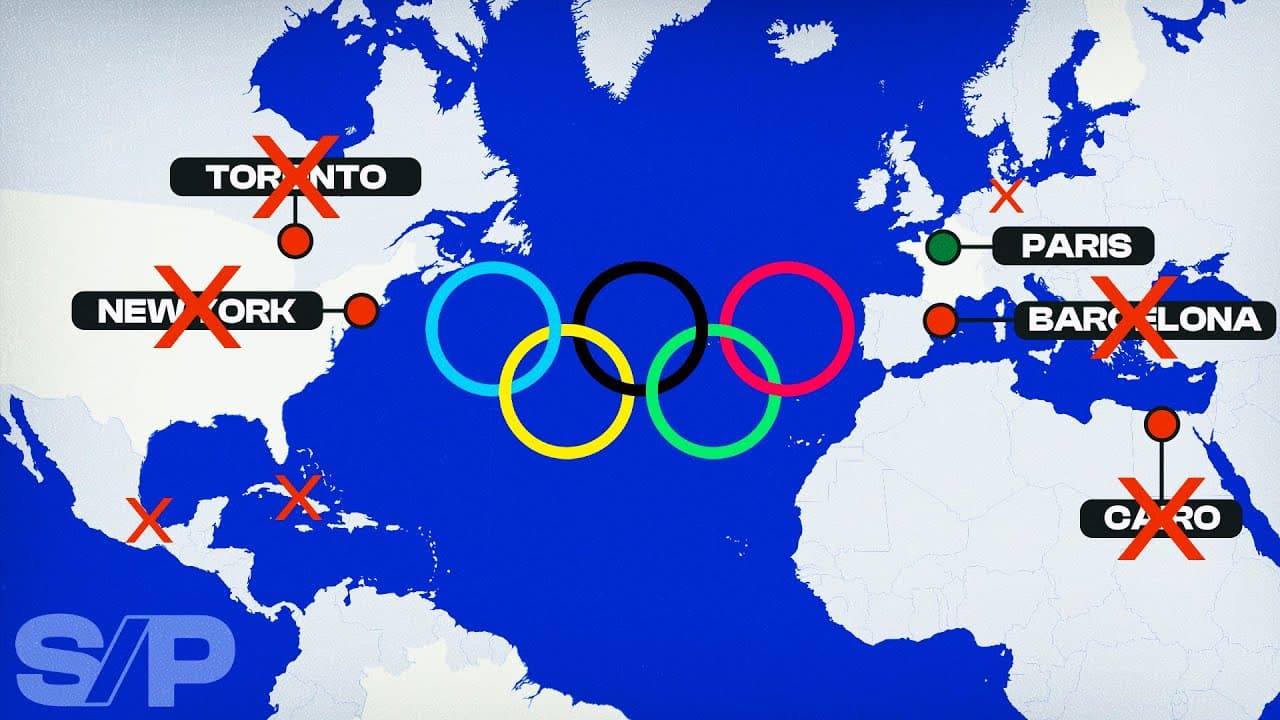
Host cities are increasingly reluctant to bid for the Olympics due to high costs and risks.
Transcript
(crowds cheering) - [Commentator] Down the back straight. (announcer muttering indistinctly) - [Narrator] It's September, 2017, and members of the International Olympic Committee are gathered to pick the city that will host the 2024 Olympic Games, the biggest decision this group makes. They've put representatives from the two competing cities on st... Read More
Key Insights
- 🏙️ Interest in bidding for the Olympics has declined significantly, with only two cities competing for the 2024 Games.
- 👶 The IOC's historical reliance on new constructions has created unaffordable hosting costs, often exceeding initial budgets.
- ❤️🩹 While cities initially hoped for economic revitalization through hosting, many have ended up with empty venues and financial liabilities, challenging the perception of the benefits of the Games.
- 😒 Recent reforms aim to encourage the use of existing venues and shared resources, potentially revitalizing interest in hosting by reducing financial risks.
- 🤨 Historical instances of political turmoil during Olympic events have raised concerns about the safety and public perception of hosting.
- 🏙️ There is market resistance against the ongoing perception of the Olympics as a purely beneficial investment for cities.
- 🥺 Past Olympic infrastructures sometimes lead to significant financial drains, reinforcing views that hosting may harm local economies rather than help them.
Install to Summarize YouTube Videos and Get Transcripts
Explore YouTube Video Summarizer or Get YouTube Transcript Extractor
Questions & Answers
Q: Why are cities now hesitant to bid for the Olympics?
Cities are hesitant to bid for the Olympics due to the financial risks involved. The costs associated with hosting have skyrocketed, often requiring extensive new infrastructure and facilities that lead to overruns, resulting in significant financial burdens on local taxpayers. Cities look at past Olympics, where host cities ended up with empty venues and debts, and are reluctant to follow suit.
Q: How did the 1984 Los Angeles Olympics change the perception of hosting?
The Los Angeles Olympics of 1984 set a precedent by utilizing existing venues instead of building new ones, leading to a successful and profitable event. This model showed that hosting could be financially sustainable, sparking interest from other cities for a while, but the IOC later shifted demands towards extensive new constructions which countered this success.
Q: What led to the IOC's decision to award the 2024 and 2028 Olympics simultaneously?
The IOC awarded the 2024 and 2028 Olympics to Paris and Los Angeles respectively due to dwindling interest in hosting. The committee was concerned that if they held separate bids, other cities may withdraw altogether, leaving them without a host city. This simultaneous awarding was seen as a necessary response to declining bidding participation.
Q: What are 'white elephants' in the context of the Olympics?
'White elephants' refer to expensive and underutilized venues built for the Olympics that end up being a financial burden for host cities. Often, these structures do not attract enough ongoing events or income to justify their costs, leading to significant maintenance expenses and public dissatisfaction with the investment.
Q: How do hosting the Olympics affect local tourism?
Contrary to popular belief, hosting the Olympics does not guarantee a long-term boost in tourism. Studies suggest that while cities may experience an initial surge in visitors, many report a decline in tourism post-Games. Factors, such as negative media coverage during the event, can deter potential visitors, complicating the assumption that hosting is beneficial for tourism.
Q: What are some proposed alternatives for the future of the Olympics?
Some experts suggest a permanent Olympic venue where the Games could be held regularly, reducing the financial burden on host cities and eliminating the risk of white elephants. This would allow the Olympics to be run in a financially sensible and environmentally friendly manner, while still maintaining excitement for the events.
Summary & Key Takeaways
-
The Olympics, once a coveted event for host cities, now struggle to attract bidders due to financial burdens and past failures that have made potential hosts wary.
-
Since the successful 1984 Los Angeles Games, the IOC's demands for more venues and facilities have led to rising costs, making hosting economically unattractive for many cities.
-
Recent attempts to reform the bidding process and a shift towards using existing venues may revitalize interest; however, the idea of a permanent Olympic venue is gaining traction as a potential solution.
Read in Other Languages (beta)
Share This Summary 📚
Summarize YouTube Videos and Get Video Transcripts with 1-Click
Try YouTube Summary with ChatGPT & Claude or YouTube Transcript Generator
Explore More Summaries from Search Party 📚




Summarize YouTube Videos and Get Video Transcripts with 1-Click
Try YouTube Summary with ChatGPT & Claude or YouTube Transcript Generator