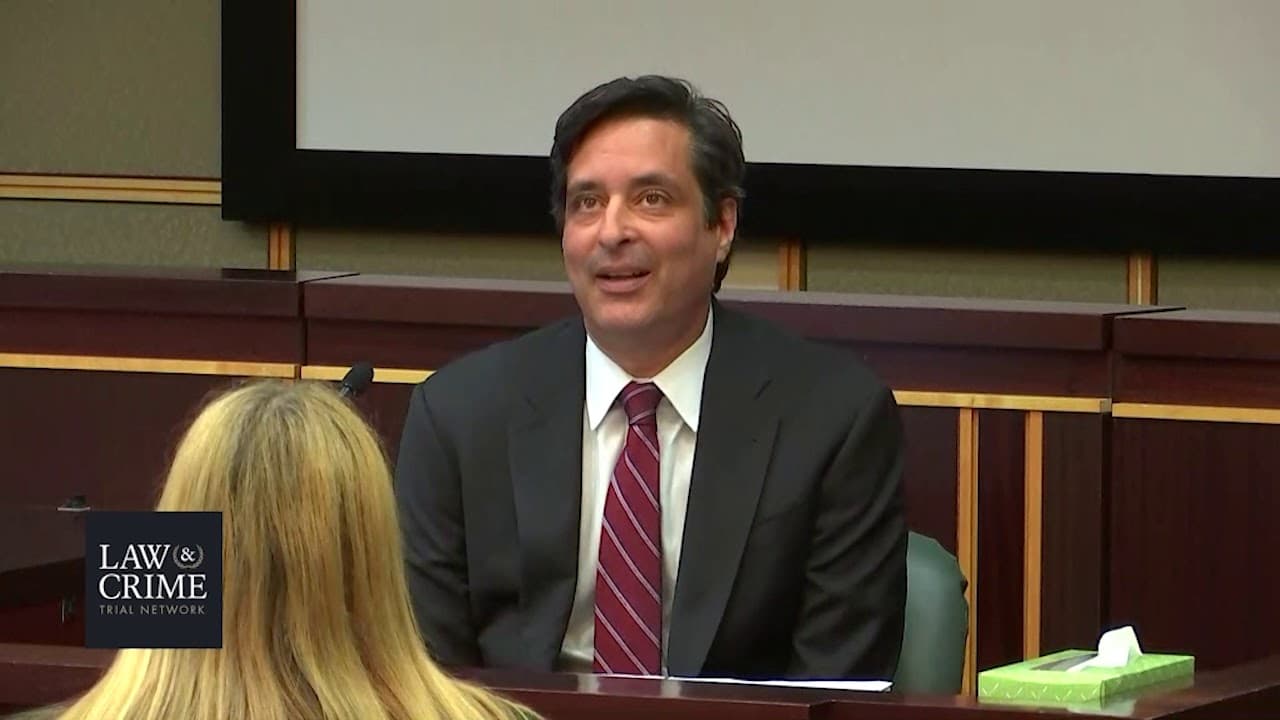
Scott Nelson Penalty Phase Day 2 Dr Robert Ouaou Part 2 & Dr Mark Rubino
TL;DR
Neurologist evaluates cognitive deficits without imaging, suspecting brain injury or stroke.
Transcript
at 2017 cf1 five six eight four state me Nelson back from our recess mr. not only is stay ready proceed miss a mr. Bence mr. Nelson you ready doctor you ready yes sir all right let's bring in the jury please Simmons is defense ready to proceed mr. Nelson you're right mr. not only does the state knowledge the jury no Simmons defense mr. Nelson yes s... Read More
Key Insights
- 🧑🦼 Deficits in naming, visual fields, and motor function were localized, suggesting a specific area of impairment.
- 🤕 Vascular risk factors, head injuries, and atrial fibrillation contribute to Mr. Nelson's cognitive issues.
- ❓ The neurologist's evaluation focused on identifying deficits and determining the likely causes without imaging confirmation.
- ❓ Impulsiveness, inattention, and poor planning were behavioral correlates of the identified cognitive impairment.
Install to Summarize YouTube Videos and Get Transcripts
Explore YouTube Video Summarizer or Get YouTube Transcript Extractor
Questions & Answers
Q: How did the neurologist assess Mr. Nelson's cognitive deficits?
The neurologist used a Montreal cognitive assessment test and evaluated physical reflexes and sensory coordination.
Q: What factors contribute to Mr. Nelson's cognitive impairment?
The neurologist pointed to a history of head injuries, possible strokes, and atrial fibrillation among risk factors.
Q: How did the neurologist address the limitations of not having imaging studies?
The neurologist expressed the difficulty in pinpointing the exact cause without imaging and highlighted the need for further testing.
Q: How did the neurologist validate Mr. Nelson's cognitive deficits?
By analyzing test results and correlating them with Mr. Nelson's symptoms and history, the neurologist confirmed the presence of genuine cognitive impairment.
Summary & Key Takeaways
-
Neurologist evaluates Mr. Nelson's cognitive deficits, including impulsiveness, inattention, and poor planning.
-
Deficits from head injuries and potential strokes are identified, but the exact cause remains undetermined without imaging.
-
Lack of secondary gain measures suggests genuine cognitive impairment.
Read in Other Languages (beta)
Share This Summary 📚
Summarize YouTube Videos and Get Video Transcripts with 1-Click
Try YouTube Summary with ChatGPT & Claude or YouTube Transcript Generator
Explore More Summaries from Law&Crime Network 📚


Summarize YouTube Videos and Get Video Transcripts with 1-Click
Try YouTube Summary with ChatGPT & Claude or YouTube Transcript Generator